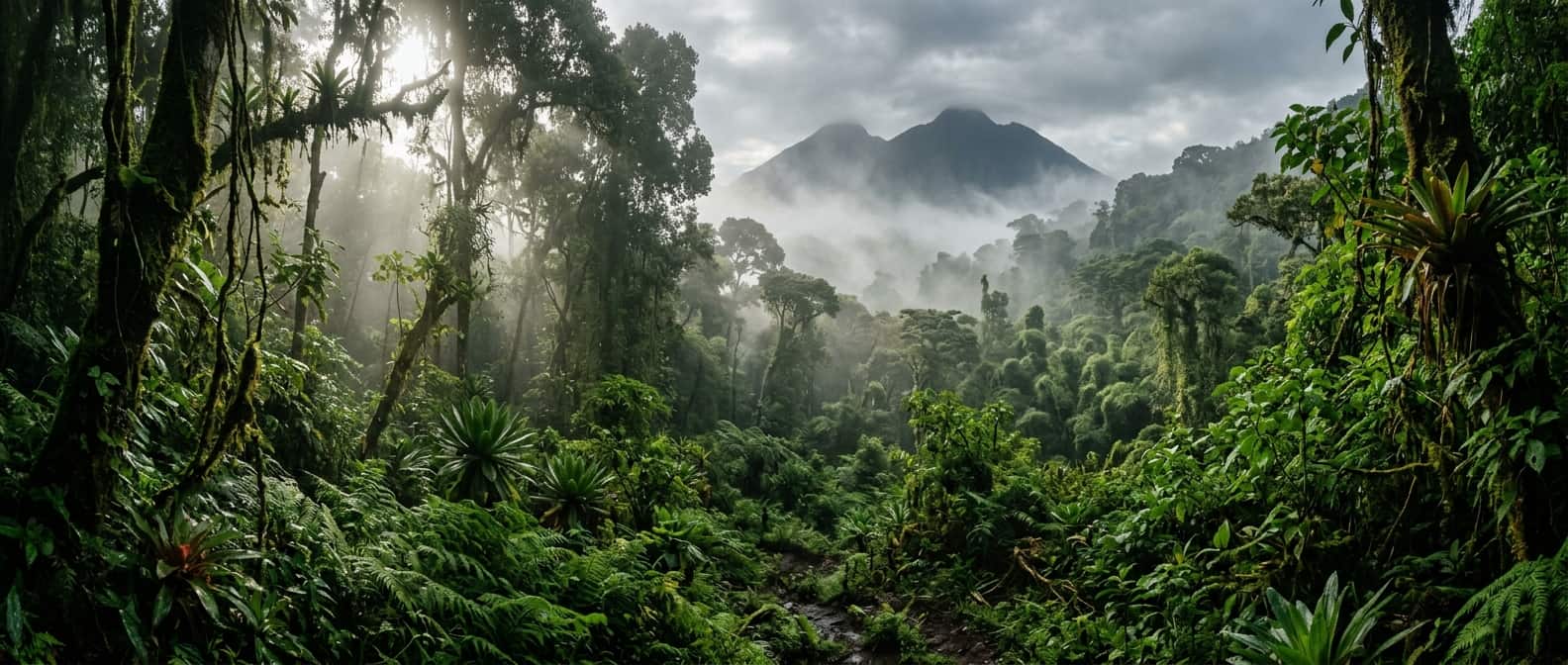
The air in the Virunga Mountains does not just sit; it breathes. It is heavy with the scent of damp earth, crushed lobelia, and the mist that clings to the volcanic peaks long after dawn. Here, at the edge of the Albertine Rift, the notion of luxury shifts from thread counts and infinity pools to something far more profound: absolute access. For the modern affluent traveler, the ultimate privilege is not just isolation, but proximity to the untouched. In Rwanda, this means walking quietly into the bamboo forests to stand mere feet from the mountain gorillas—a fleeting, deeply humbling audience with one of the planet’s rarest primates.
As experiential travel continues to eclipse traditional leisure, Rwanda has quietly positioned itself as the vanguard of high-value, low-impact conservation. It is a destination that demands presence. You do not come here simply to observe; you come to participate in a fragile, highly regulated ecosystem. For the Indian outbound market—increasingly fatigued by crowded European summers and manufactured resorts—the dense emerald canopy of Volcanoes National Park offers a profound recalibration.
The Shift to High-Value Conservation
Rwanda’s approach to wildlife tourism is deliberate and fiercely protective. By limiting the number of trekking permits and keeping the price premium, the government has ensured that mass tourism never breaches the Virunga massif. This strategy has funded community development and anti-poaching initiatives, allowing the mountain gorilla population to steadily rebound.
For the luxury traveler, this model guarantees an experience devoid of crowds. There are no convoys of vehicles, no jostling for viewpoints. It is just your small group, expert trackers who read the forest like a map, and the dense, enveloping quiet of the wild. This is conservation as the ultimate luxury—where the exclusivity of the experience directly contributes to the preservation of the species.
Arrival: Kigali to the Volcanoes
The journey begins in Kigali, a city that defies typical African capital stereotypes with its manicured boulevards, vibrant art scene, and palpable sense of forward momentum. From here, the transition to the wild is seamless. While a scenic, winding three-hour drive through the “Land of a Thousand Hills” is the standard route, the truly discerning opt for a private helicopter transfer.
Lifting off from Kigali, the urban grid quickly gives way to terraced farmlands that ripple across the topography like contour lines on a map. As you approach the northwest, the jagged, mist-wreathed summits of the Virunga volcanoes rise to meet you. Touching down near the park headquarters, the air instantly drops in temperature, carrying the crisp, elemental chill of high altitude.
The Architecture of the Wild: Singita and One&Only
Rwanda’s ascent in the luxury sector is anchored by a handful of lodges that redefine wilderness architecture. These are not mere basecamps; they are sanctuaries of high design that blur the line between the built environment and the forest.
Singita Kwitonda Lodge sits on 178 acres of meadow right at the park’s edge. Its design is a masterclass in understated elegance—woven ceilings, terracotta brickwork, and volcanic stone that echo the raw textures of the landscape. Each suite features a private heated plunge pool, indoor and outdoor fireplaces, and vast glass panels that frame the brooding peaks of Sabyinyo, Gahinga, and Muhabura.
A short distance away, One&Only Gorilla’s Nest offers a different, yet equally striking, immersion. Hidden among swaying eucalyptus trees, its standalone treehouse-style suites are suspended above the forest floor. The aesthetic marries traditional Rwandan geometric patterns with sleek, contemporary lines. After a grueling trek, the lodge’s spa—drawing on African botanical traditions—becomes a vital retreat for recovery.
The Trek: An Audience with the Silverback
The core of the Rwandan experience is, unequivocally, the trek. It begins at dawn. The forest floor is slick, the bamboo thick, and the ascent can be demanding. Trackers hack paths with machetes, communicating via quiet clicks and radios. The duration is unpredictable—you might hike for thirty minutes, or you might hike for four hours.
And then, suddenly, the trackers stop. The air smells sharply of wild celery and musky earth.
A silverback, the size of a boulder, sits entirely unbothered just yards away. Around him, the family dynamic unfolds: juveniles tumble through the underbrush, females groom one another with meticulous care. For precisely one hour, you are permitted to exist in their space. It is an hour of intense, silent observation. The gorillas’ eyes hold a startling depth and intelligence, a mirror of our own evolutionary past. In a world defined by constant digital noise, this analog, primal connection is arresting.
Beyond the Primates: Golden Monkeys and Cultural Shifts
While the gorillas are the primary draw, Volcanoes National Park holds other, more subtle rewards. The endemic golden monkeys, with their bright, inquisitive faces, inhabit the lower bamboo zones. Trekking to find them is a lighter, more playful experience, offering a contrasting rhythm to the solemnity of the gorilla encounter.
Beyond the wildlife, Rwanda’s narrative is one of profound resilience. Engaging with the local communities, perhaps through a visit to a cooperative or sharing a meal sourced entirely from the volcanic soil, adds a necessary layer of context. The luxury here is not isolated from the reality of the country; it is deeply interwoven with its miraculous recovery and future aspirations.
Leaving the Virungas, the enduring luxury is the memory of the mist, the physical ache of the hike, and the quiet gaze of the silverback. It is a reminder that the most exclusive experiences on earth cannot be manufactured; they must be sought out, respected, and fiercely protected.
Sources
(Note: Web search was unavailable. Information is drawn from general luxury travel knowledge and official property descriptions of Singita and One&Only.)