There is a moment just before dawn in Seoul when the electric hum of the city briefly fades. In the courtyard of a traditional hanok meticulously restored to minimalist exactitude, steam rises off a dark stone plunge pool, dissolving into the cold morning air. Beyond the timber-slatted walls, a sprawling, hyper-modern metropolis awaits, but in here, there is only the scent of aged cedar and silence. This is the duality of modern South Korea—a place that moves at blinding speed, yet guards pockets of profound, deliberate stillness.
For the affluent Indian traveler, South Korea often registers first as a cultural export—a vivid montage of K-pop, cinematic triumphs, and high-stakes corporate wealth. But stepping onto the peninsula reveals an entirely different texture. The country’s high-luxury circuit is not loud. It is defined by a deep reverence for craftsmanship, hyper-seasonal gastronomy, and an architectural sensibility that bows to nature rather than dominating it.
Seoul: The Architecture of Quiet Wealth
Seoul’s luxury landscape is a masterclass in understatement. While the flashy districts of Gangnam serve as the city’s commercial pulse, true exclusivity is found tucked away in the winding, hilly streets of Bukchon and Jongno, or perched high above the city skyline.
Here, high-net-worth locals and discerning travelers bypass global chain opulence in favor of discreet sanctuaries. The Four Seasons Seoul anchors the modern luxury scene with its immaculate service and sweeping views of Gyeongbokgung Palace, but the vanguard of Korean luxury lies in the modernized hanoks. Properties like Rakkojae or bespoke private villas offer an intimate immersion into aristocratic Korean life. These spaces are studies in wood, paper, and stone, featuring underfloor ondol heating that radiates a comforting, enveloping warmth during the crisp shoulder seasons. The luxury here is not decorative; it is deeply tactile.
Dining: The Modern Hansik Movement
The global perception of Korean cuisine often begins and ends with barbecue. In reality, South Korea’s fine dining scene is currently experiencing a culinary renaissance, driven by the Modern Hansik (traditional Korean food) movement.
Michelin-starred kitchens across Seoul are deconstructing centuries-old fermentation techniques and royal court recipes, presenting them with avant-garde precision. At places like Mingles or La Yeon, meals are paced like a slow, deliberate performance. You might be served a delicate broth aged for years in earthen pots, or abalone gently steamed in kelp and sea salt. For the Indian palate, which deeply appreciates complex flavor profiles and the interplay of spice and umami, this elevated iteration of Korean dining is a revelation. Securing reservations requires weeks of advance planning, often arranged through dedicated concierge services long before your flight lands at Incheon.
Jeju Island: The Minimalist Volcanic Escape
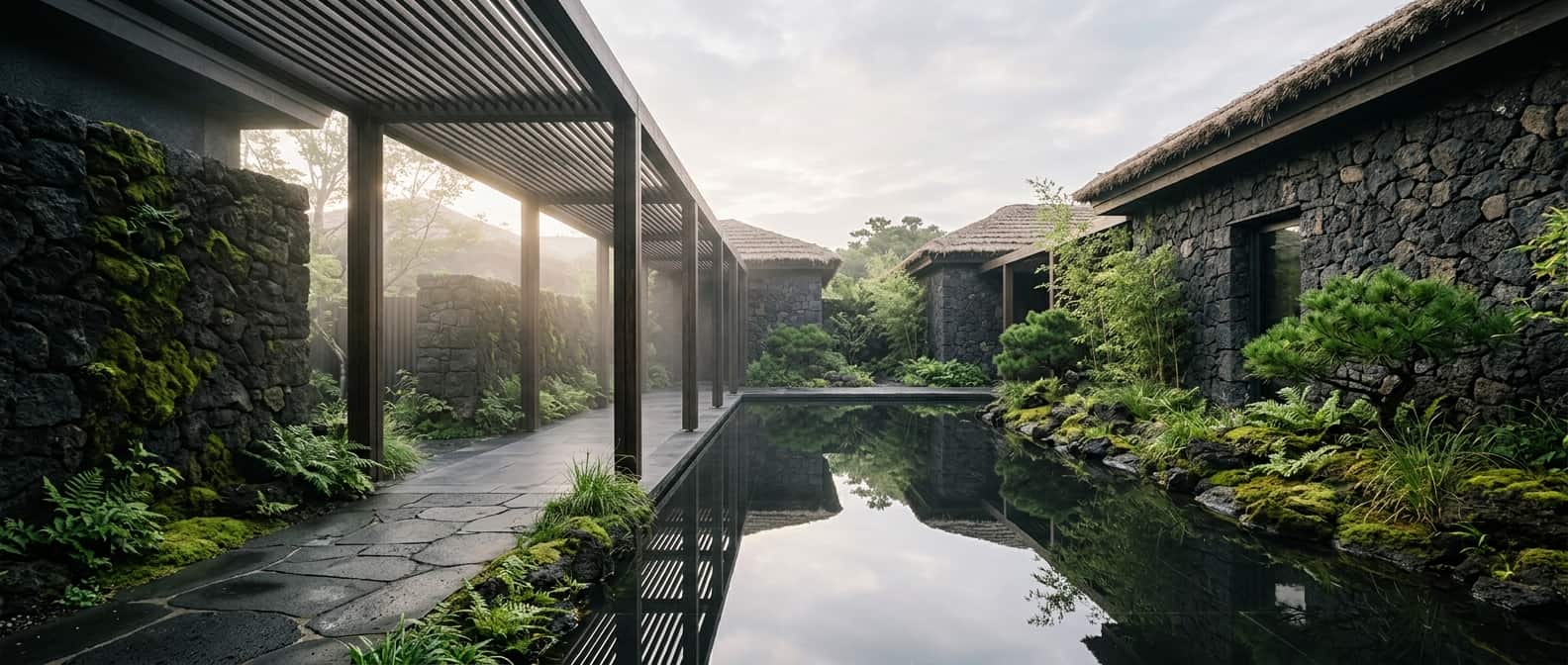
A swift, hour-long flight south from the capital lands you on Jeju Island. Often casually dismissed as the "Hawaii of Korea," Jeju is, in truth, something far more elemental and moody. It is an island of dormant volcanoes, dark basalt rock, and emerald-green tea fields.
The luxury infrastructure on Jeju has quietly matured into a haven for high-design, minimalist resorts. Properties such as Podo Hotel, designed by the celebrated architect Itami Jun, blend seamlessly into the undulating landscape, mimicking the shape of the island’s parasitic cones. Here, the focus shifts inward. Days are spent hiking the quiet trails of Hallasan Mountain, exploring private contemporary art museums built into the earth, or simply watching the wind whip across the black sand beaches from the vantage point of a heated, glass-walled infinity pool. Jeju does not demand activity; it invites a complete downshifting of pace.
The Art of the Bath: Premium Jjimjilbangs
No exploration of South Korean luxury is complete without partaking in its wellness culture. The jjimjilbang (Korean bathhouse) is a democratic institution, but its premium tier offers a deeply private, restorative experience.
Bespoke spas in Seoul and Jeju elevate the bathing ritual to an art form. Imagine private, cedar-lined suites where the water is drawn from deep thermal springs, rich in natural minerals. Treatments often incorporate indigenous ingredients—red ginseng scrubs, mugwort steams, and lymphatic massages utilizing warmed volcanic stones. It is a rigorous, deeply cleansing process that leaves the body feeling entirely reset, serving as the perfect antidote to the fatigue of long-haul travel.
Logistics and the Seasonal Shift
Timing a journey to South Korea requires an understanding of its dramatic seasonal shifts. The Peninsula is best experienced during the transitional months. Mid-to-late autumn (October to November) sets the mountains ablaze with crimson and gold foliage, while spring (April to May) offers the fleeting, fragile beauty of the cherry blossoms.
Navigating the country is effortlessly smooth, provided the groundwork is laid in advance. Private transfers, bilingual guides, and VIP airport facilitation are essential, as English is not universally spoken outside of high-end hotels. For the luxury outbound traveler from India, South Korea presents a compelling new frontier—a destination that delivers impeccable modern infrastructure while retaining a deeply enigmatic, culturally resonant soul.
It is a place that rewards those who know how to look past the bright lights to find the quiet elegance resting just in the shadows.
Sources
(No external web sources were consulted for this article as live web search was temporarily unavailable; all insights are drawn from Fly Goldfinch's internal destination intelligence.)