The flight path to Buenos Aires from Mumbai or Delhi is a long, deliberate arc across the globe. It is a journey that prepares you, by its very duration, for a place that does not reveal itself in a hurry. Argentina operates on a different rhythm, a cadence set by the passionate pulse of tango in the capital and the profound, glacial silence at the end of the world. For the Indian traveller accustomed to the grand tours of Europe or the familiar luxuries of Southeast Asia, Argentina offers something more elusive: a story of duality, a dialogue between the manicured polo fields of the pampas and the untamed wilderness of Patagonia.
This is not a trip of checklists. It is a journey built on two distinct, deeply immersive experiences. The first is a surrender to the high-goal glamour of the polo season, a world of private country estates known as estancias, where the "sport of kings" is a way of life. The second is an expedition south, to the sublime, humbling landscapes of Patagonia, where the Andes meet vast lakes and sprawling ice fields. It is a trip for those who understand that true luxury is not just about comfort, but about access, contrast, and the richness of a well-told story.
The Arrival: An Introduction to Buenos Aires
Buenos Aires is a city of European bones and a Latin soul. Arriving at Ezeiza International Airport, you are met with a grand, sprawling metropolis that feels at once familiar and foreign. The wide, tree-lined avenues of Recoleta and Palermo could be mistaken for Paris or Madrid, with their Beaux-Arts architecture and chic, well-dressed locals, the porteños. But the spirit of the city is entirely its own. It is in the melancholic notes of a bandoneon drifting from a corner café in San Telmo, the Sunday antique market buzzing with life, and the intoxicating energy of a late-night dinner, where conversations flow as freely as the Malbec.
Before venturing into the countryside, the city deserves a brief, focused immersion. Bypass the tourist-heavy shows and instead, arrange for a private tango lesson in an intimate studio. Visit the Teatro Colón, not just to admire its gilded interiors, but to attend a performance if the season allows. Explore the MALBA (Latin American Art Museum of Buenos Aires) to understand the region's modern creative pulse. This initial contact with the city’s culture provides the necessary context for the world you are about to enter, a world where urban sophistication and rural traditions are inextricably linked.
The Sport of Kings: Inside the Gates of a Private Estancia
Just an hour or two outside the capital’s embrace, the urban landscape gives way to the pampas, the vast, fertile plains that are the heartland of Argentine identity. This is campo life, and its most refined expression is the estancia. These are not merely hotels; they are historic family estates, sprawling ranches where cattle ranching (gaucho culture) and polo converge. To stay in one during the spring polo season (September to November) is to be invited into a private, exhilarating world.
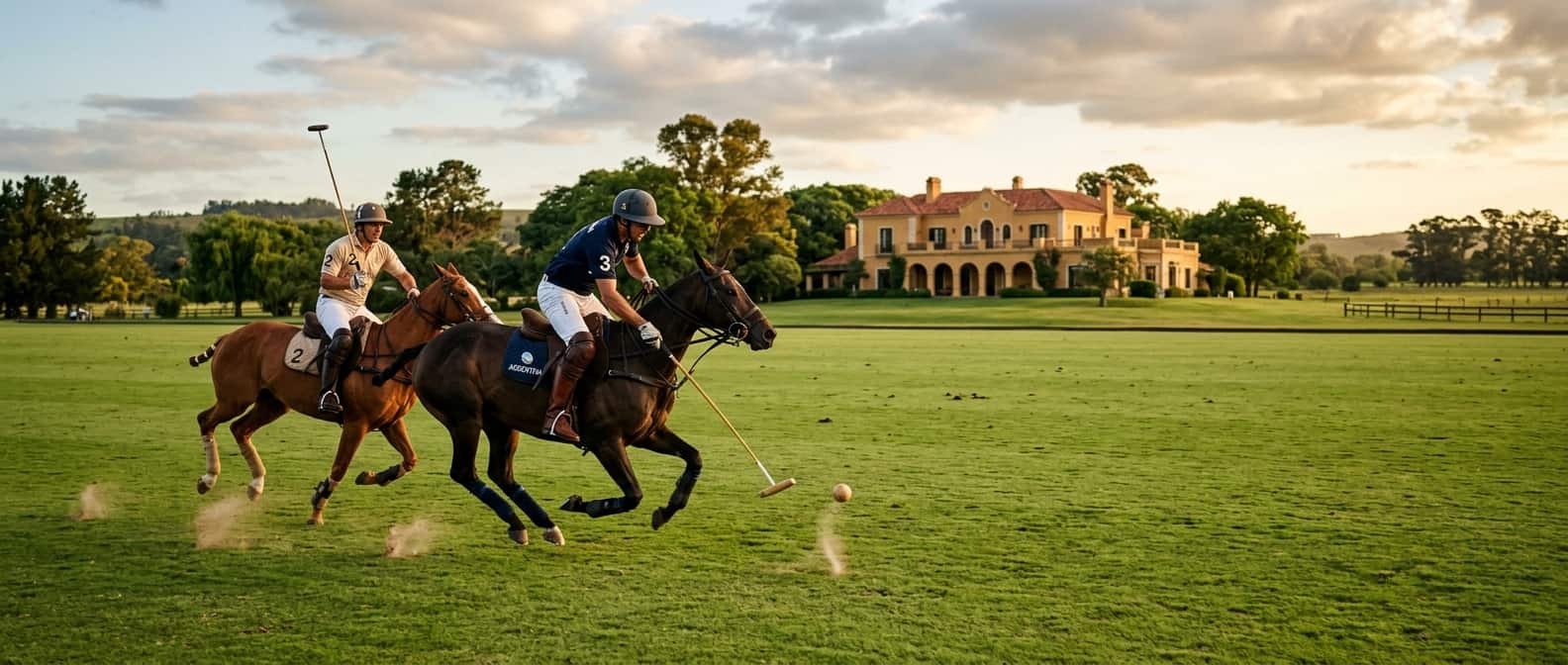
An estancia like La Bamba de Areco or Estancia La Sofía is a world unto itself. The days are structured around the rhythm of the horses. Mornings begin with a ride across the plains, guided by a local gaucho. Afternoons are for polo. You do not simply watch; you are integrated into the fabric of the sport. Private lessons are readily available, starting with the basics of the swing on a wooden horse before graduating to a gentle pony. Even for those with no intention of playing, witnessing a practice match, a chukkа, up close is a visceral experience—the thundering hooves, the crack of the mallet hitting the ball, the intuitive, almost telepathic communication between rider and horse. This is a world of inherited skill, where families have been breeding polo ponies for generations, creating bloodlines as prized as any in horse racing.
Polo, Unpacked: A Primer for the First-Time Spectator
To the uninitiated, a polo match can seem like a chaotic cavalry charge. But understanding a few key elements unlocks its intricate, high-speed chess match. A team consists of four players, each with a handicap from -2 to 10, with 10 being the pinnacle of the sport. The objective is simple—to score by hitting a small hard ball through the opponent's goalposts. The game is divided into periods called chukkas, each lasting seven minutes.
What truly elevates the experience is observing the details. Notice the seamless exchange of horses between chukkas; players may ride a dozen different ponies in a single match. These horses are the true athletes, bred for speed, agility, and a calm temperament. The social ritual is as much a part of the day as the sport itself. Afternoons are punctuated by a leisurely lunch, often an asado (a traditional Argentine barbecue), where different cuts of meat are slow-cooked over an open flame, accompanied by superb local wines. It is in these moments of shared food and conversation with the players and estancia owners that the guarded world of Argentine polo opens up, revealing a community bound by a shared passion.
Interlude: The Art and Taste of the Capital
After a few days immersed in the campo, a return to Buenos Aires feels like a welcome change of pace. Now is the time to explore its sophisticated palate. The city's culinary scene has undergone a renaissance, moving far beyond its steak-centric reputation. Arrange a tasting menu at a closed-door restaurant, a puerta cerrada, for an intimate dining experience in a chef's own home. Explore the vibrant wine bars of Palermo Soho, where expert sommeliers can guide you through the nuanced terroir of Mendoza, Salta, and Patagonia.
This is also the time for bespoke experiences. Commission a pair of handmade leather shoes or a custom-designed jacket from the city’s master artisans. Seek out a private viewing at an art gallery in the Villa Crespo neighborhood, or take a guided architectural tour focusing on the city’s hidden Art Deco gems. This interlude acts as a cultural bridge, a moment of urban refinement before the journey to the raw, elemental beauty of the south.
The Second Act: A Journey to the End of the World in Patagonia
The flight from Buenos Aires to El Calafate or Ushuaia is a journey to another planet. The lush, green pampas are replaced by a stark, dramatic landscape of jagged, snow-capped peaks, turquoise lakes, and immense glaciers. This is Patagonia, a land of vast distances and profound silence. The luxury here is not one of opulence, but of space, solitude, and proximity to some of the planet’s most awe-inspiring natural wonders.
From a base in El Calafate, the primary excursion is to the Perito Moreno Glacier, a living, breathing river of ice that is constantly calving massive chunks into Lago Argentino. While most visitors view it from a crowded boardwalk, the discerning traveller can arrange for a private guide to trek across the glacier itself, a surreal experience of navigating blue crevasses and seracs with crampons. Further afield lies El Chaltén, the trekking capital of Argentina, home to the iconic Fitz Roy massif. Here, luxury is a day of challenging hiking followed by a return to a warm, secluded lodge with a fireplace and a view of the mountains you just conquered.
Where to Stay: The Best of Both Worlds
In the pampas, the choice is classic. Estancia La Bamba de Areco offers a historic, intimate setting with a strong focus on polo, owned by the Fenestraz family. For a more modern and exclusive feel, La Sofía provides a private polo club experience, where you feel more like a house guest than a tourist.
In Buenos Aires, the Alvear Palace Hotel in Recoleta remains the grand dame of classic luxury. For a more contemporary, boutique experience, hotels like the Faena Hotel in Puerto Madero or BE Jardín Escondido by Coppola in Palermo offer design-led alternatives with a strong sense of place.
In Patagonia, the lodges are destinations in themselves, designed to frame the epic landscape. EOLO - Patagonia's Spirit, a Relais & Châteaux property near El Calafate, offers unparalleled views and a sense of splendid isolation. Further south, in the Ushuaia region, Arakur Ushuaia Resort & Spa is perched on a natural balcony, offering a luxurious basecamp for exploring the Tierra del Fuego National Park.
A Note on Timing and Transit
The ideal time for this two-part journey is during the Argentine spring, from October to December. This window aligns with the peak polo season in Buenos Aires when the weather is pleasant, and also offers the best conditions for exploring Patagonia as the summer approaches, with long daylight hours and blooming wildflowers.
The journey requires thoughtful planning. Domestic flights connect Buenos Aires with Patagonian hubs like El Calafate (FTE) and Ushuaia (USH). Given the distances, it is wise not to rush. A well-paced itinerary would dedicate at least four nights to the estancia experience, three to four nights in Buenos Aires, and a minimum of five nights in Patagonia. It is an investment in time, but the reward is a journey of profound contrasts, a rare opportunity to experience two of the world's most captivating destinations in a single, seamless narrative.