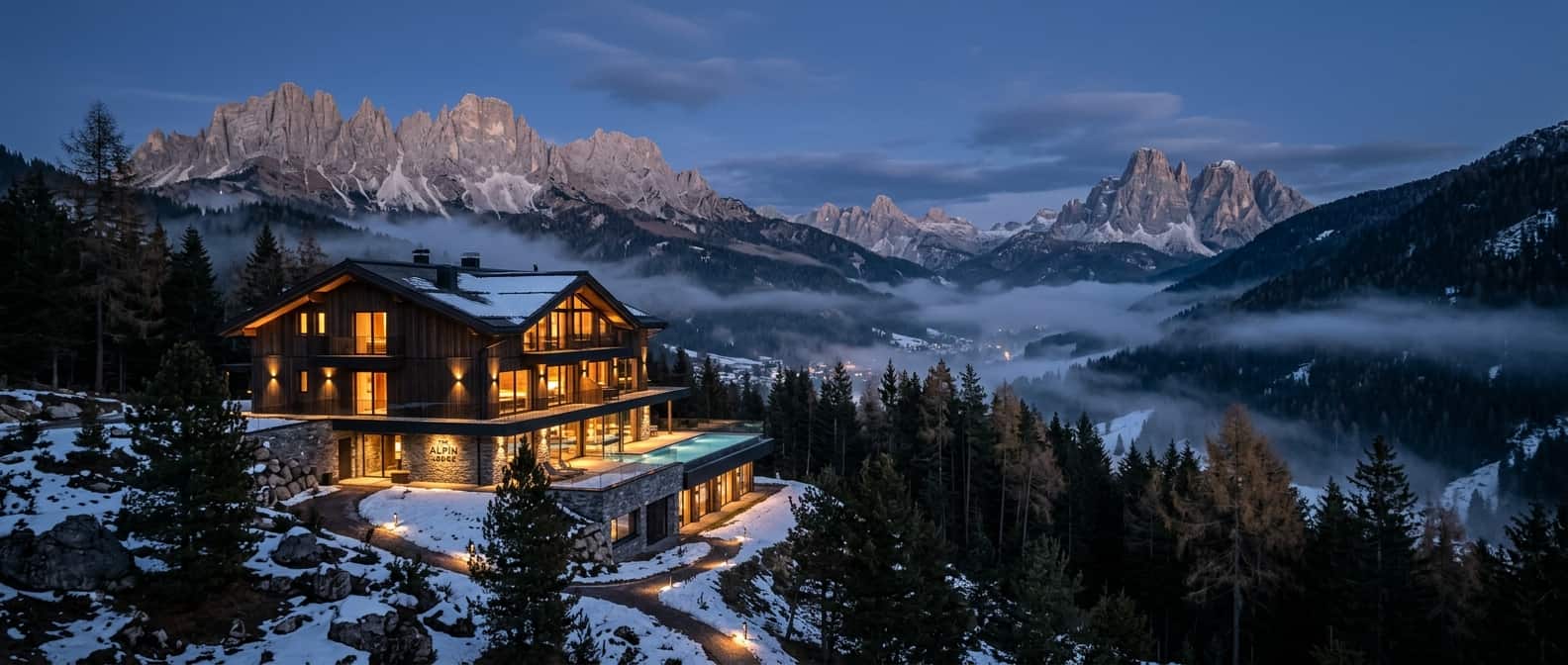
The pale limestone peaks of the Dolomites do not simply rise; they splinter the sky in a jagged, cinematic display that shifts from ash-grey to bruised purple as the sun dips below the horizon. The air here carries a sharp, mineral clarity, scented with ancient pine and cold earth. For years, the default Italian summer meant the saturated coastlines of the Amalfi or the sun-baked masserie of Puglia. But as temperatures rise and the Mediterranean crowds swell, the quietest, most coveted luxury is now found at altitude.
The Italian Alps offer an entirely different rhythm. This is a landscape where time slows, where the rush of the coastline is replaced by the silent geometry of the mountains. It is a destination that demands a deliberate pace, rewarding those who seek vast spaces, clean air, and an architectural approach to hospitality that frames the natural world rather than competing with it.
The Altitude Shift
The concept of the European summer is evolving. Affluent Indian travelers, weary of the relentless heat of the plains and the bustling, often chaotic energy of the traditional Mediterranean hotspots, are looking upwards. The "coolcation" is no longer a fleeting trend; it is a structural shift in how luxury travel is mapped. The Dolomites, an autonomous pocket of northern Italy where Austrian efficiency meets Italian warmth, provide the perfect canvas for this shift.
Here, the focus moves from beach clubs to alpine meadows, from crowded piazzas to secluded forest trails. The transition is not merely physical, but atmospheric. The sheer scale of the mountains—UNESCO-protected and impossibly dramatic—instills a sense of profound quiet. It is an environment that naturally filters out noise, allowing for a deeper, more intentional form of rest.
Architecture Woven into Stone
The hospitality landscape in the Dolomites has undergone a quiet revolution, moving away from heavy, traditional chalet aesthetics toward a striking, site-specific modernism. The most compelling retreats in the region are studies in integration. They utilize local larch wood, dark slate, and vast expanses of untreated glass to create structures that feel born of the mountains rather than imposed upon them.
These design-forward lodges operate on the principle of the view as the ultimate amenity. Suites are engineered to blur the boundary between indoors and the elements. You might find yourself reading by a suspended fireplace while a snowstorm or a sudden summer squall sweeps across the valley just inches away. The luxury here is the warmth of the interior set against the raw, untamed power of the alpine environment.
The Alpine Wellness Movement
Wellness in the Dolomites is an elemental pursuit. It relies less on clinical intervention and more on the therapeutic properties of the landscape itself. The tradition of the alpine spa has been elevated to an art form. Infinity pools heated to a perfect thermal temperature extend out into the crisp mountain air, their edges seemingly dropping off into the valleys below.
The philosophy is rooted in contrast: the heat of a bio-sauna followed by the shock of a cold plunge, the exertion of a morning hike followed by the stillness of a pine-scented meditation room. Therapies often incorporate locally sourced ingredients—arnica, mountain hay, and glacial water—grounding the experience in the immediate terroir. It is a holistic approach that leaves one feeling deeply anchored and intensely alive.
Gastronomy Above the Clouds
The culinary identity of the Dolomites is a fascinating intersection of Tyrolean heartiness and Italian precision. This is a region that holds an astonishing density of Michelin stars, yet the dining experiences remain intimately connected to the land. Foraging is not a culinary trend here; it is a historic necessity that has been refined into high gastronomy.
Chefs source mountain herbs, wild berries, and game from the surrounding forests, translating the rugged landscape onto the plate. Dining at three thousand meters might involve a tasting menu centered around local river trout, fermented mountain roots, and cheeses aged in high-altitude caves. Paired with crisp, mineral-driven Alto Adige wines, the meals are complex, hyper-local, and deeply satisfying—a far cry from the predictable luxury dining found in the continent's urban capitals.
Pacing the Peaks
The true luxury of the Dolomites is the freedom to dictate your own momentum. There is no pressure to tick off landmarks or navigate crowded cultural sites. Days can be spent entirely within the sanctuary of a lodge, watching the light change across the rock faces. For the more active, private guides can facilitate everything from gentle walks through high-altitude meadows to technical climbs via via ferrata routes, completely tailored to individual skill and inclination.
As the afternoon shadows lengthen and the peaks take on their famous enrosadira—the rosy alpenglow—the mountains settle into absolute silence. There is a specific kind of peace found only at this altitude, a quiet detachment from the world below. It is a reminder that sometimes, the ultimate luxury is simply the space to breathe.