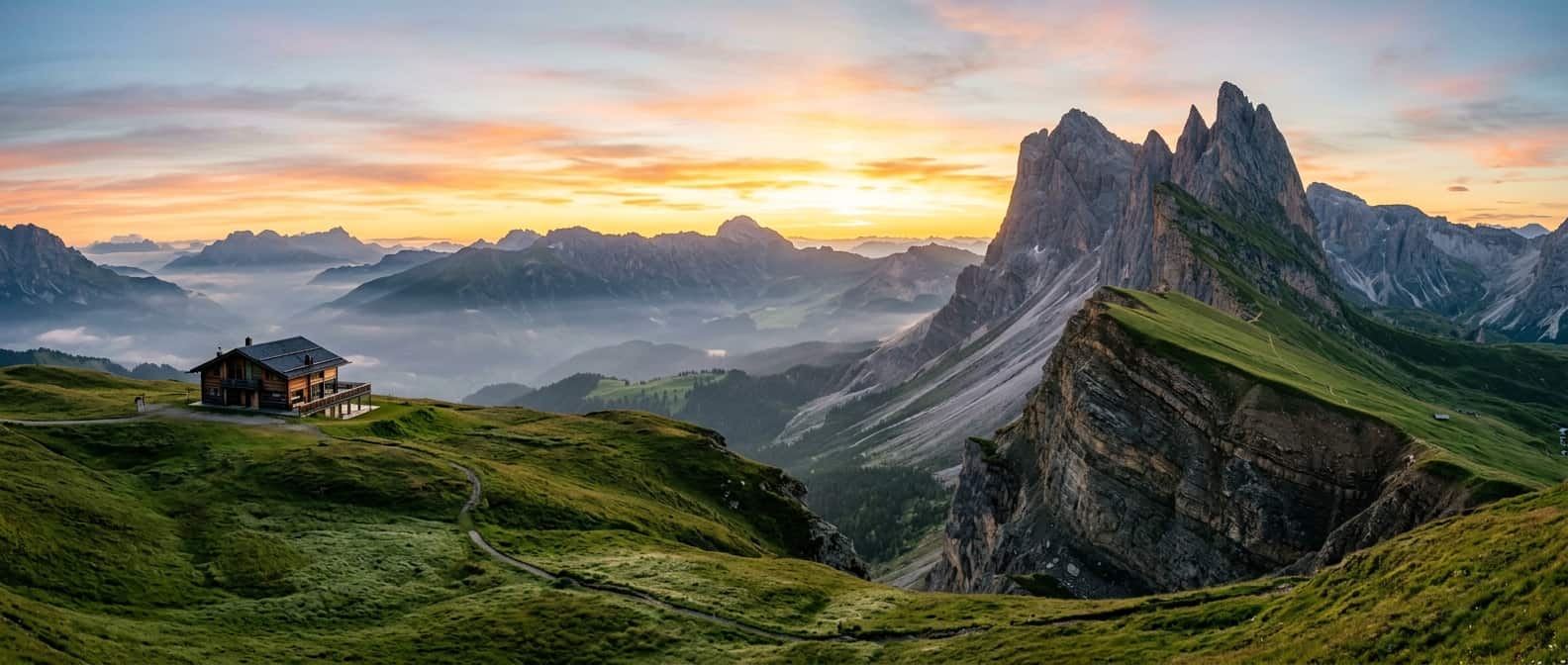
The morning air at 2,000 meters does not just cool the skin; it clarifies the mind. As the first light of a June sun strikes the Pale Mountains—so named for the carbonate rock that glows a haunting, ethereal pink at dawn—the frantic heat of the Indian plains feels not just miles away, but like a memory from another life. This is the Enrosadira, the Alpenglow, and in the Italian Dolomites, it is the daily opening act for a theatre of luxury that has quietly usurped the Mediterranean coast as the discerning traveler’s summer sanctuary.
The Shift from Coast to Crest
For decades, the ritual of the Indian HNI summer was codified: May meant London, June meant the Amalfi Coast or the beach clubs of Saint-Tropez. But as temperatures soar and the "overtourism" of the southern coasts becomes a logistical hurdle rather than a luxury, a new migration pattern has emerged. The northward gaze now settles on South Tyrol and the Trentino-Alto Adige region. Here, the "Alpine Riviera" offers a sophisticated juxtaposition: the efficiency and cleanliness of the Germanic world paired with the soul, the pasta, and the sprezzatura of Italy.
The draw is not just the temperature—a crisp 22°C while Delhi swelters at 44°C—but a specific kind of "Quiet Luxury." It is the luxury of space, of silence, and of a landscape so dramatic it renders the smartphone screen obsolete. In the Dolomites, status is not signaled by a branded beach bag, but by the location of your balcony overlooking the Val Gardena.
Alpine Architecture: Where Modernism Meets the Mountains
The hospitality landscape in the Dolomites has undergone a radical transformation. Gone are the days when "luxury" meant only heavy floral carpets and dark wood carvings. The new guard of Dolomiti hotels—led by properties like Forestis and Adler Lodge Ritten—embraces a "soft minimalism" that draws the outdoors in.
At Forestis, located on the Plose mountain above Brixen, the architecture is a masterclass in restraint. Stone, glass, and sun-bleached spruce dominate the three towers that rise like modern monoliths from the pine forest. The experience is monastic yet indulgent; the water is sourced from the Plose spring, the air is scented with cedar, and the views through floor-to-ceiling windows make you feel as though you are floating above the valley.
For those seeking a more traditional but no less refined intimacy, Rosa Alpina in San Cassiano—now under the Aman umbrella—continues to set the gold standard. It remains the spiritual home of Ladin hospitality, where the Pizzinini family has spent generations perfecting the art of the mountain retreat.
A Gastronomic Ascent: Michelin Dining in the Clouds
It is a common misconception that mountain food is limited to heavy polenta and speck. In reality, South Tyrol is one of the most Michelin-dense regions in Italy. The culinary scene here is a dialogue between the rugged terrain and avant-garde technique.
The pinnacle of this is St. Hubertus at Rosa Alpina, where Chef Norbert Niederkofler pioneered the "Cook the Mountain" philosophy. By using only ingredients sourced from the surrounding peaks and valleys—no citrus, no olive oil, no imported seafood—Niederkofler has created a three-Michelin-starred language of sustainability that resonates deeply with the modern, conscious traveler. Even for the vegetarian Indian palate, the innovation found in mountain herbs, fermented roots, and alpine dairy is a revelation.
Down in the valleys, the rifugi (mountain huts) have also leveled up. These are no longer mere pitstops for hikers; places like Rifugio Comici or Emilio Comici offer fresh seafood flown in daily from the Adriatic, served on a sun-drenched terrace with a backdrop of the Langkofel massifs.
The Wellness Frontier: Forest Bathing and High-Altitude Spas
Wellness in the Dolomites is not merely an indoor activity; it is an ecological immersion. The region’s spas are world-renowned for their use of local elements—hay baths (a centuries-old tradition), pine needle infusions, and mineral-rich mountain water.
At Alpin Panorama Hotel Hubertus, the "Skypool"—a 25-meter cantilevered infinity pool with a glass bottom—offers the sensation of swimming through the peaks. But the true luxury lies in the "Forest Bathing" programs offered at many lodges, guided walks that use the phytoncides of the larch and fir trees to lower cortisol levels and reset the nervous system. For the urban-dwelling Indian traveler, this deep, oxygenated silence is the ultimate commodity.
The Summer Itinerary: Cortina to Val Gardena
A perfect summer week in the Dolomites balances movement with stillness. Start in the chic town of Cortina d’Ampezzo, the "Queen of the Dolomites," which is currently prepping for the 2026 Winter Olympics. Shop the Corso Italia for mountain-luxe fashion before taking the Freccia nel Cielo cable car to the top of Tofana di Mezzo.
Mid-week, transfer to the Val Gardena, home to the iconic villages of Ortisei and Selva. This is the heart of Ladin culture, where the language is ancient and the woodcarving traditions are world-famous. Spend your days on the Alpe di Siusi, Europe’s largest high-altitude alpine meadow. In June and July, the meadow is a riot of wildflowers, easily navigable via e-bike or private guided hikes.
Finish your journey in the Alta Badia, perhaps at the Hotel La Perla in Corvara. Here, the wine cellar—the "Mahatma Wine Cellar"—holds over 30,000 bottles, providing a subterranean temple to the grape that rivals any estate in Tuscany.
Practicalities: Reaching the Peaks from India
The Dolomites are more accessible than their remote appearance suggests. For the most seamless experience, fly into Venice Marco Polo (VCE) or Milan Malpensa (MXP). From Venice, a private transfer can have you in Cortina in under two hours. Alternatively, flying into Munich and driving south through the Brenner Pass offers one of the most scenic road trips in Europe.
For the Indian traveler, the Dolomites represent the new frontier of Italian travel—a place where the grandeur of nature meets the height of human hospitality. It is a destination that doesn't just ask you to look at it, but to breathe it in.
Sources
- South Tyrol Official Tourism Board — Data on Michelin-starred restaurants and seasonal climate averages.
- Aman / Rosa Alpina — Insights into the "Cook the Mountain" philosophy and Ladin hospitality.
- Forestis Dolomites — Details on high-altitude wellness and sustainable Alpine architecture.
- Condé Nast Traveller — Context on the shift in European summer travel trends toward mountain retreats.