The air in the Messenian countryside smells of silver-green olive leaves, wild oregano, and the lingering warmth of ancient stones. It’s a scent that settles in the lungs, a quiet assertion of place that feels a world away from the thrum of the Cycladic islands. Here, on the Peloponnesian peninsula, the myths of Heracles and the dramas of Sparta are not just stories in a book; they are written into the landscape itself, a constant, low hum beneath the surface of modern life. This is a different Greece, one that asks for a slower pace and rewards it with a deeper sense of connection.
An Arrival in Kalamata
Most journeys to the Peloponnese begin in Kalamata, a city known for its namesake olives, nestled in the crook of the Messenian Gulf. It’s a gateway, not a destination in itself, but it sets the tone. Instead of the whitewashed villages of popular imagination, you find a working port city with a quiet confidence. The drive out of Kalamata quickly unfolds into rolling hills, vast agricultural plains where citrus and olive groves are stitched together in a patchwork of green and gold. The roads climb, and with each turn, the presence of the Taygetos Mountains grows, their limestone peaks a formidable spine running down the peninsula. It is here you begin to understand the scale of the place, its history measured not in centuries, but in millennia.
The Deep Soul of the Mani Peninsula
Driving south from Kalamata, the landscape becomes more severe, more dramatic. This is the Mani Peninsula, a finger of land pointing defiantly into the Mediterranean. The soil is thinner here, the olive trees more gnarled, and the coastline is a crenulation of rocky coves and deep blue water. The villages, like Kardamyli and Aeropoli, are clusters of stone tower houses, built more for defence than for comfort, a testament to the region’s fierce, independent spirit.
Luxury in the Mani is not about opulence. It is about solitude and authenticity. It is staying in a restored stone tower, its thick walls a cool respite from the midday sun, its windows framing perfect vignettes of the sea. It is a private boat trip to the Diros Caves, a subterranean river system where the silence is broken only by the dip of an oar. It is lunch at a seaside taverna in the tiny port of Limeni, where octopus is hung to dry in the sun and the catch of the day is grilled with nothing more than local olive oil, lemon, and salt. The Mani doesn’t shout; it whispers, and you must be still to hear it.
Wine and Whispers in the Nemean Hills
To the northeast lies Nemea, a region whose name is synonymous with wine. According to myth, this is where Heracles slew the Nemean lion, and the area still feels steeped in a kind of heroic classicism. The hills are softer here than in the Mani, carpeted with the lush green of Agiorgitiko grapevines. This is one of Greece’s most important wine appellations, and a new generation of vintners is creating world-class wines that speak of this specific terroir.
A visit to a winery here is an immersive experience. At estates like Ktima Palivou or Semeli Estate, you can walk through the vineyards, the soil crunching underfoot, and learn about the unique microclimate that gives the Agiorgitiko grape its character—notes of red fruit, soft tannins, and a hint of spice. A tasting is a lesson in geography and history, each glass a reflection of the sun, the soil, and the centuries of tradition that have gone into its making. It’s a slow, deliberate pleasure, a conversation with the land itself.
Restoration at the Bay of Navarino
On the western coast, in the region of Messenia, a different kind of vision is taking shape. Here, at Costa Navarino, luxury is being redefined on a grander scale, but with a deep and abiding respect for the environment. This is not just a resort; it is a master-planned destination built on principles of sustainability and cultural preservation. The architecture draws on local vernacular, using stone and wood to blend into the landscape. The grounds are a celebration of native flora, with over 6,000 olive trees transplanted and saved during construction.
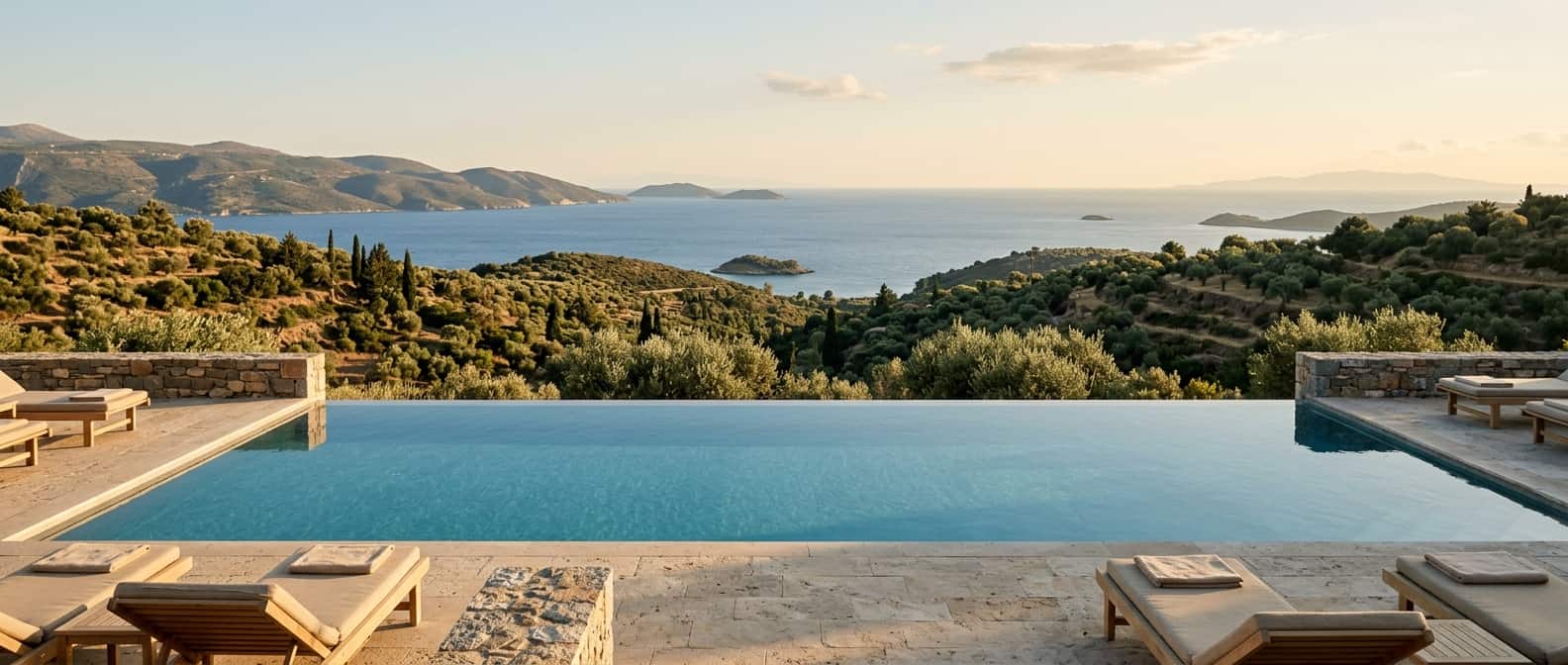
The experience here is one of curated comfort and choice. Two of the world's best golf courses trace the lines of the coast. The Anazoe Spa draws on the wisdom of Hippocrates, using local herbs and olive oil in its treatments. You can take a philosophy walk under the olive trees, learn to cook traditional Messenian dishes, or simply relax by a pool that seems to merge with the Ionian Sea. It is a place that proves luxury and sustainability are not mutually exclusive; they can, in fact, be mutually reinforcing.
The Ancient Future of Epidaurus
No journey through the Peloponnese is complete without a visit to the ancient sites that dot the peninsula. Olympia, the birthplace of the Olympic Games; Mycenae, the citadel of Agamemnon; and, perhaps most movingly, the Sanctuary of Asklepios at Epidaurus. The theatre at Epidaurus, built in the 4th century BCE, is a marvel of engineering and acoustics. To sit in the top tier of stone seats and hear a coin dropped at the center of the stage is to feel a direct, unbroken connection to the past.
But Epidaurus was more than a theatre; it was a center for healing, the ancient world’s most celebrated sanatorium. People came from all over Greece to be healed, not just of their physical ailments, but of their spiritual ones. The beauty of the landscape, the purity of the air, the catharsis of the theatre—it was all part of the cure. In our own frantic, disconnected age, the wisdom of the ancients feels more relevant than ever. The idea of travel not just as an escape, but as a form of restoration, is an idea that finds its roots here, in the quiet hills of the Argolid.
A Taste of Place: Peloponnesian Cuisine
The food of the Peloponnese is the food of the land. It is simple, seasonal, and profoundly flavourful. It is built on the trilogy of wheat, wine, and, of course, olive oil. The Kalamata olive is the undisputed king, but the region produces hundreds of varietals, each with its own distinct character. The local cheeses—feta, graviera, sfela—are sharp and salty, a perfect complement to the sun-ripened tomatoes and cucumbers of a village salad. You will find wild greens (horta), braised lamb with artichokes (arni me aginares), and rooster stewed in wine (kokoras krasatos). It is a cuisine without pretence, one that finds its luxury in the quality of its ingredients.
The Quiet Departure
Leaving the Peloponnese, you carry its sensory memories with you: the scent of wild oregano on a hillside, the taste of salt on your skin after a swim, the sound of cicadas in the late afternoon heat. It is a place that reminds you that the greatest luxury is not about what you can buy, but what you can experience. It is the luxury of space, of silence, of time. Beyond the crowded islands of the Aegean, a different Greece is waiting, one that offers not just a holiday, but a homecoming to a quieter, more essential way of being.