The light in the Caucasus has a quality of stillness. It falls across 5,000-metre peaks and settles in valleys where grapevines have grown for 8,000 years, illuminating a landscape that feels both ancient and on the cusp of discovery. For the discerning Indian traveller, accustomed to the grand tours of Western Europe, Georgia offers a different kind of luxury—one rooted in authenticity, profound hospitality, and a quiet, confident sense of place. It’s a country that doesn’t shout; it murmurs, inviting you into its monasteries, its vineyards, and its homes.
Tbilisi: Where History Meets the Avant-Garde
Most journeys begin in Tbilisi, a city built on thermal springs and centuries of layered history. The old town, with its carved wooden balconies and winding cobblestone streets, tells tales of the Silk Road. But look closer, and a new narrative emerges. Brutalist Soviet-era buildings are being reimagined as cultural hubs, and former factories now house some of the most talked-about hotels and restaurants in Europe.
Stay at the Stamba Hotel, a staggering conversion of a 20th-century publishing house. Here, five-storey atriums are filled with jungle-like foliage, and guest rooms feature exposed brick, custom-made furniture, and freestanding brass bathtubs. It’s a masterclass in industrial-chic design that still feels deeply Georgian. Spend your days exploring the Dry Bridge Market for Soviet memorabilia and local art, and your evenings at Keto and Kote, a restaurant tucked away in a traditional house, offering modern interpretations of classic Georgian dishes with views over the city.
Kakheti: The Cradle of Wine
To understand Georgia is to understand its wine. This is not the familiar world of Cabernet and Chardonnay; it is a universe of Saperavi, Rkatsiteli, and Mtsvane, grapes vinified in enormous subterranean clay amphorae called qvevri—a method so integral to the culture it is recognised on UNESCO’s Intangible Cultural Heritage list. The Kakheti region, a two-hour drive from Tbilisi, is the heart of this tradition.
Base yourself at the Radisson Collection Tsinandali Estate, a historic property once home to a 19th-century prince and poet. The estate blends its aristocratic past with sleek, modern design, housing an exceptional enoteca and a museum. From here, arrange private tastings at small, family-run cellars. At Pheasant's Tears, an American artist and his Georgian family champion the qvevri method, pairing their organic wines with farm-to-table cuisine. It’s an experience that connects you not just to the wine, but to the very soil from which it came.
Kazbegi: A Room with a Mountain View
The Georgian Military Highway is one of the world’s great road trips. It winds its way north from Tbilisi towards the Russian border, climbing through the Greater Caucasus mountains to the town of Stepantsminda, more commonly known as Kazbegi. The final destination is less a place than a single, breathtaking panorama.
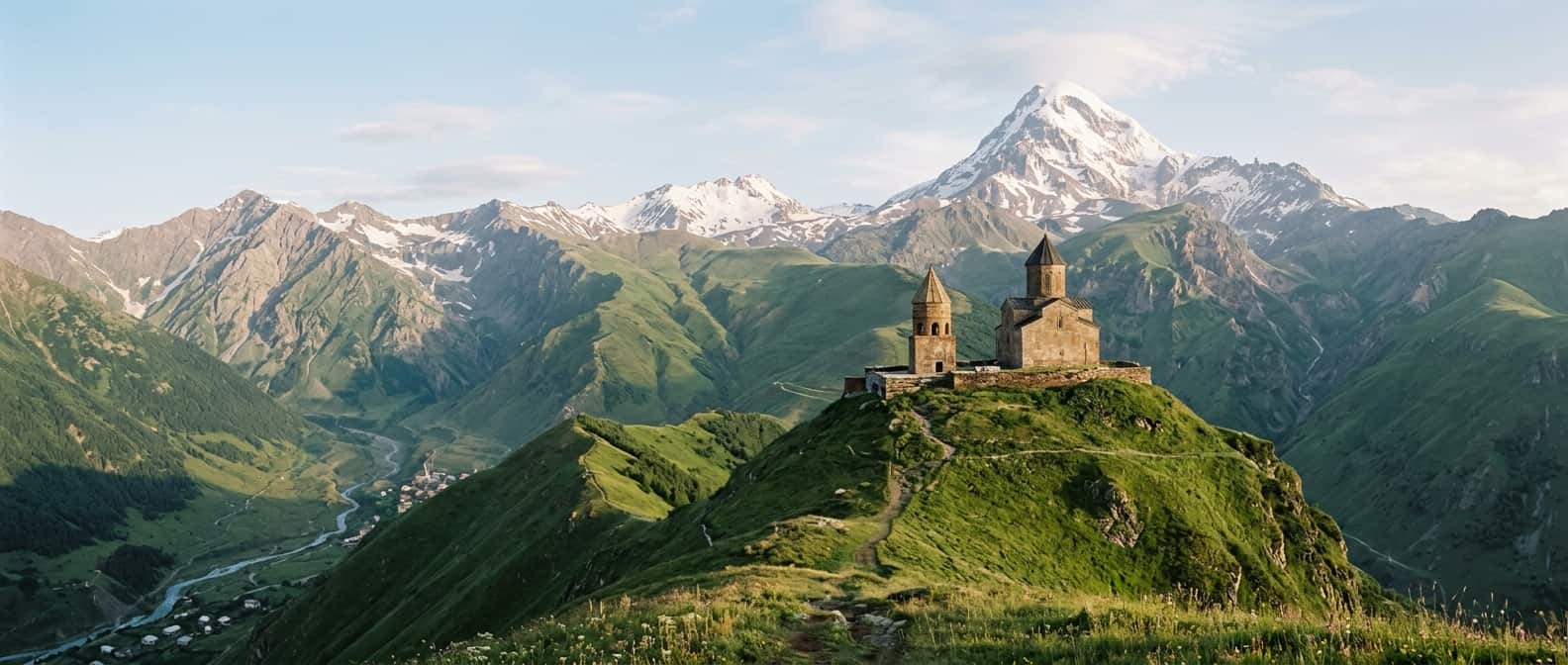
The hotel that redefined Georgian tourism is Rooms Hotel Kazbegi. A former Soviet sanatorium, it has been transformed into a design-led mountain lodge with a sprawling terrace that looks directly at the iconic Gergeti Trinity Church and the snow-draped peak of Mount Kazbek. The interiors are a study in rustic modernism—all raw timber, worn leather, and vintage books. The true luxury here is the view. Waking up, pulling back the curtains, and seeing that 14th-century church against the vastness of the mountains is a moment of profound tranquility. Arrange for a private 4x4 to take you up to the church at dawn, when the air is sharp and the only sound is the wind.
The Georgian Table: A Feast for the Senses
Georgian food is not merely sustenance; it is a celebration. The cuisine is a complex tapestry of flavours, drawing influences from the Mediterranean and the Middle East, yet remaining utterly unique. Dishes are often served family-style, in a generous, rolling procession.
You will encounter khachapuri, a non-negotiable bread boat filled with molten cheese and a single egg yolk. You will discover khinkali, large, twisted dumplings filled with spiced meat and broth, which must be eaten by hand. There are rich, slow-cooked stews fragrant with walnuts and pomegranates, and simple salads of cucumber and tomato elevated by Kakhetian sunflower oil. It’s a cuisine that is at once rustic and deeply sophisticated, best experienced not in formal dining rooms, but at a long table with friends, new and old.
The Art of the Supra: Understanding Georgian Hospitality
The most memorable Georgian experience might be a supra, or traditional feast. More than a meal, it is a cultural institution, a ritualised event led by a tamada, or toastmaster. The tamada guides the table through a series of toasts—to God, to country, to family, to peace—that are poetic, heartfelt, and occasionally philosophical.
To be invited to a supra is to be welcomed into the inner sanctum of Georgian life. It is where the nation’s famed hospitality, its deep-seated belief that a guest is a gift from God, is most palpable. Wine flows, stories are shared, and polyphonic folk songs might erupt spontaneously. This is the luxury that cannot be bought or booked—an authentic human connection that lingers long after the plates have been cleared.
Logistics for the Indian Traveller
Getting to Georgia is increasingly straightforward. Direct flights operate from major Indian hubs, or convenient one-stop connections are available through Gulf carriers. Indian passport holders are eligible for an e-visa, simplifying the entry process. The country is best visited from May to October, when the weather is ideal for exploring both the mountains and the wine regions. A private car with a driver is the most comfortable way to navigate the country, allowing for flexibility and access to more remote locations. While credit cards are widely accepted in Tbilisi, it is wise to carry cash for smaller, family-run establishments in the countryside.
Georgia is a country on the verge, but its greatest charms remain timeless. It offers a journey that is as much about inner discovery as it is about exploring a new place. It is the texture of a 200-year-old wall, the taste of a wine made as it was thousands of years ago, and the quiet power of a mountain that has watched empires rise and fall.