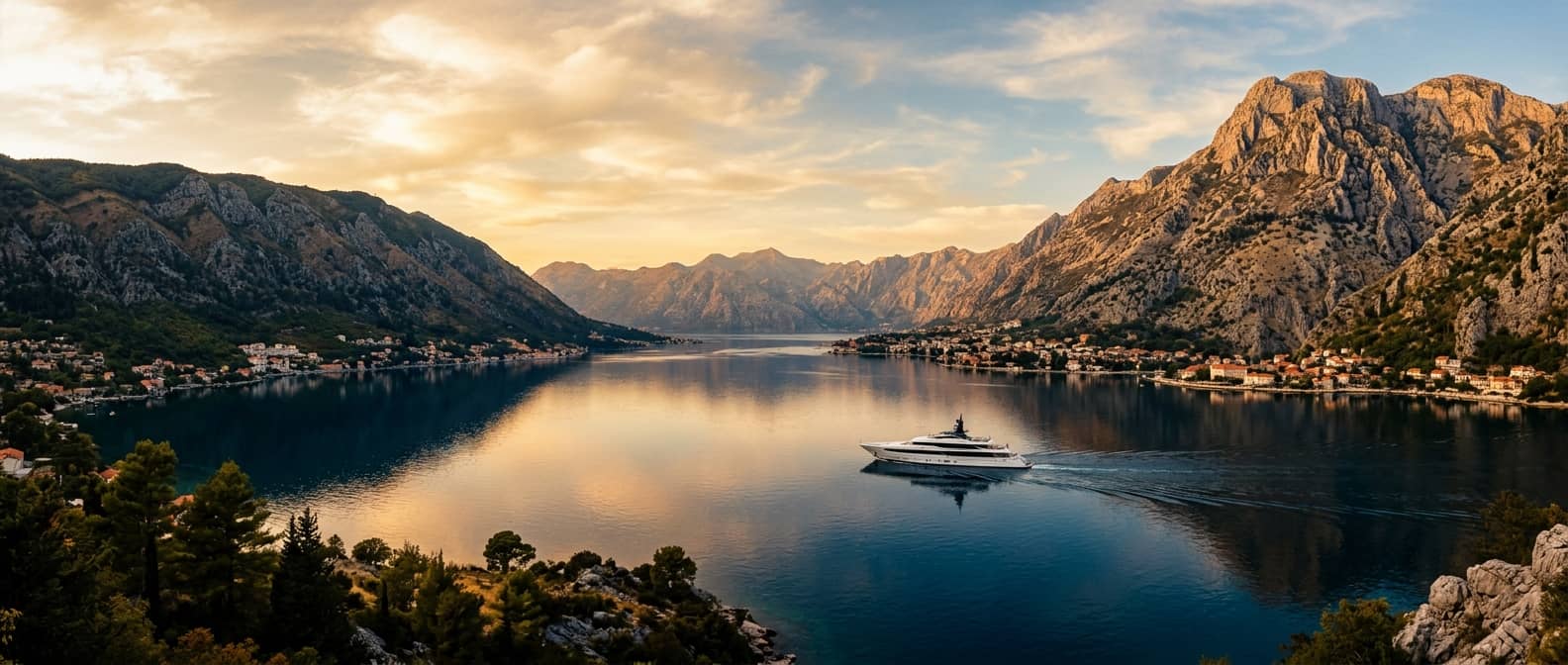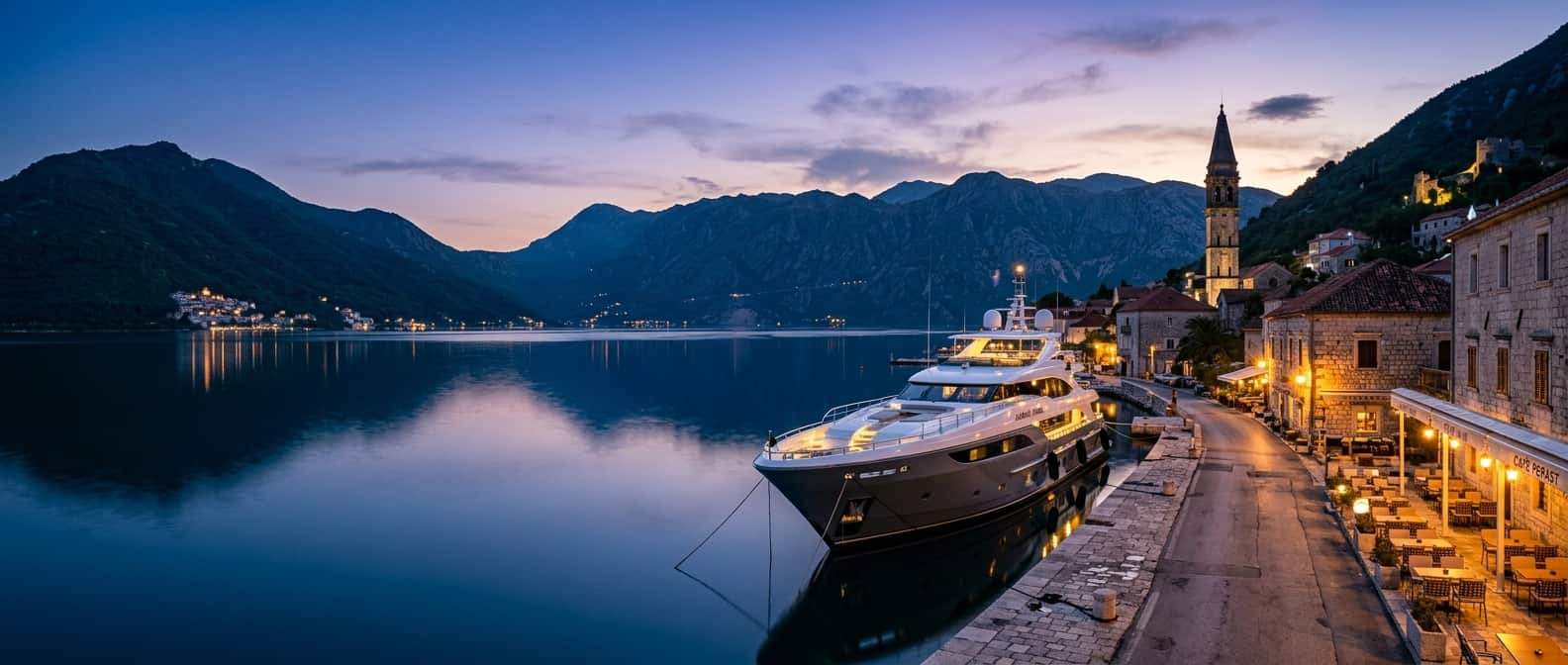
The air in the Bay of Kotor carries a scent that is difficult to place—a blend of ancient limestone dust, wild sage, and the sharp, salt-heavy tang of the Adriatic. To arrive here at dusk, as the sun dips behind the sheer, 6,000-foot peaks of the Lovćen massif, is to witness a landscape that feels less like Europe and more like a high-fantasy fjord that has somehow wandered into the Mediterranean. The water, a glass-still indigo, reflects the flickering lights of medieval stone villages that have clung to these shores since the days of the Venetian Republic.
For the discerning Indian traveler, who has perhaps grown weary of the seasonal congestion of the Amalfi Coast or the predictable glitz of the Côte d'Azur, Montenegro has emerged as the definitive alternative. It is a destination currently undergoing a "millionaire's moment," as European Business Magazine notes, fueled by a favorable investment climate and a rapid influx of ultra-luxury hospitality brands. This is not a place of loud, neon-lit luxury; it is a sovereign of quietude, where the true currency is seclusion and a panoramic view of the world’s most dramatic coastline.
The Boka Bay Arrival: A Fjord in the Mediterranean
The Bay of Kotor, or Boka Bay, is frequently described as Europe’s southernmost fjord. While technically a submerged river canyon, its visual impact is undeniable. As you navigate the winding coastal road from Tivat Airport—or better yet, arrive by private Riva speedboat—the scale of the landscape begins to settle in. The mountains don't just flank the water; they dwarf it, creating a natural amphitheater that has protected these waters for centuries.
Historically, this was the frontier of the Venetian Empire, and that heritage is etched into every sun-bleached stone. The towns of Dobrota, Perast, and Kotor are masterpieces of Baroque and Renaissance architecture, built by sea captains who amassed fortunes on the silk and spice routes. Today, that same spirit of maritime wealth has returned, though the wooden galleons have been replaced by the gleaming white hulls of some of the world’s largest superyachts.
Porto Montenegro: The New Epicentre of Yachting Culture
If Boka Bay is the soul of the country, Porto Montenegro is its beating heart of modern opulence. Located in Tivat, this former naval base has been transformed into a world-class marina and village that rivals Monaco. It is a place where the pavements are made of Italian marble and the boutiques carry names like Dior, Rolex, and Saint Laurent.
Walking through the marina at sunset, one feels the specific gravity of High Net Worth travel. The village is designed with an almost cinematic precision—palm-lined promenades, infinity pools that seem to spill into the bay, and the Regent Porto Montenegro, a hotel that anchors the waterfront with its grand, palazzo-style facade. For the Indian HNI, Porto Montenegro offers a familiar level of service and security, serving as a perfect base for exploring the coast while remaining ensconced in a bubble of contemporary comfort.
The One&Only Portonovi: A Study in Palatial Seclusion
While Tivat offers social energy, the opening of One&Only Portonovi in the Herceg Novi region marked a shift toward true palatial seclusion. As the brand’s first European outpost, Portonovi was designed to evoke the grandeur of a traditional Montenegrin estate, albeit on a gargantuan scale.
The resort is a labyrinth of terracotta roofs, private sandy beaches (a rarity in this part of the world), and the world-renowned Chenot Espace wellness center. For the Indian traveler, the draw here is the privacy. The "Villazzo" villas offer private pools and dedicated hosts, allowing for a completely insulated experience. It is here that the concept of the "Adriatic lifestyle" is most fully realized—long, slow lunches of grilled sea bass and local Vranac wine, followed by a spa circuit that draws on both scientific detox and ancient Mediterranean healing.
Kotor and Perast: Navigating the Architecture of the Venetian Era
Leaving the resorts behind for a day is essential to understanding the country's depth. The Old Town of Kotor, a UNESCO World Heritage site, is a triangular maze of narrow streets and sudden squares. It is best explored in the early morning, before the day-trippers arrive. One should climb the 1,350 steps to St. John’s Fortress for a view that spans the entire inner bay—a sight that justifies every bit of the exertion.
A short boat ride away lies Perast, perhaps the most beautiful town in the Adriatic. It consists of a single street lined with sixteen Baroque palaces. Just offshore sit two islets: St. George and Our Lady of the Rocks. The latter is an artificial island built over centuries by local sailors who laid rocks upon rocks after finding an icon of the Virgin Mary on a sea cliff. It is a testament to the enduring, almost mystical relationship the people of this coast have with the sea.
Aman Sveti Stefan: The Legacy of the Pink-Sand Islet
Further south along the Budva Riviera sits the most iconic image of Montenegro: Aman Sveti Stefan. This 15th-century fortified village, connected to the mainland by a narrow causeway, was once a playground for 1960s icons like Elizabeth Taylor and Sophia Loren. After a meticulous restoration by Aman, it remains the ultimate pinnacle of Adriatic luxury.
The island’s stone cottages have been converted into suites that retain their original rustic charm—thick stone walls, wooden beams, and heavy oak doors—while offering the monastic luxury for which Aman is known. Even if one isn't staying on the island, the Aman Spa on the mainland’s Queen’s Beach is a sanctuary of pink sand and olive groves that represents the quietest corner of the Montenegrin coast.
The High-Altitude Detour: Durmitor’s Wild Beauty
Montenegro’s name literally translates to "Black Mountain," and it is a mistake to spend an entire journey at sea level. A private helicopter or a three-hour drive takes you into the heart of the Durmitor National Park. Here, the landscape shifts from Mediterranean azure to Alpine emerald.
The Tara River Canyon, the deepest in Europe, offers world-class rafting, while the Black Lake provides a mirror-like surface for reflection amidst ancient pine forests. For the Indian family or couple seeking a "multi-texture" holiday, the contrast between the yacht-filled marinas of the coast and the raw, prehistoric wilderness of the north is what makes Montenegro truly unique.
Logistics for the Indian HNI: Visas, Private Charters, and Seasonality
Traveling to Montenegro from India requires a bit of foresight. While Indian citizens typically require a visa, those holding a valid multiple-entry US, UK, or Schengen visa can often enter the country for up to 30 days. It is always advisable to check the latest regulations with a luxury travel partner like Lumiere Holidays.
The best time to visit is from June to September. July and August are the peak of the yachting season, perfect for those who want to be in the center of the action. However, the "shoulder" months of June and September offer the best balance—warm enough for swimming in the Adriatic, but quiet enough to have the medieval streets of Perast almost entirely to yourself. For those flying private, Tivat (TIV) is the primary gateway, positioned just minutes from the major marinas and resorts.
Montenegro is no longer just a stopover on a Croatian cruise; it is a destination that demands its own itinerary. It offers a rare thing in the modern world: a place where the history is palpable, the nature is towering, and the luxury is as deep and still as the bay itself.
Sources
- Montenegro: Europe's Rising Magnet for Wealth and Investment — Context on Montenegro's emergence as a luxury hub and its economic growth.
- Montenegro Travel Guide | Lumiere Holidays — Details on tour packages and logistics specific to Indian travelers.
- Dubrovnik and Montenegro Honeymoon | Scott Dunn — Information on luxury itineraries and the One&Only Portonovi.
- 7-Day Romantic Honeymoon in Montenegro — Highlights of romantic destinations like Aman Sveti Stefan and the Budva Riviera.