The aircraft descends towards Muscat, and the view is one of ochre and bone-white, a landscape baked into stark relief by the Arabian sun. For many, this is the extent of their Omani imagination: a clean, bright, and orderly capital city nestled between barren peaks and a turquoise sea. But to end the journey here is to read only the preface of a deeply compelling story. The true soul of Oman, its quiet and profound character, reveals itself in the journey inland—a journey of ascent into cool mountain air and a journey of immersion into the vast, silent sea of sand. For the discerning Indian traveler, this is where the real discovery begins, a short flight away but a world apart.
The drive from Muscat is a study in cinematic transitions. The low-lying city gives way to the formidable wall of the Hajar Mountains, a range that forms the geological spine of the nation. The road begins to climb, carving through wadis—dry riverbeds that thunder to life during winter rains—and past date palm oases that appear like miracles of deep green in the arid landscape. The destination is Jebel Akhdar, the ‘Green Mountain,’ a name that feels less like a description and more like a promise.
The Green Mountain: Jebel Akhdar's Terraced Gardens and Rose-Scented Air
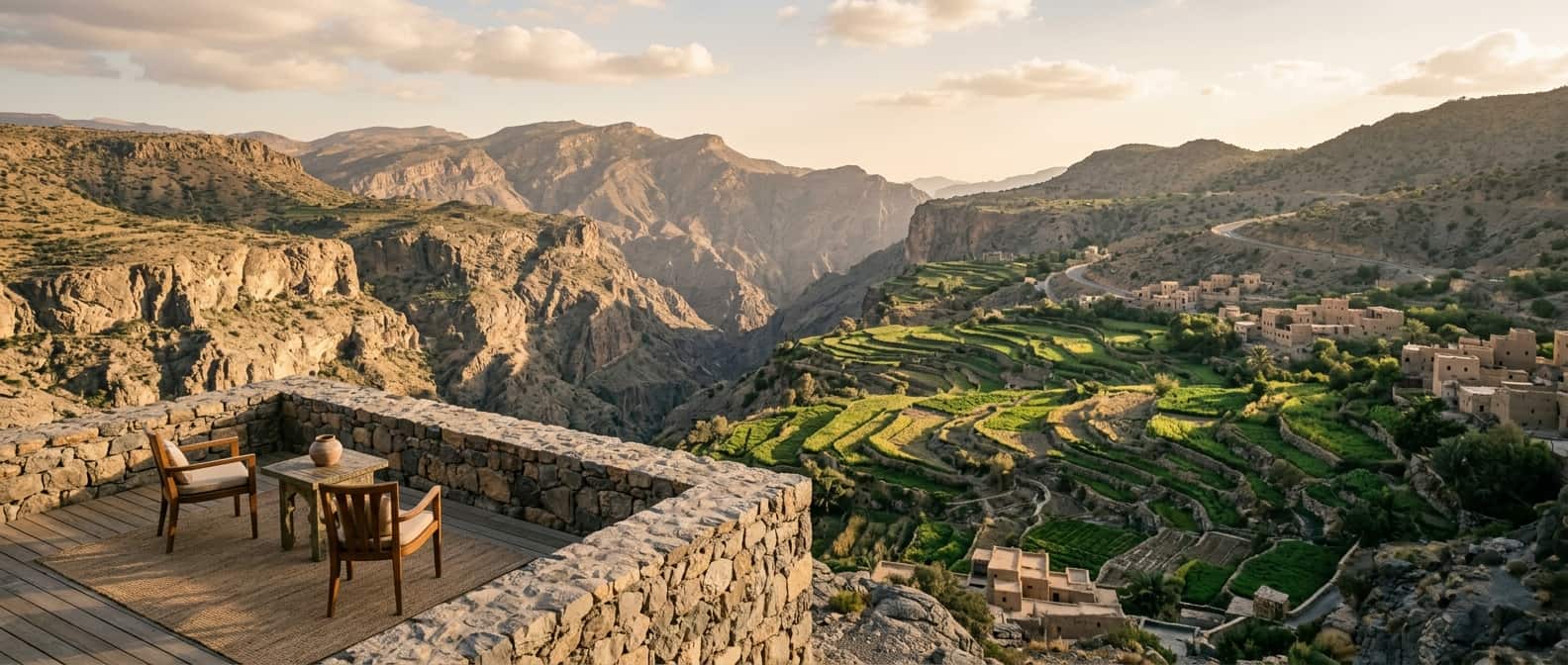
To arrive in Jebel Akhdar is to feel a shift in the very quality of the air. At 2,000 metres above sea level, the punishing heat of the coast is replaced by a refreshing, almost Mediterranean coolness. This is Oman’s agricultural heart, a high-altitude plateau where the unique climate allows for the cultivation of pomegranates, apricots, walnuts, and, most famously, Damask roses. From March to May, the air is thick with their heady perfume as local families harvest the petals to be distilled into the region’s prized rose water.
The landscape is a marvel of human ingenuity and natural beauty. For centuries, Omani villagers have built and maintained a complex system of aflaj (ancient irrigation channels) that carry water from mountain springs to meticulously terraced farms. These green steps, carved into the sides of the canyons, are a testament to a patient, enduring relationship with the land. To walk the paths that wind through these hanging gardens is to step into a quieter, more deliberate rhythm of life. The silence is broken only by the bleating of mountain goats and the gentle murmur of water making its way through stone channels. This is a place for contemplation, for long walks along the rim of the ‘Omani Grand Canyon,’ and for understanding that in this part of the world, luxury is measured in altitude, shade, and the scent of roses on the breeze.
Stay: Where to Find Sanctuary in the Peaks
The hospitality in Jebel Akhdar is defined by its dramatic setting. Properties here are not merely places to stay; they are destinations in themselves, built to honour the scale and serenity of the mountains.
The Alila Jabal Akhdar is a masterclass in this philosophy. Built from local stone and timber, its architecture blends seamlessly into the cliff-edge. The hotel’s suites and villas offer staggering, uninterrupted views into the gorge, best enjoyed from a private terrace or the spectacular infinity pool that seems to hang suspended over the void. The design is minimalist, yet warm, with Omani textiles and motifs providing a subtle sense of place.
Slightly further afield, the Anantara Al Jabal Al Akhdar Resort offers a different kind of grandeur. Perched on the curving rim of the great canyon, it famously occupies the same viewpoint where Princess Diana once stood. The resort offers private villas with their own plunge pools, exceptional dining experiences, and guided activities that range from mountain biking to sunrise yoga on a cantilevered platform. It is a place that manages to feel both expansive and deeply private, a sanctuary of modern luxury in an ancient landscape.
The Golden Sea: The Wahiba Sands and the Art of Bedouin Life
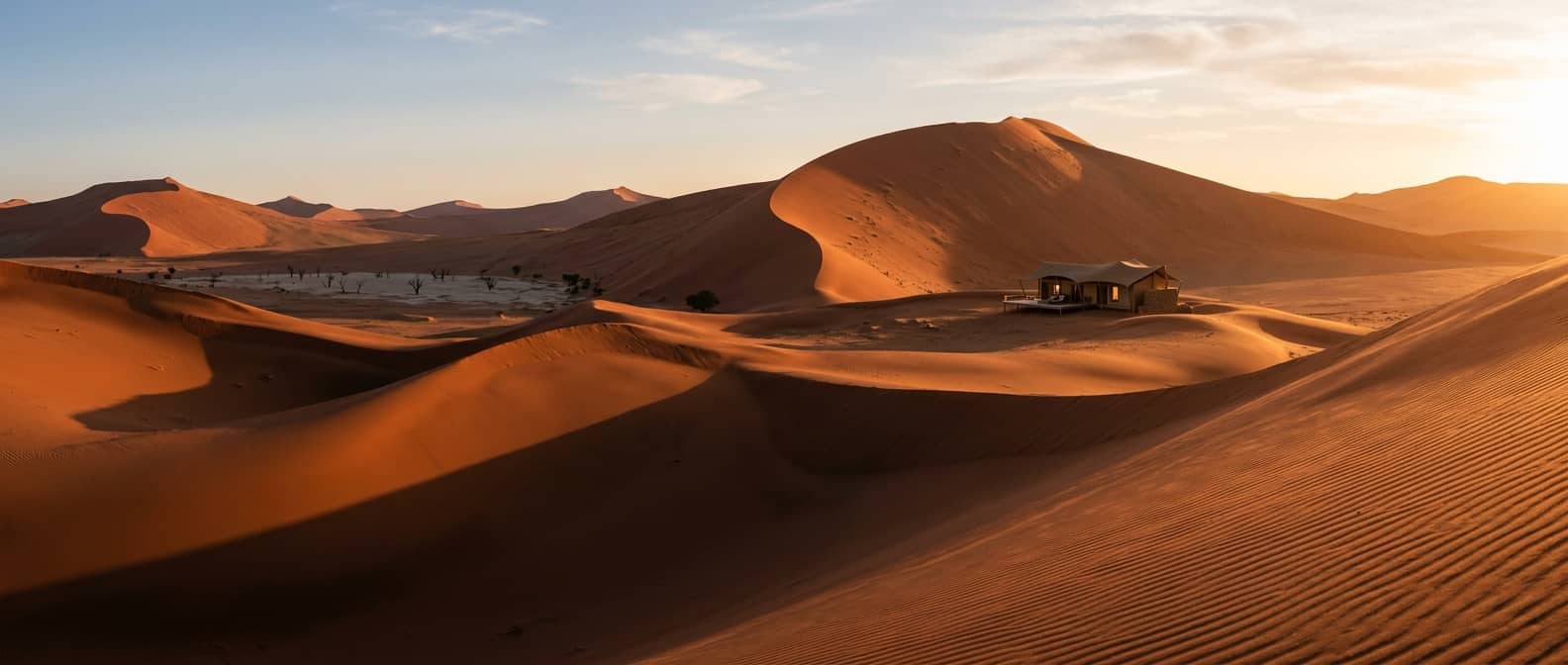
From the cool heights of the mountains, the journey continues south, descending back towards the heat and into the endless expanse of the Wahiba Sands, now officially known as the A'Sharqiyah Sands. This is the archetypal desert of the imagination: a 12,500-square-kilometre sea of longitudinal dunes, some rising up to a hundred metres high. Their colour shifts with the time of day, from pale gold at dawn to a deep, burnished copper at sunset.
To enter the Wahiba Sands is to commit to a different sensory reality. The horizon expands, the sky feels immense, and a profound silence settles in, broken only by the whisper of the wind over the dunes. This is the traditional home of the Bedouin people, whose deep knowledge of the desert—its moods, its hidden resources, its unforgiving nature—is the stuff of legend. A visit here is an opportunity to connect, however briefly, with this resilient and hospitable culture. The experience is often distilled into its most iconic moments: a thrilling ‘dune-bashing’ drive in a 4x4 that feels like surfing on sand, a slow, contemplative camel ride to a high dune for sunset, and an evening spent under a canopy of stars so bright they seem almost within reach.
Stay: Encounters with Silence in the Dunes
The luxury of the desert lies in its ability to offer comfort and perspective in an environment of beautiful austerity. The best desert camps understand this implicitly.
Desert Nights Camp is one of the most established and respected properties in the Wahiba Sands. It offers 39 Bedouin-style tented suites, each with luxurious bedding, private bathrooms, and air conditioning—a welcome respite from the midday heat. The camp is nestled in a valley between towering dunes, creating a sense of intimacy and seclusion. Evenings are spent in the flickering light of campfires and lanterns, enjoying traditional Omani cuisine before retreating to the quiet of your tent.
For those seeking an even more exclusive experience, Canvas Club Private Glamping elevates the concept. With only a handful of tents, it offers a truly private encounter with the desert. The experience is bespoke, with a private chef, a dedicated host, and curated activities designed around your interests. It is the ultimate expression of desert luxury: absolute immersion in the landscape without sacrificing an ounce of comfort.
A Fort and a Souq: The Cultural Heartbeat of Nizwa
No journey through Oman’s interior would be complete without a visit to Nizwa. Once the nation’s capital, it remains its cultural and spiritual heart. The city is dominated by the immense, circular cannon tower of the 17th-century Nizwa Fort. A climb to the top provides a panoramic view of the city and the vast date palm oasis that surrounds it. The fort’s design is a marvel of defensive architecture, full of hidden shafts, false doors, and secret passages designed to repel invaders.
Adjacent to the fort is the Nizwa Souq, one of the oldest and most fascinating in the country. While it has been modernised, it retains its authentic character. Different sections are dedicated to different crafts: silverwork, for which Nizwa is famous; pottery from the nearby town of Bahla; and the sale of spices, dates, and a potent, fragrant frankincense. The most compelling spectacle is the Friday morning goat market, a chaotic, exhilarating auction where local farmers and Bedouin from the surrounding region come to trade livestock in a tradition that has remained unchanged for centuries. It is a vibrant, noisy, and utterly authentic glimpse into the rhythm of local life.
Field Notes: Planning Your Omani Journey from India
- Getting There: Oman is well-connected, with direct flights from major Indian cities like Mumbai, Delhi, and Bangalore to Muscat on Oman Air, IndiGo, and other carriers. The flight time is typically 3 to 4 hours.
- Visa: For Indian passport holders, Oman offers a visa-on-arrival for a stay of up to 14 days, provided you hold a valid visa for the USA, UK, Canada, Australia, Japan, or a Schengen country. It is always best to check the latest regulations with the Royal Oman Police or your travel advisor before departure.
- When to Go: The best time to visit Oman’s interior is from October to April, when the daytime temperatures are pleasant and the nights are cool. The summer months (May to September) can be extremely hot.
- Getting Around: The best way to explore the interior is by hiring a 4x4 vehicle with a driver-guide. The roads are excellent, but a knowledgeable local guide can enrich the experience immeasurably, navigating the desert tracks and providing cultural context. A self-drive journey is possible for the adventurous, but not recommended for a first visit.
- Combining the Journey: A typical luxury itinerary would involve 2-3 nights in Jebel Akhdar and 1-2 nights in the Wahiba Sands, often with a day visit to Nizwa in between. This allows for a comfortable pace without feeling rushed.
The journey from the Green Mountain to the golden sands is more than a trip; it is an immersion into the quiet confidence of a land that is both ancient and modern, dramatic and serene. It is Oman, unplugged and unfiltered.
Sources
- Oman – Arabia's hidden gem for Indian travelers — This article highlights Oman's appeal for Indian travelers, citing its mix of culture, adventure, and luxury.
- Oman Tourism Embarks on India Roadshow — Provided context on Oman actively promoting itself as a premier luxury destination for the Indian market.
- How to enjoy authentic luxury travel in Oman — Gave specific examples of luxury experiences, including desert safaris and cultural sites like Nizwa Fort.
- Oman luxury travel 2025 Journey Guide — This guide for Indian travelers helped shape the "Field Notes" section with practical advice.