The air in the Douro Valley doesn't just hang; it settles. In late October, it carries the scent of damp earth, of fermenting grapes from a harvest just passed, and the faint, mineral trace of the river itself. This isn't the crisp, predictable autumn of a manicured park, but something wilder, older. It’s a season that feels less like an ending and more like a slow, golden exhalation. For years, the discerning Indian traveller has sought this quietude in the rolling hills of Tuscany, but a discerning few are now turning west, to the steep, terraced slopes of northern Portugal.
They come seeking a different kind of quiet luxury, one measured not in brand names but in the authentic cadence of a place. Here, the luxury is in the silence between bird calls, the private view from a centuries-old wine estate, and the knowledge that you are experiencing a region on its own terms, just as the season turns. The Douro in autumn is not a performance. It is simply itself.
The Golden River
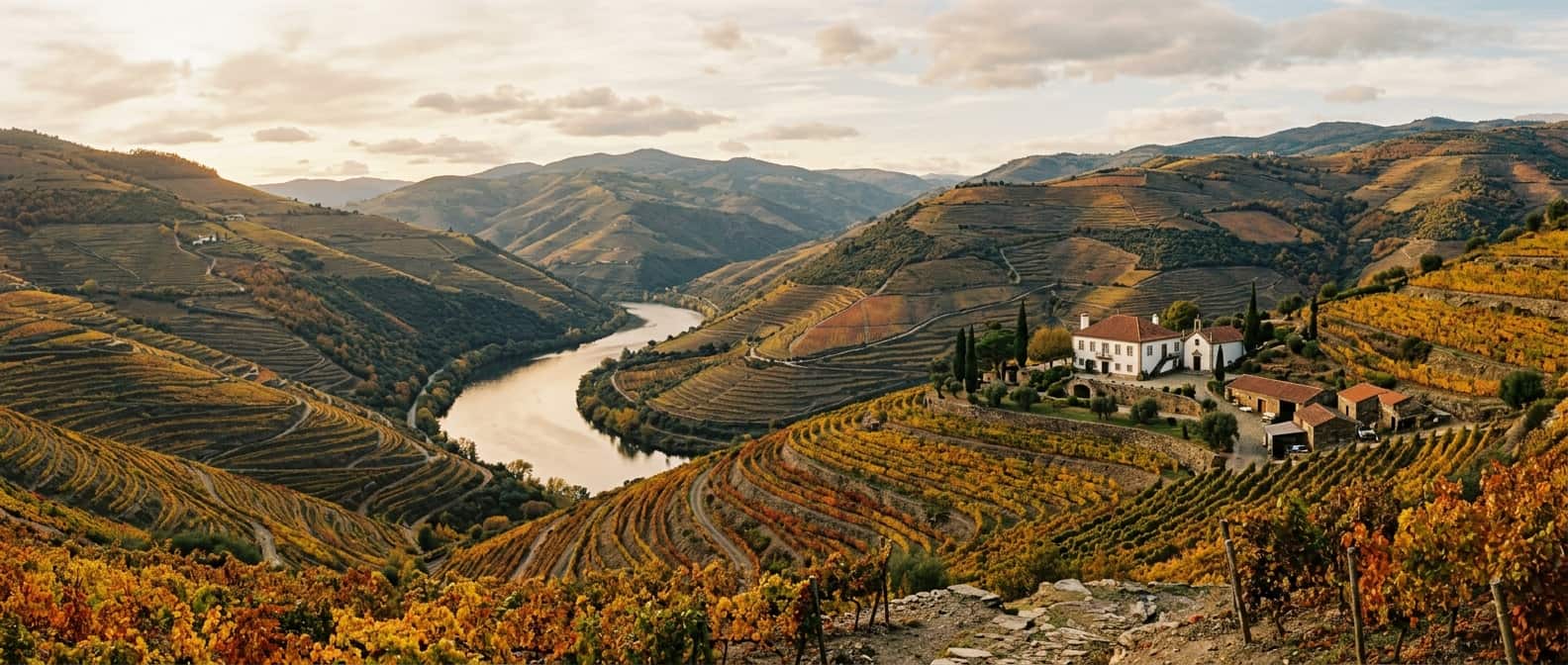
To understand the Douro is to understand the river. For centuries, it was the region’s artery, the liquid road on which flat-bottomed rabelo boats transported barrels of Port wine from the inland vineyards to the lodges of Porto. Today, the journey is easier, but the river remains the anchor of the landscape. Driving east from Porto, the industrial coastline gives way to verdant hills that soon rise into dramatic, sculpted terraces.
In autumn, these terraces are a spectacle. The tightly packed vines, having given up their fruit, turn to fire. Hues of ochre, crimson, and burnt sienna cascade down to the water’s edge, a man-made topography that feels both monumental and deeply organic. The light here is softer than in summer, a diffuse, honeyed glow that seems to emanate from the schist soil itself. This is a landscape built for slow contemplation, best appreciated not on a rushed day trip, but over several days, allowing the rhythm of the river to set your pace. A private river cruise at dusk, with the lingering warmth of the day on the water, offers a perspective that is both grand and intimate.
Quintas: More Than a Vineyard Stay
The heart of the Douro experience lies in its quintas. These are not merely hotels but historic wine estates, many of which have been in the same family for generations. To stay in a quinta is to be a guest in the home of Portuguese winemaking. Properties like Quinta do Crasto or Quinta Nova de Nossa Senhora do Carmo offer more than just luxurious accommodation; they offer an immersion. You wake to the sight of vineyard rows striping the hillsides, you walk the same paths as the grape-pickers, and you taste wines born of the very soil beneath your feet.
Unlike the often-impersonal scale of larger hotels, the quintas of the Douro prize a quiet, personal hospitality. The service is intuitive, the furnishings often a mix of family heirlooms and contemporary Portuguese design. An autumn afternoon might be spent with a book by the fireplace, a glass of tawny Port in hand, or on a private tour of the winery, where the air is thick with the promise of the year’s vintage. It is this feeling of being embedded in the landscape, not just observing it, that sets the Douro apart.
The Taste of the Terroir
The cuisine of the Douro is, like its landscape, honest and deeply rooted in place. It is not a cuisine of overt extravagance, but of exceptional ingredients prepared with rustic elegance. Autumn brings a particular bounty. It is the season for wild mushrooms, for roasted chestnuts bought from roadside stalls, and for hearty stews that ward off the evening chill.
Dining at a top-tier quinta restaurant, such as the one at Six Senses Douro Valley or DOC by Chef Rui Paula, is an essential experience. Here, the region’s humble ingredients are elevated to culinary art. A dish of slow-roasted kid or river fish is paired, of course, with the estate’s own wines. It is in these pairings that the concept of terroir becomes tangible. The same minerality present in a glass of white wine can be tasted in the vegetables grown on the estate, creating a seamless connection between plate, glass, and land. This is a dining experience that is not about being seen, but about seeing—and tasting—a place more clearly.
Beyond the Vine: Pinhão and the N222
While the temptation to remain within the serene bubble of a quinta is strong, the region invites exploration. The small town of Pinhão, nestled at a bend in the river, is the unofficial heart of the Cima Corgo sub-region. Its fame comes from its railway station, a tiny, charming building adorned with blue-and-white azulejo tiles depicting scenes of the grape harvest. It is a beautiful, nostalgic glimpse into the valley’s past.
From Pinhão, the N222 road beckons. Often voted one of the most scenic drives in the world, this stretch of road follows the river’s curves, offering breathtaking views at every turn. In autumn, with the tourist traffic of summer a distant memory, it becomes a driver’s delight. The road leads to small, sleepy villages and viewpoints (miradouros) that command panoramic vistas of the valley. It’s a journey to be taken slowly, with frequent stops to simply absorb the scale and silence of the landscape.
The Practicalities of an Autumn Visit
Visiting the Douro in September through November is ideal. The weather is generally mild and sunny, though cooler in the evenings. It is the perfect climate for hiking through the vineyards or enjoying a long lunch on a terrace. Reaching the valley is straightforward; it is a scenic 90-minute drive from Porto’s international airport, which is well-connected to major European hubs.
For the discerning traveller, a bespoke itinerary is key. Combining a stay at a historic quinta with a night or two in Porto provides a perfect balance of rustic tranquility and urban sophistication. It is wise to book winery tours and top restaurants in advance, as even in the shoulder season, the best experiences are in high demand. This is not a trip to be rushed, but one to be savoured.
A Quiet Return
There is a moment, on the last evening of a trip to the Douro, when you stand on a balcony overlooking the valley. The sun has set, the sky is a deep indigo, and the terraced slopes have become monolithic shadows. The only sounds are the distant bark of a dog and the gentle murmur of the river. It is in this profound stillness that the valley’s secret is revealed. The real luxury was not the thread count of the sheets or the age of the vintage, but the rare, uninterrupted quiet. It is a quiet that stays with you, long after you’ve returned home.