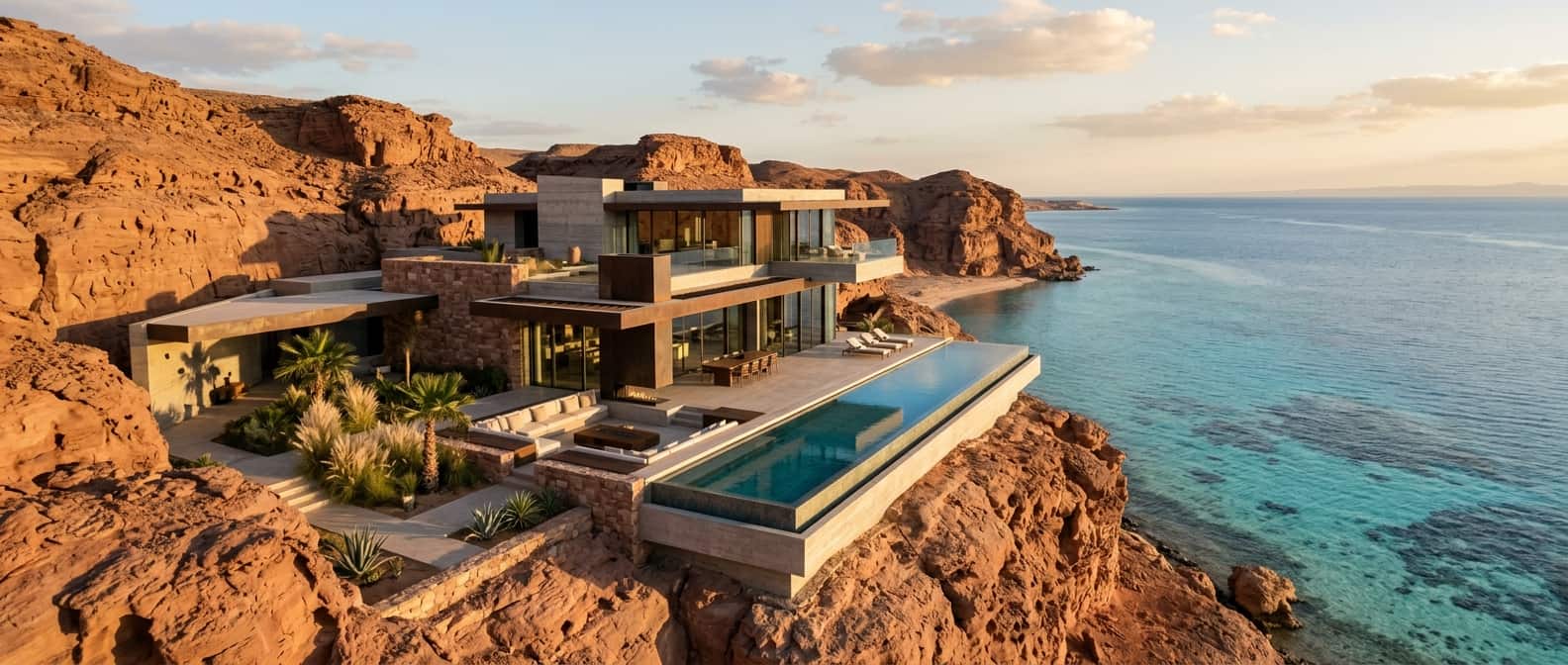
The light on the Red Sea coast hits differently. It’s not the hazy, humid glow of the Maldives or the sharp, classical clarity of the Aegean. It is a dry, ancient light that seems to emanate from the red sand itself, rendering the turquoise water almost impossibly vivid. For generations, this has been a landscape of stark, untouched beauty, a silent coastline known more to traders and pilgrims than to travelers. That silence is now breaking, replaced by the quiet hum of ambition.
This is the home of The Red Sea, one of Saudi Arabia’s marquee giga-projects—an undertaking of scale and vision that is difficult to comprehend. It is not merely a collection of new hotels, but an entire tourism ecosystem conceived from the ground up, built on principles of regenerative sustainability and architectural innovation. For the discerning Indian traveler, accustomed to the world’s finest resorts, The Red Sea poses a compelling question: what does luxury look like when you start with a blank canvas?
The project’s stated goal is to create a net positive conservation benefit of 30 percent by 2040. This isn't just about reducing impact; it's about actively improving the environment—enhancing coral reefs, restoring mangrove forests, and creating habitats for native wildlife. It is a bold claim in a region built on extractive wealth, and one that reframes the entire purpose of a luxury holiday. Here, the indulgence is not just in the thread count of the sheets or the temperature of the private pool, but in the knowledge that your presence is, by design, contributing to the regeneration of a pristine natural environment.
A New Coastline of Ambition
To understand The Red Sea is to understand its geography. It unfolds across a vast archipelago of more than 90 pristine islands, dormant volcanoes, and sweeping desert canyons. This is not a single destination, but a constellation of experiences. The initial phase has seen the opening of two distinct inland and coastal properties, with a third island resort welcoming guests imminently. The scale is staggering: upon full completion, it will encompass 50 resorts, offering up to 8,000 hotel rooms and more than 1,000 residential properties across 22 islands and six inland sites.
The journey begins at the Red Sea International Airport (RSI), itself a piece of statement architecture. Designed by Foster + Partners, its five flowing, shell-like pods are inspired by the desert landscape, and it’s intended to serve a million passengers annually by 2030, all while being powered entirely by renewable energy. This is a recurring theme: every touchpoint is considered, every structure designed to be both iconic and integrated.
What separates this from other large-scale developments is the master plan's foundational commitment to the environment. The development is centered around Shura Island, which will form a hub connecting the other islands, but a significant majority of the archipelago will remain untouched, designated as conservation zones. This careful balance between access and preservation is the project's central pillar, a philosophy that informs everything from construction methods to guest experiences.
The Architecture of Arrival: Overwater Villas and Desert Sanctuaries
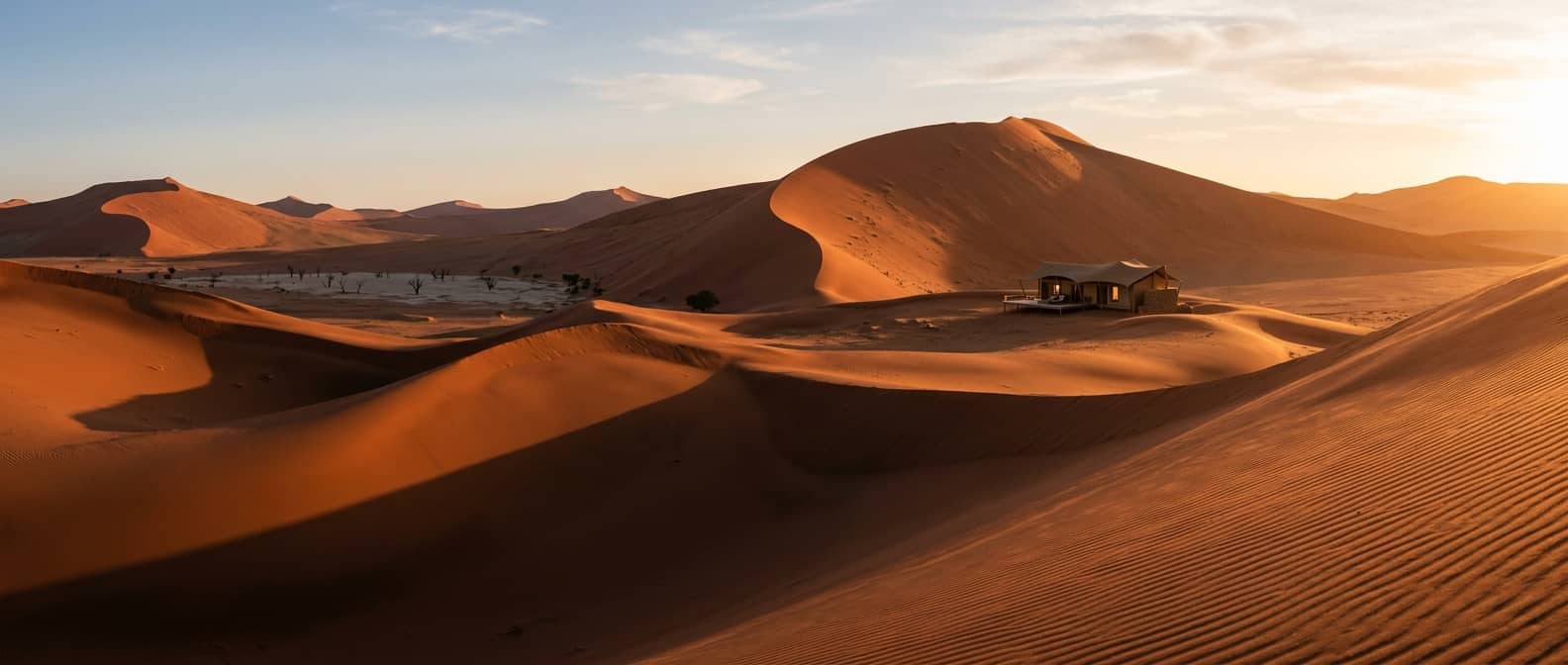
The first properties to open offer a glimpse into this new vernacular of Arabian luxury. At Six Senses Southern Dunes, the design, helmed by Foster + Partners, draws inspiration from the region's Nabataean heritage and the surrounding desert landscape. The 40 villas are scattered like seeds among the dunes, their tent-like forms blending seamlessly with the ochre sands. The approach is one of quiet integration, where the architecture bows to the majesty of the landscape. It feels less built and more discovered, a sanctuary that channels the profound silence of the desert.
A short transfer by electric vehicle or seaplane brings you to the coast, and to a completely different interpretation of luxury. The St. Regis Red Sea Resort, on the private Ummahat Island, offers the overwater villa experience familiar to Maldives devotees, but with a distinct architectural twist. Designed by Kengo Kuma, the villas are circular, their spiraling forms creating a sense of organic movement that mirrors the marine life below. Each offers a private pool and unobstructed views of the sea, but it is the sense of seclusion and design-led minimalism that truly defines the experience.
Joining them is Nujuma, a Ritz-Carlton Reserve, also on Ummahat Island. With 63 overwater and beach villas, Nujuma—meaning 'stars' in Arabic—emphasizes a deep connection to the celestial and the elemental. The design narrative is woven around astrology and the natural world, aiming for an experience that is both deeply luxurious and profoundly grounding. This is not simply about importing a successful resort model; it's about creating something intrinsically of its place.
Beyond the Beach: Curated Immersion in Nature
While the villas and suites are destinations in themselves, the true promise of The Red Sea lies in its experiences. The focus is on active, meaningful engagement with the environment. The archipelago is home to the world's fourth-largest barrier reef system, and the diving and snorkeling here are pristine, with vibrant coral gardens and an abundance of marine life, including endangered hawksbill turtles and dugongs.
The project's developers have established a partnership with the King Abdullah University of Science and Technology (KAUST) to ensure all marine activities are monitored and managed to prevent over-tourism and environmental degradation. Guided excursions take guests to specific, resilient sites, ensuring that the underwater ecosystem remains untouched.
On land, the activities are just as curated. Guests can explore dormant volcanic craters, hike through desert canyons to find ancient Nabataean inscriptions, or spend an evening with expert astronomers for a breathtaking tour of the star-filled desert sky. The absence of light pollution here is profound, offering a clarity that is itself a rare luxury. These are not add-on activities; they are central to the destination's ethos of connecting with the natural world in a way that is both intimate and respectful.
A Commitment to Regenerative Wellness
Wellness at The Red Sea is interpreted in its broadest sense. It is not confined to the spa—though the Six Senses and St. Regis spas are, of course, world-class. It extends to the air you breathe, the food you eat, and the silence you hear. The commitment to 100% renewable energy means the air is clean. The culinary programs prioritize locally sourced ingredients, with a focus on sustainable farming and fresh, Red Sea seafood.
But the deeper wellness comes from the concept of "regenerative tourism." It is the idea that travel can be a force for good, actively contributing to the health of an ecosystem rather than merely minimizing its decline. Knowing that the resort is powered by one of the world's largest renewable energy storage facilities, or that a portion of the revenue is funneled directly into coral reef restoration projects, changes the nature of the indulgence. It becomes a guilt-free, purposeful form of escape.
This philosophy is aimed squarely at the modern luxury traveler, who increasingly seeks purpose and positive impact from their journeys. It shifts the definition of exclusivity from being merely about price to being about access to a pristine, protected environment and the opportunity to contribute to its flourishing.
The Logistics of a Nascent Destination
As a new destination, prospective travelers should be aware of the logistics. Currently, access is primarily through Red Sea International Airport (RSI), with connections from major hubs like Riyadh and Jeddah. Direct international flights are expected to increase as more resorts come online. The visa process for Saudi Arabia has been streamlined significantly, with the e-visa program now available to citizens of many countries, including India, making short-term tourism visits straightforward.
Within the destination, travel between the airport, inland resorts, and island properties is handled by a fleet of electric vehicles, seaplanes, and luxury boats, all part of a seamless, integrated mobility network. This is a highly controlled environment, which ensures a frictionless guest experience but also means less room for spontaneous, independent exploration. The luxury here is curated and comprehensive.
This is a destination for the traveler who appreciates a master plan, who finds comfort in flawless execution and cutting-edge infrastructure. It is perhaps less suited for those who seek the charming chaos of a well-trodden path. But for its target audience, this precision is the entire point.
An Alternative to the Archipelago
The inevitable comparison for The Red Sea will be with the Maldives, the long-reigning champion of island luxury for the Indian market. Both offer turquoise waters, overwater villas, and a sense of escape. Yet, the proposition is fundamentally different. Where the Maldives offers a singular focus on oceanic bliss, The Red Sea presents a duality: the desert and the sea, ancient history and hyper-modern future.
It offers a more active, exploratory form of luxury. It is for the traveler who wants to dive a pristine reef in the morning, hike to an ancient petroglyph in the afternoon, and dine under a canopy of stars at night. It is a destination that engages the mind as much as it pampers the body.
As more of the project's ambitious vision comes to life, The Red Sea is poised to become a formidable new player on the global luxury travel map. It represents a bold, multi-billion-dollar bet that the future of travel lies not just in opulence, but in purpose; not just in exclusivity, but in regeneration. For those who have watched the sun set over the atolls of the Indian Ocean and wondered what comes next, the answer may well be rising from the sands of the Arabian coast.
Sources
- Top International Destinations at India's Best Awards 2025 — travelandleisureasia.com — Confirmed that The Red Sea was awarded "Best Emerging Destination" at the Travel + Leisure India awards, providing the core "why-now" justification for this article.
- Inside India's Outbound Luxury Travel Boom — burdaluxury.com — Provided context on the shift in the Indian luxury market towards bespoke itineraries, privacy, and wellness journeys, which aligns with The Red Sea's positioning.
- What the new Indian luxury traveller wants — travelweekly-asia.com — Offered insights into the preferences of the modern Indian traveler, emphasizing the move towards experience-focused journeys over simple sightseeing.