The wind moves differently through the canyons of AlUla. It carries the scent of warm sandstone, ancient dust, and the subtle, sharp notes of desert flora. Here, in the remote northwest of Saudi Arabia, thousands of years of Nabataean history are being carefully, almost surgically, introduced to modern luxury. The result is not a loud, opulent oasis, but a quiet dialogue between the monumental landscape and the architectural restraint of the world’s most ambitious hoteliers.
For the affluent Indian traveler looking beyond the familiar sands of Dubai or the crowded capitals of Europe, AlUla represents a profound shift. It is a destination that demands presence. The scale of the desert—the towering, wind-carved rock formations, the vast canopy of stars unpolluted by city lights—forces a kind of slow, deliberate travel. This is not a place for frantic itinerary-checking. It is a place to settle in, to listen, and to witness a profound cultural awakening.
The Architecture of Invisibility
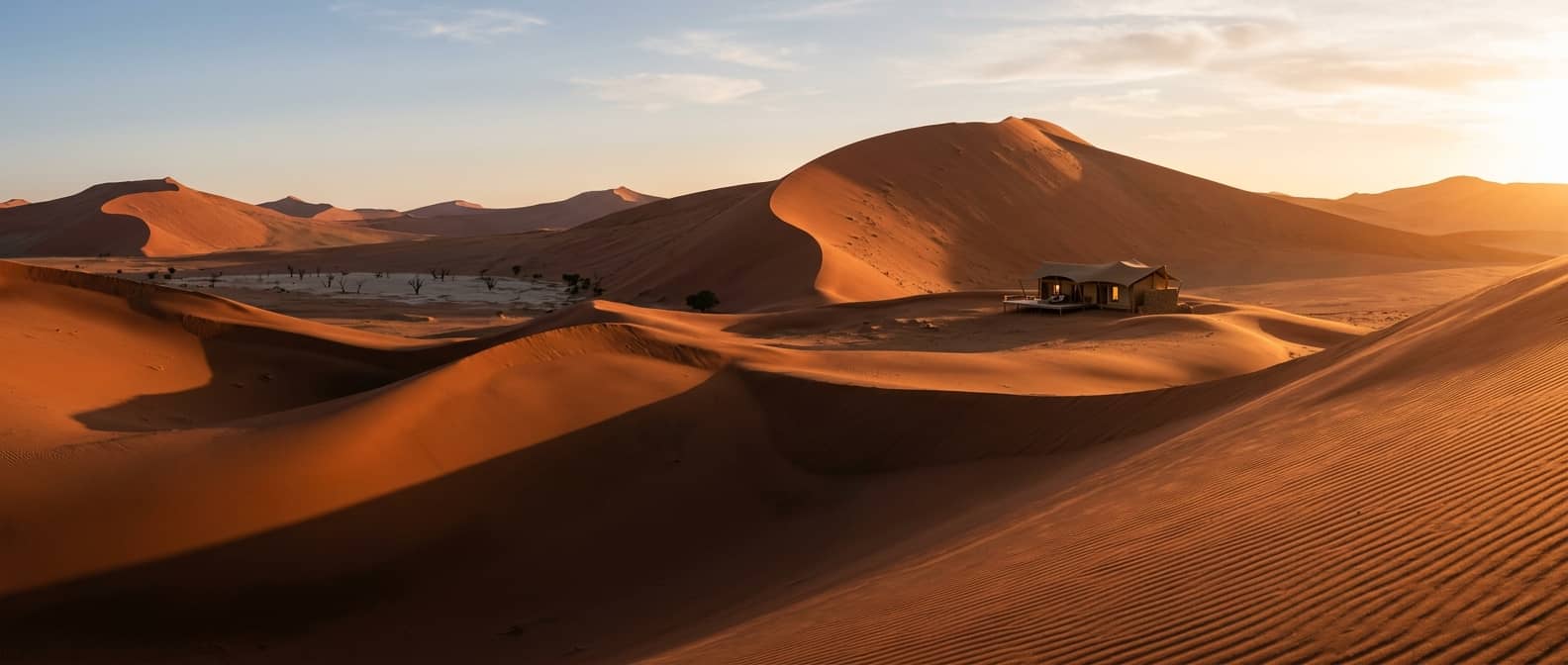
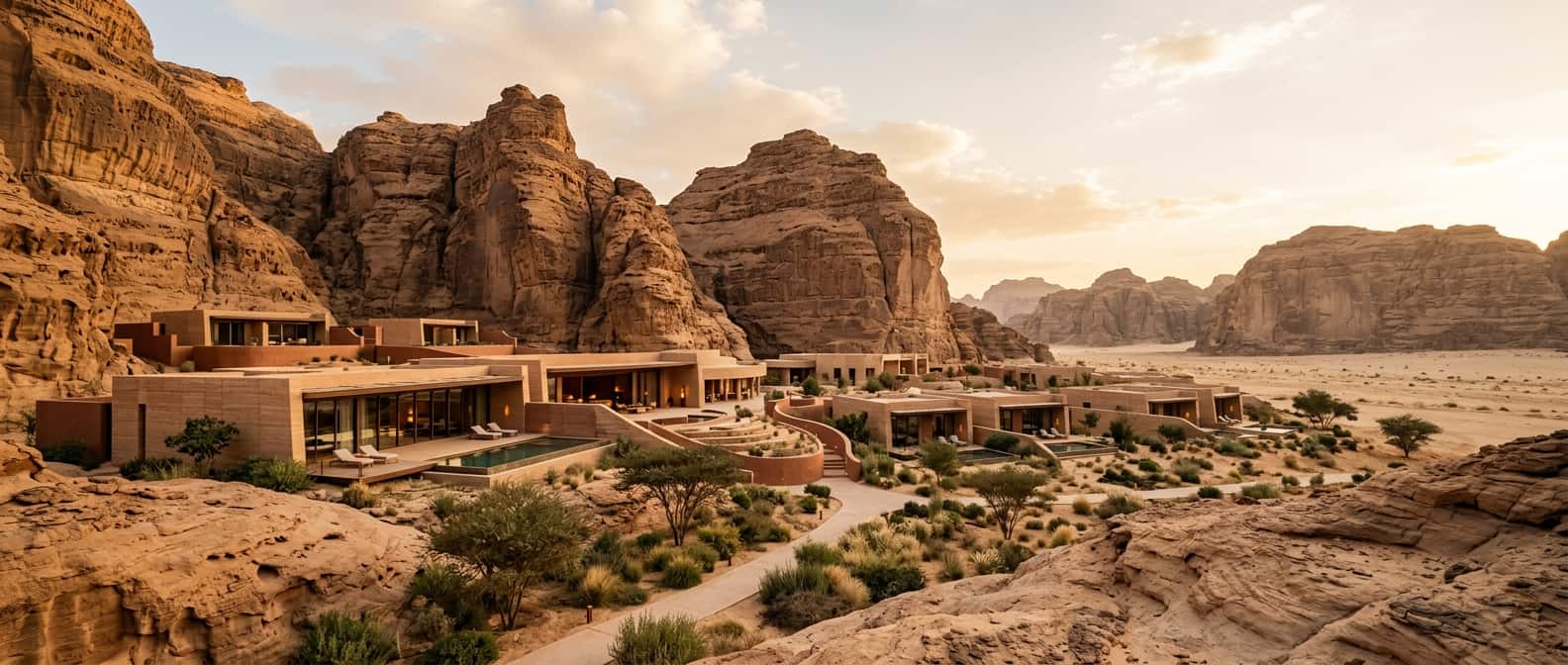
The true luxury of AlUla lies in its restraint. The most striking resorts here have been designed not to dominate the landscape, but to disappear into it. Banyan Tree AlUla, set deep within the Ashar Valley, is a masterclass in this philosophy. Its tented villas, inspired by traditional Bedouin architecture, are suspended almost weightlessly above the desert floor. The color palette—ash, ochre, terracotta—is pulled directly from the surrounding canyons, rendering the structures nearly invisible from a distance.
Inside, the luxury is absolute but understated. Private plunge pools mirror the towering rock faces above, while massive windows frame the desert as if it were a curated exhibition. Similarly, Habitas AlUla embraces a low-impact, modular design ethos, prioritizing sustainability without sacrificing comfort. Here, the boundaries between the indoors and outdoors blur, allowing the stillness of the desert to permeate every moment of the day.
The Monumental Heritage
To visit AlUla without engaging with its history is to miss its beating heart. Hegra, Saudi Arabia’s first UNESCO World Heritage site, is a sprawling necropolis built by the Nabataeans, the same civilization responsible for Petra in Jordan. But unlike Petra, which can often feel overwhelmed by foot traffic, Hegra retains a sense of profound isolation. Wandering among the monolithic tombs, intricately carved into the sandstone outcroppings over two millennia ago, is an exercise in awe.
The experience is elevated by the presence of expert local guides, known as Rawis, who weave the historical facts with local folklore, offering a deeply personal connection to the stones. Beyond Hegra, the ancient city of Dadan and the open-air library of Jabal Ikmah offer further glimpses into the complex, layered history of this ancient crossroads.
Culinary Intersections
The culinary landscape in AlUla is evolving at a remarkable pace, matching the ambition of its hospitality offerings. The focus is on finding harmony between global haute cuisine and the deeply rooted flavors of the Arabian Peninsula. Maraya, the Guinness World Record-holding mirrored concert hall that seamlessly reflects the desert, is also home to Maraya Social. Here, Michelin-starred chef Jason Atherton offers a menu that honors the surrounding agriculture, utilizing dates, citrus, and herbs grown in the nearby AlUla Oasis.
For a more immersive dining experience, secluded canyon dinners are arranged by the top resorts. Tables are set deep within narrow rock fissures, illuminated only by candlelight and the stars, offering a private, acoustic dining experience that is entirely unique to the region. The food—often slow-cooked meats, flatbreads baked over open flames, and delicate spiced sweets—is a direct reflection of the nomadic heritage of the land.
The Rhythm of the Seasons
Timing a visit to AlUla is crucial. The summer months are fiercely hot, dictating an indoor or nocturnal lifestyle. However, from October through April, the desert cools, becoming an incredibly hospitable environment. This is when the region comes alive with cultural festivals, outdoor art installations, and equestrian events. The Winter at Tantora festival, in particular, draws a global elite with its schedule of high-profile concerts, hot air ballooning over the ruins, and exclusive culinary pop-ups.
For the Indian luxury traveler, the accessibility is rapidly improving, with increasingly streamlined e-visa processes and a growing network of direct or one-stop flights via major Middle Eastern hubs. AlUla is no longer an arduous expedition; it is a refined, highly curated experience that can be seamlessly integrated into a broader Middle Eastern itinerary.
AlUla is a reminder that true luxury often lies in the spaces between things. It is in the profound silence of a canyon at dawn, the stark beauty of a Nabataean tomb against an impossibly blue sky, and the careful, considered hospitality that respects the land it occupies. It is a destination that doesn't just offer an escape, but a recalibration.