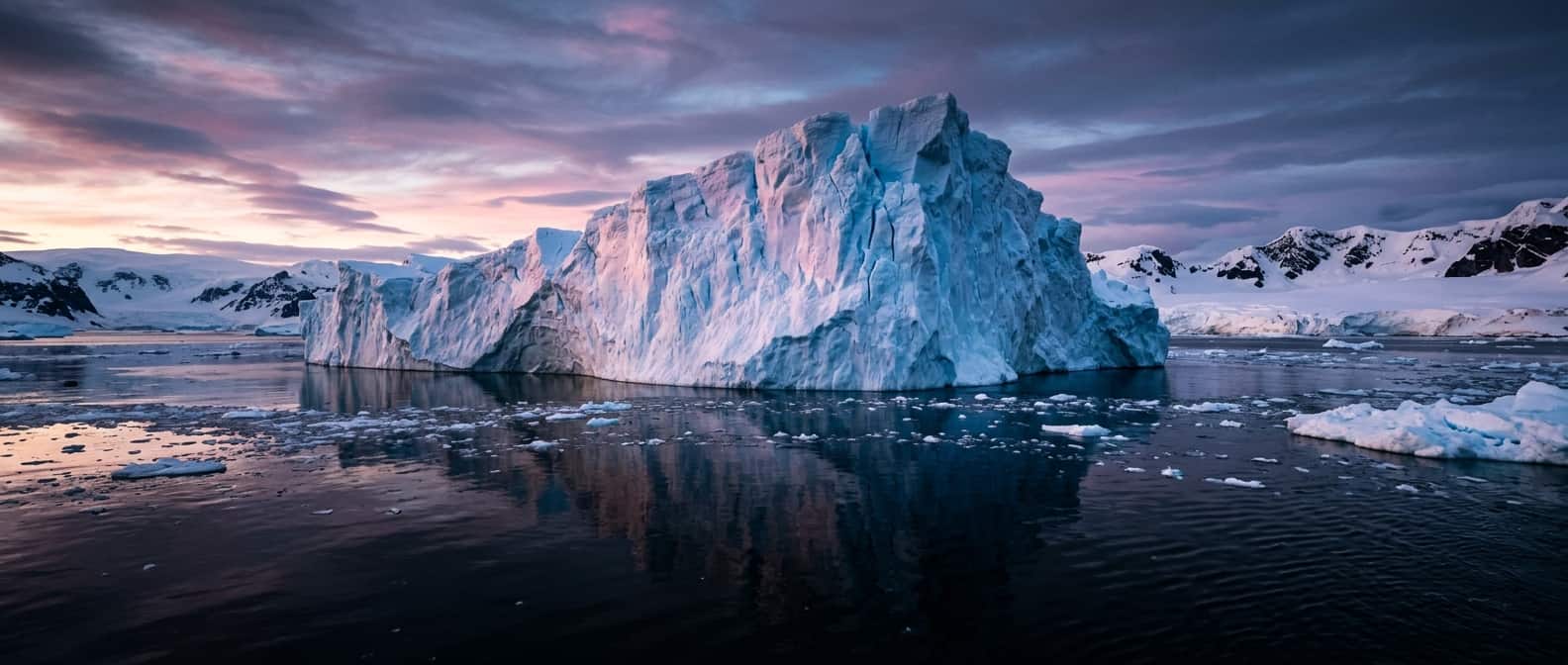
The air at the bottom of the world does not just feel cold; it feels entirely untouched. Standing on the deck of an ice-strengthened vessel, watching a cathedral of blue ice calve into the ink-dark Southern Ocean, there is a profound sense of isolation. For decades, this landscape belonged exclusively to rugged explorers and research scientists. Today, it has quietly become the ultimate summit of experiential travel, drawing a new wave of affluent travelers who seek something rarer than a private island.
The definition of luxury has shifted. It is no longer just about thread counts and infinity pools; it is about access. Reaching the Seventh Continent once meant sacrificing comfort for the sake of the expedition. Now, the journey south involves submarine dives, Michelin-caliber dining, and private aviation, proving that the world’s most hostile environment can be experienced with zero compromise.
The New Pinnacle of Experiential Travel
For the discerning Indian outbound traveler, the usual luxury circuits—the summer weeks in Lake Como, the private safaris in the Serengeti, the winter escapes to Gstaad—have become beautifully familiar. Antarctica represents the antidote to the expected. It is a destination that cannot simply be booked on a whim; it requires intention, preparation, and a willingness to surrender to the rhythms of the ice.
This exclusivity is exactly the draw. The Antarctic season is remarkably short, stretching only from November to March, when the pack ice thaws enough to allow passage. Capacity is strictly limited by the International Association of Antarctica Tour Operators (IAATO), meaning that only a fraction of the world’s travelers will ever set foot on the continent in a given year. The resulting experience is a masterclass in scale and silence, where the only traffic jams are caused by pods of migrating orcas and waddling colonies of Emperor penguins.
Crossing the Drake: Fly or Sail?
The traditional rite of passage for any Antarctic journey is the Drake Passage—the notoriously tempestuous stretch of ocean between the southern tip of Argentina and the South Shetland Islands. For purists, enduring the "Drake Shake" is part of the story. For those who prefer to maximize their time on the ice, the "Fly-Drake" option has revolutionized polar travel.
Bespoke operators now offer the ability to bypass the two-day sea crossing entirely. Travelers can board a chartered flight from Punta Arenas, Chile, soaring over the roiling waters to land directly on King George Island. From there, it is a brief zodiac ride to board your waiting luxury vessel. This innovation not only cuts transit time significantly but also opens the continent to those who might otherwise be deterred by the prospect of rough seas, delivering them straight to the glacial serenity of the Antarctic Peninsula.
The Floating Sanctuaries: Ultra-Luxury Expedition Yachts
The vessels navigating these polar waters have evolved from spartan research ships into floating architectural marvels. Brands like Silversea, Seabourn, and Scenic have launched purpose-built, PC6 ice-class expedition yachts that rival the finest boutique hotels in Paris or Tokyo.
Onboard the Silver Endeavour or the Scenic Eclipse, the suites feature floor-to-ceiling glass, allowing you to watch humpback whales breach from the warmth of your bed. The mudrooms—where guests gear up for zodiac landings—are heated and expertly managed, ensuring that every excursion onto the ice is seamless. Beyond the lavish suites, these ships carry an arsenal of toys: twin-engine helicopters for aerial perspectives of the ice shelves, and custom-built submersibles that plunge into the sapphire depths to reveal an otherworldly marine ecosystem. Returning from a sub-zero trek to a glass of rare vintage champagne and a hot stone massage is the new standard of polar exploration.
White Desert: The Private Aviation Route
For the ultimate exercise in polar exclusivity, the sea is not required at all. Enter White Desert, the pioneer of luxury interior Antarctic travel. Operating out of Cape Town, South Africa, White Desert flies its guests via private Gulfstream jet directly to a blue-ice runway in the heart of the continent.
Their Whichaway Camp is an oasis of warmth in a landscape of absolute white. Comprising high-tech, aerospace-designed sleeping pods, the camp feels like a bespoke space station. Here, guests are not just observing the edges of the continent; they are embedded within it. Days are spent exploring ice tunnels, visiting immense emperor penguin colonies, and, for the truly ambitious, embarking on guided treks to the South Pole itself. Evenings conclude with six-course tasting menus prepared by private chefs, using ingredients flown in fresh from the Cape. It is a surreal juxtaposition: the stark, unforgiving beauty of the Antarctic interior paired with the refined hospitality of a private club.
The Silence of the Ice
The true luxury of Antarctica, however, is not found in the thread count of the linens or the vintage of the wine. It is found in the profound, echoing silence. It is the realization that you are standing in a place that operates entirely outside of human history, governed only by wind, ice, and tide.
In an era where we are perpetually connected and reachable, the White Continent offers a rare commodity: absolute detachment. To sit on a zodiac, the engine cut, listening only to the crackle of ancient ice melting into the sea, is a visceral recalibration. It is a reminder that there are still frontiers left to cross, and that the greatest luxury of all is to witness the world exactly as it was at the dawn of time.