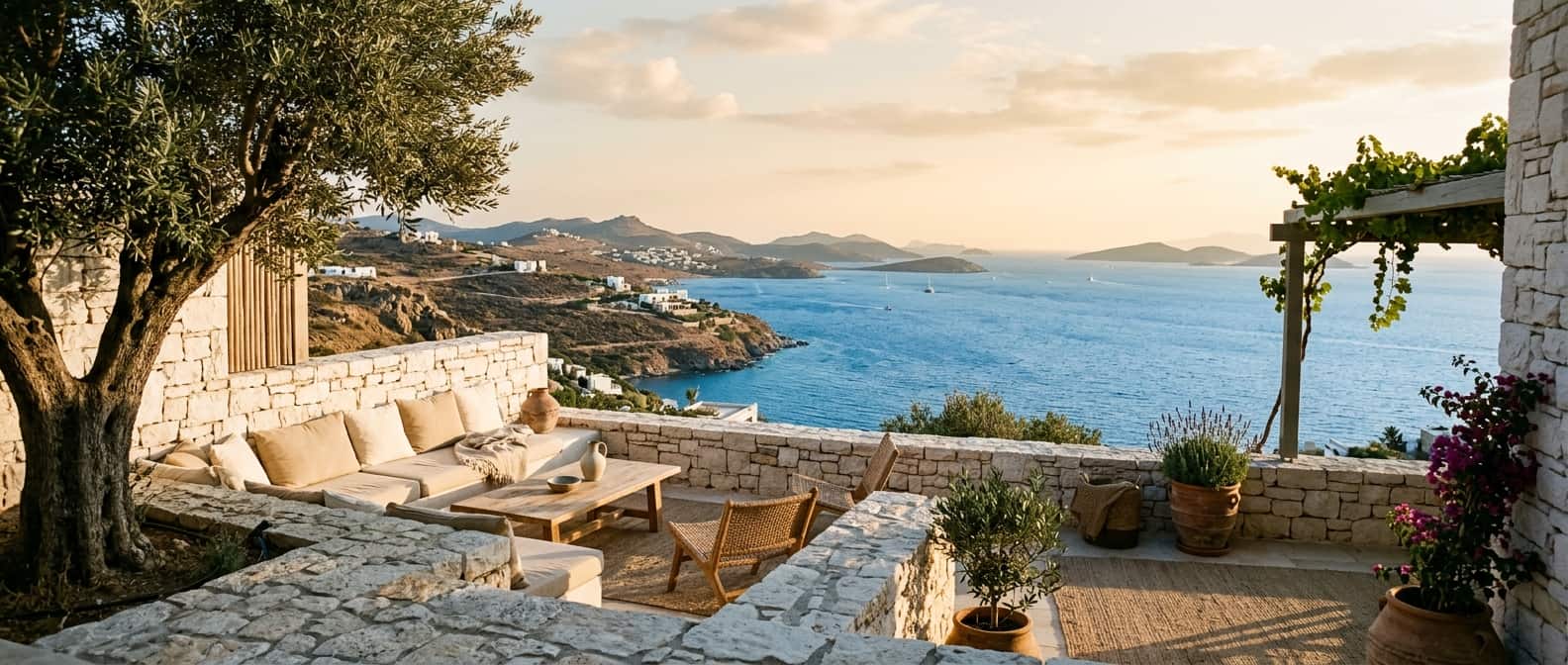
The late afternoon light hits the Aegean Sea not as a blinding reflection, but as a deep, fractured mosaic of sapphire and gold. High on a limestone ridge above the water, the scent of crushed wild thyme and sea salt hangs in the still, warm air. There is no thumping bass line from a crowded beach club, no line of supercars idling at a valet stand. Instead, there is only the rhythmic lap of water against wooden hulls in the bay below, and the quiet clinking of ice against glass on a private terrace. This is the new Bodrum—a place that has quietly shed its skin to become the Mediterranean’s most refined sanctuary.
For years, the affluent Indian traveler’s compass reliably pointed toward the Côte d'Azur or the Amalfi Coast as the mercury rose. But as those historic shores have grown increasingly congested, a subtle migration has occurred. The discerning eye has turned east, past the crowded piazzas of Italy, to the jagged, pine-scented coastline of southwestern Turkey. Here, along the Bodrum Peninsula, the definition of coastal luxury is being rewritten. It is less about being seen, and entirely about how deeply one can disconnect.
The Architecture of the Aegean: Amanruya and Beyond
The shift in Bodrum’s identity is most visible in its architecture. The peninsula has largely rejected the towering, monolithic resorts that plague other Mediterranean shores. In their place is a movement toward ‘Aegean modernism’—low-slung, stone-clad pavilions that disappear into the olive groves and pine forests.
Nowhere is this ethos more perfectly articulated than at Amanruya. Designed to resemble a traditional Ottoman village, its freestanding guest pavilions are constructed from local stone, mahogany, and Turkish marble. Each opens onto a private pool and a garden of fig trees, offering absolute seclusion. The luxury here is atmospheric; it is the feeling of having an entire hillside estate entirely to oneself. Similar philosophies echo through the Bodrum EDITION and the newly reimagined Maçakızı, where wooden decks cascade down the cliffside directly into the sea, allowing guests to step from their rooms into the Aegean without encountering a single stretch of public sand.
For the Indian family or couple seeking absolute privacy, this architectural approach is transformative. It allows for multi-generational gatherings in interconnected villas where the service is invisible but omnipresent, perfectly suited to those accustomed to the highest standards of bespoke hospitality.
On the Water: The Art of the Private Gulet
To remain entirely landbound in Bodrum is to miss its soul. The true currency of luxury on this coastline is time spent on the water, specifically aboard a traditional wooden gulet. However, the modern iteration of this experience bears little resemblance to the rustic sailing trips of the past.
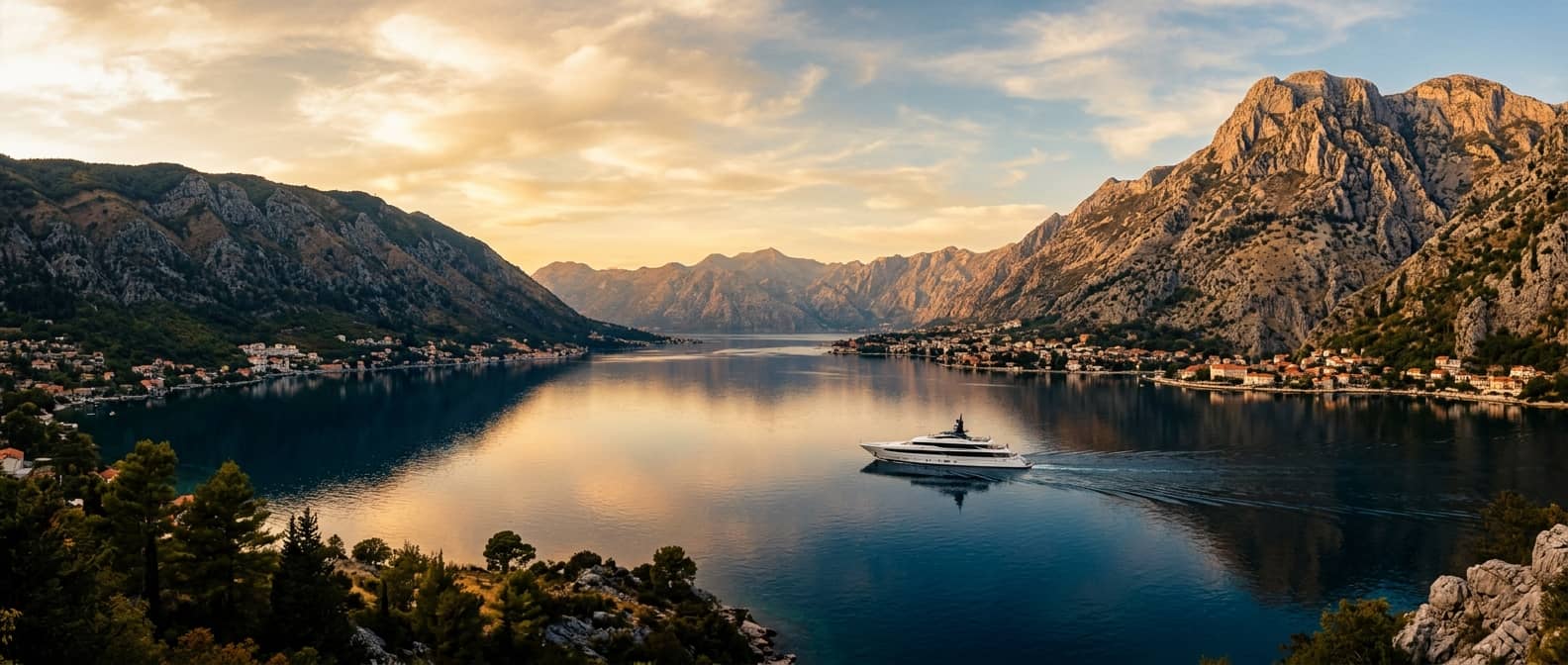
Today’s premium gulets are essentially floating boutique hotels. Custom-built with vast teak decks, air-conditioned master suites, and onboard private chefs, they offer a level of nautical luxury that rivals the superyachts of Monaco, but with a profoundly local character. Chartering a vessel for a few days allows travelers to access the hidden coves of the Gulf of Gökova—bays accessible only by water, where the pine trees grow right to the water's edge and the sea is as clear as cut glass.
Days on the water adopt a languid, unhurried rhythm. Mornings begin with a swim in an empty bay before a traditional Turkish breakfast is laid out on the aft deck. Afternoons are spent dropping anchor near the ruins of ancient sunken cities, paddle-boarding over submerged columns that have lain undisturbed for millennia. It is this seamless blending of elemental nature and uncompromising comfort that defines the high-end Turkish nautical experience.
The Culinary Renaissance: Olive Oil and Fire
The culinary narrative of the Turkish Riviera has matured far beyond simple mezze and grilled meats. Bodrum has become a crucible for a new kind of Aegean gastronomy, one that honors ancient agrarian traditions while applying modern, highly refined techniques. The focus is obsessively local—olive oil pressed from the peninsula's own groves, wild herbs foraged from the surrounding hills, and seafood pulled from the Aegean that same morning.
Restaurants like Od Urla (a short flight or drive up the coast) and the celebrated dining rooms within Bodrum's top-tier resorts are leading this charge. Diners can expect dishes that are elemental yet sophisticated: slow-roasted lamb shoulder cooked over an open fire, delicate sea bass carpaccio dressed with local citrus, and complex vegetable preparations that elevate humble ingredients to an art form. For the affluent Indian palate, which often appreciates robust, layered flavor profiles, the Aegean kitchen is a revelation. It is light enough for the coastal heat, yet deeply satisfying, heavily reliant on the holy trinity of the region: olive oil, fire, and time.
Pacing the Day: Beach Clubs and Antiquity
While the emphasis in modern Bodrum is on privacy, its social scene remains vibrant—albeit entirely on its own terms. The beach clubs here are not the champagne-spraying affairs found in Mykonos; they are sophisticated, low-key enclaves designed for long, lazy afternoons. At places like Scorpios Bodrum or the legendary deck at Maçakızı, the transition from day to evening is a masterclass in mood. Guests lounge on plush sunbeds built onto wooden jetties, diving directly into the sea between courses of fresh crudo and crisp Turkish rosé.
Yet, the peninsula offers more than just sun and sea. Bodrum, built on the ruins of the ancient city of Halicarnassus, wears its history lightly but proudly. A morning spent exploring the Bodrum Castle, built by the Knights Hospitaller in the 15th century, or walking among the remnants of the Mausoleum at Halicarnassus (one of the Seven Wonders of the Ancient World), provides a profound cultural anchor to a holiday otherwise defined by leisure. This duality—the ability to touch ancient history before lunch and retreat to a hyper-modern luxury pavilion by afternoon—is uniquely Turkish.
Practical Magic: Logistics for the Indian Traveler
From a logistical standpoint, the Turkish Riviera holds a distinct advantage. While securing a Schengen visa for Western Europe has become an increasingly fraught and unpredictable process, Turkey offers a streamlined, efficient e-visa system for Indian passport holders who already possess a valid US, UK, or Schengen visa.
Flight connectivity has also evolved to meet demand. With seamless connections via Istanbul, arriving in Bodrum is a straightforward affair, bypassing the multi-stop journeys often required to reach more remote Mediterranean islands. Upon landing at Milas-Bodrum Airport, the transition to absolute luxury is immediate—a private transfer whisking you to a secluded peninsula, ensuring that the friction of travel evaporates the moment you step out of the terminal.
Bodrum does not shout for attention. It does not need to. It waits, quietly confident, offering a masterclass in the art of slow, elemental living. For the traveler who has seen it all, it provides the rarest luxury of all: a beautiful place to simply be.