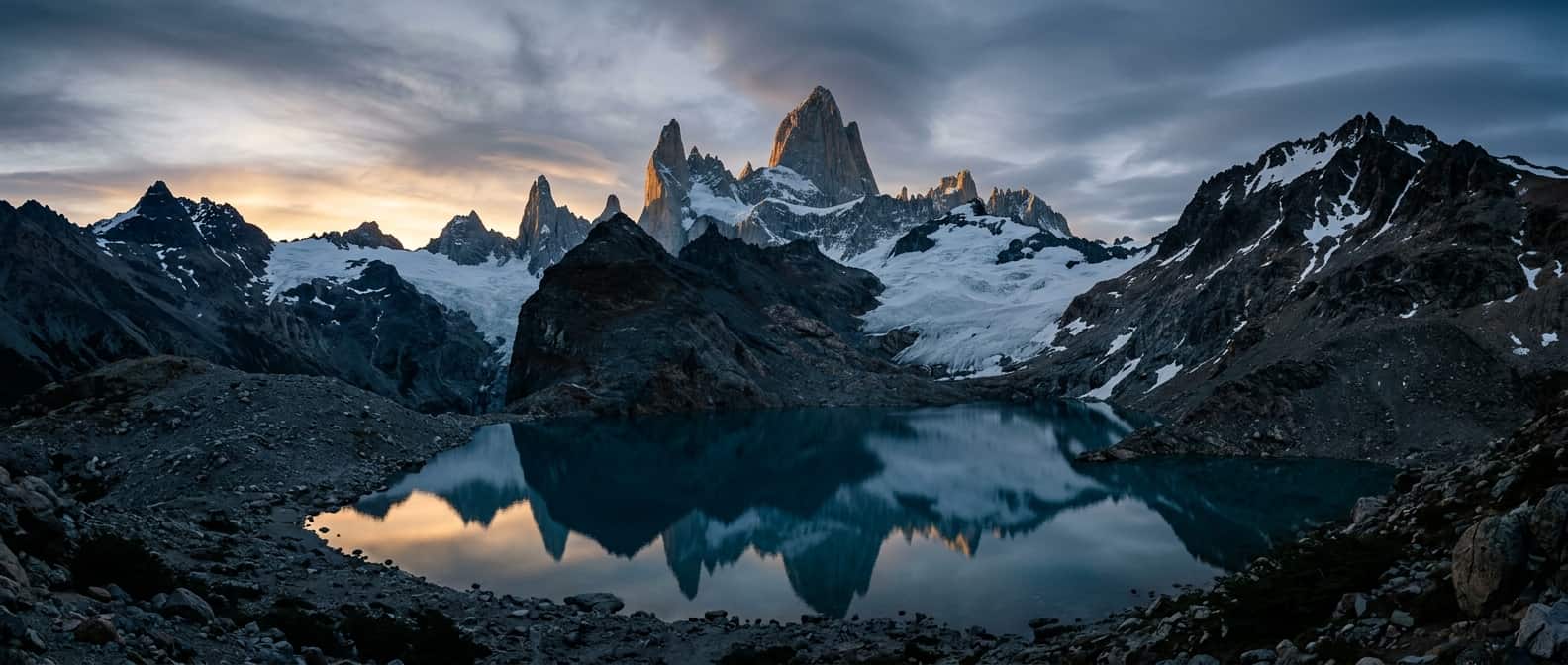
The wind here does not just blow; it commands. At the very edge of the South American continent, where the Andes shatter into an archipelago of fjords and ice fields, Patagonia remains one of the last true wildernesses on earth. For the Indian traveler accustomed to the manicured luxury of Europe or the high-touch service of Southeast Asia, Patagonia offers a profound recalibration—a raw, sensory immersion into a landscape that feels startlingly primordial, anchored by a new generation of design-forward, deeply considered lodges.
The Geography of Extremes
Patagonia is less a singular destination than a vast, fragmented kingdom shared between Chile and Argentina. To the west, the Chilean side (Torres del Paine) is a theatre of vertical granite spires, emerald lakes, and sweeping steppes. To the east, Argentine Patagonia centers around Los Glaciares National Park, home to the groaning, thunderous mass of the Perito Moreno Glacier. The luxury here is found not in white-glove formality, but in access: private guides, solitary trails, and returning from a ten-kilometer trek to a fire-warmed suite and an unhurried pour of Carménère.
Architectural Sanctuaries
The modern Patagonian lodge is a study in architectural restraint. Properties like Awasi Patagonia and Explora have pioneered a model of luxury that defers to the environment. Awasi, with its fourteen secluded villas built on a private reserve overlooking Torres del Paine, operates on a completely bespoke basis—each villa is assigned a private guide and a 4x4 vehicle, ensuring that no two itineraries are the same. Explora, perched quite literally at the edge of Lake Pehoé, acts as a luxurious basecamp, offering over forty distinct explorations that range from horseback riding with local gauchos to high-alpine ascents.
The Ice and the Steppe
The draw of Patagonia is deeply physical. The days are built around movement. One morning might involve a private boat charter across Lago Grey, navigating through a graveyard of icebergs calved from the glacier's electric-blue face. The next might see you riding criollo horses across the endless pampas, the wind carrying the scent of dry earth and calafate berries. The true luxury of these expeditions is the isolation; it is entirely possible to hike for hours without encountering another soul, enveloped only by the immense scale of the landscape.
A Culinary Recalibration
Given its remote geography, the culinary movement in Patagonia has necessarily turned inward. Lodges have embraced hyper-local sourcing, elevating the traditional asado (barbecue) to a refined art form. Dinners often feature Patagonian lamb slowly roasted over native wood fires, king crab sourced from the deep waters of the Magellan Strait, and foraging-focused tasting menus that incorporate indigenous berries and seaweeds. This is robust, elemental dining, perfectly calibrated to the demands of the environment and paired with exceptional vintages from the Colchagua and Uco valleys.
The Long Journey South
Reaching Patagonia from India is a commitment—often requiring transits through Europe or the Middle East to Buenos Aires or Santiago, followed by a domestic flight to El Calafate or Puerto Natales. Yet, it is this very friction of distance that preserves Patagonia’s exclusivity. It remains largely untouched by the velocity of modern mass tourism, offering a rare, uninterrupted quiet.
For those willing to make the journey, Patagonia delivers an experience that is both grounding and transcendent. It is a place that reminds you of your own scale in the world, doing so with a level of hospitality that is as warm and uncompromising as the land itself.
Sources
- Awasi Patagonia — Reference for private reserve villas and bespoke 4x4 guide model.
- Explora Patagonia — Reference for location at Lake Pehoé and exploration programs.