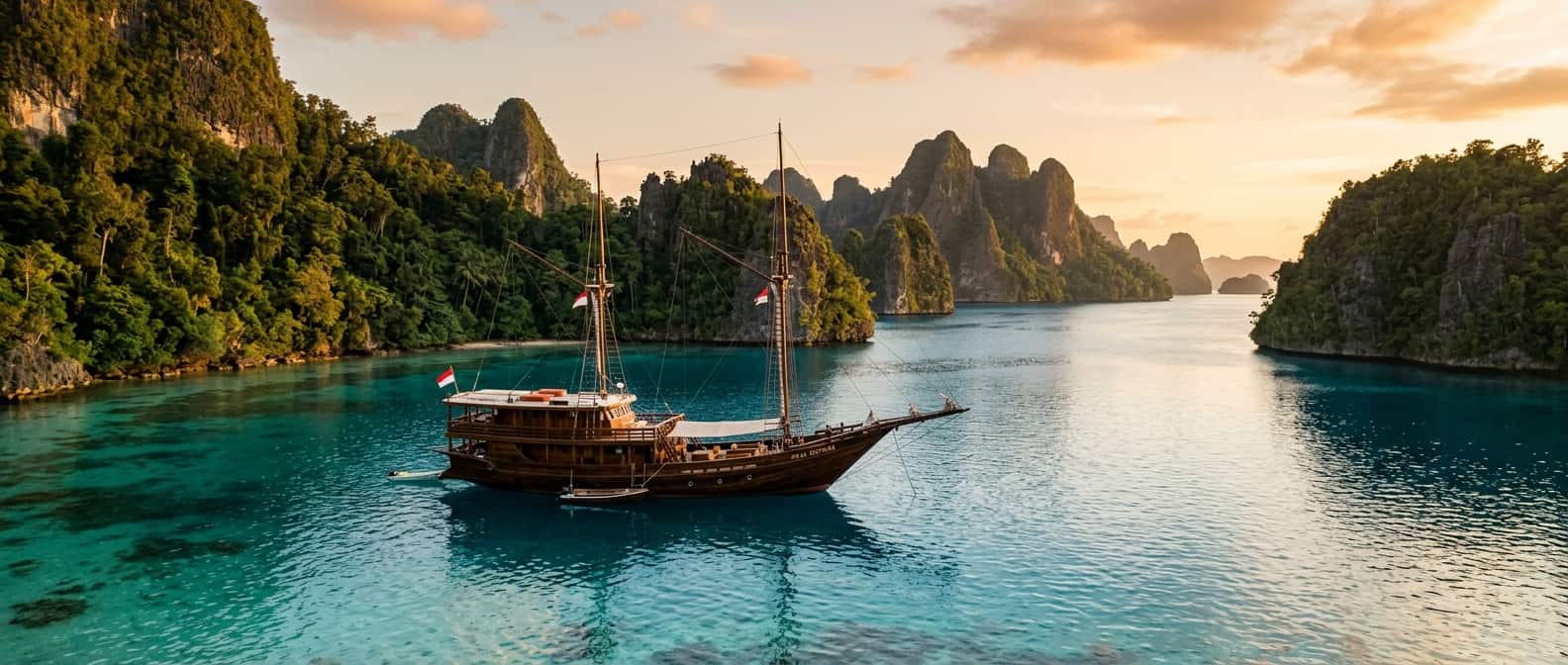
The water in Raja Ampat does not merely reflect the sky; it absorbs it, turning into a shade of cerulean so bright it feels almost illuminated from below. Here, at the easternmost edge of the Indonesian archipelago, limestone karsts rise like emerald monuments from the sea, their undercut bases shaped by centuries of tides. There are no super-clubs here, no cliffside infinity pools crowded with influencers, and no ambient thrum of traffic. Instead, the only sound is the rhythmic lap of water against the wooden hull of a traditional phinisi yacht, and the occasional, distant cry of a hornbill. For the affluent Indian traveler seeking the absolute zenith of exclusivity, Raja Ampat is not just a destination; it is a profound detachment from the known world.
The End of the Earth
Located off the northwest tip of West Papua, Raja Ampat translates to the "Four Kings," a nod to its four main islands: Misool, Salawati, Batanta, and Waigeo. Yet, the archipelago is actually a constellation of over 1,500 small islands, cays, and shoals. Reaching it requires intent. From India, one must fly into Jakarta or Bali, then connect to the port town of Sorong. It is a journey that filters out the casual tourist.
What remains is a sanctuary of staggering biodiversity. This region is the beating heart of the Coral Triangle, home to more than 75% of the world's known coral species and nearly 1,500 species of reef fish. For years, it was the exclusive domain of hardcore divers willing to rough it on basic liveaboard boats. Today, however, a new wave of ultra-luxury vessels has transformed the Raja Ampat experience, bringing Aman-level service to the very edge of the map.
The Vessel as the Destination
To experience Raja Ampat from a stationary resort is to see only a fraction of its majesty. The true luxury here lies in mobility, specifically aboard a custom-built phinisi. These traditional Indonesian two-masted sailing ships have been reimagined for the modern luxury traveler. Vessels like the Kudanil Explorer or the Amandira combine the romantic silhouette of a 19th-century spice-trading ship with the internal specifications of a five-star hotel.
Imagine a floating villa where the scenery changes daily. You wake up in a private, air-conditioned suite with panoramic windows framing a new, uninhabited island. Breakfast is served on the aft deck by a crew that anticipates your needs before you articulate them—a cold towel after a morning swim, a perfectly spiced masala chai brewed just the way you like it. The vessel moves with the tides and the whims of its passengers, unbound by strict itineraries. This is the ultimate bespoke travel experience: an entire archipelago serving as your private playground.
The Underwater Serengeti
It is impossible to overstate the visual impact of slipping beneath the surface in Raja Ampat. Even for those who have dived the Maldives or the Great Barrier Reef, the sheer density of life here is arresting. You do not need to be a certified diver to appreciate it; the snorkeling alone is world-class.
In the nutrient-rich waters of the Dampier Strait, oceanic manta rays with wingspans of up to seven meters glide gracefully through cleaning stations. Schools of barracuda move like synchronized silver clouds, while the coral gardens burst with colors so vivid they defy description. Your private guide, an expert marine biologist, leads you through this underwater Serengeti, pointing out the elusive wobbegong shark or the delicate, intricately patterned pygmy seahorse. Every excursion is private, tailored to your comfort level, and entirely devoid of the crowded boats found in more accessible marine parks.
The Rhythm of the Archipelago
Days in Raja Ampat take on a deeply restorative rhythm. Mornings might involve kayaking through hidden lagoons in Wayag, where towering, mushroom-shaped karsts create a labyrinth of tranquil waterways. The silence is profound, broken only by the dip of your paddle.
Afternoons are reserved for rest or cultural immersion. The indigenous Papuan communities that inhabit a handful of these islands offer a rare glimpse into a way of life that has remained largely unchanged for generations. A visit to a local pearl farm reveals the meticulous process behind cultivating South Sea pearls, while a trek into the jungle canopy on Waigeo might reward you with a sighting of the extraordinary Wilson’s bird-of-paradise, a creature so brightly colored it seems painted by a surrealist.
The Quiet Luxury of Isolation
As the sun begins its descent, painting the sky in violent streaks of violet and gold, the true privilege of this journey crystallizes. You are anchored in a bay entirely to yourselves. The crew has set up a private barbecue on an unnamed, powdery white-sand beach. Freshly caught snapper is grilling over coconut husks, accompanied by a carefully curated selection of wines.
This is the essence of quiet luxury. It is not about gold fixtures or brand names; it is about the luxury of absolute space, profound quiet, and unfiltered natural beauty. For the Indian couple on a milestone anniversary or a family seeking genuine disconnection from the demands of business and society, Raja Ampat offers a rare commodity: an environment that demands nothing and gives everything.
Navigating the Journey
Charting a course to Raja Ampat requires precision. The primary sailing season runs from October to April, when the seas are calmest and the manta rays are most abundant. Booking a private charter must be done anywhere from eight to twelve months in advance, as the finest vessels have highly limited availability.
It is a demanding journey, yes, but those who make the crossing are rewarded with an experience that rewires their understanding of what luxury travel can be. It is a reminder that the world still holds secrets, and that the ultimate luxury is having the means—and the vessel—to discover them.