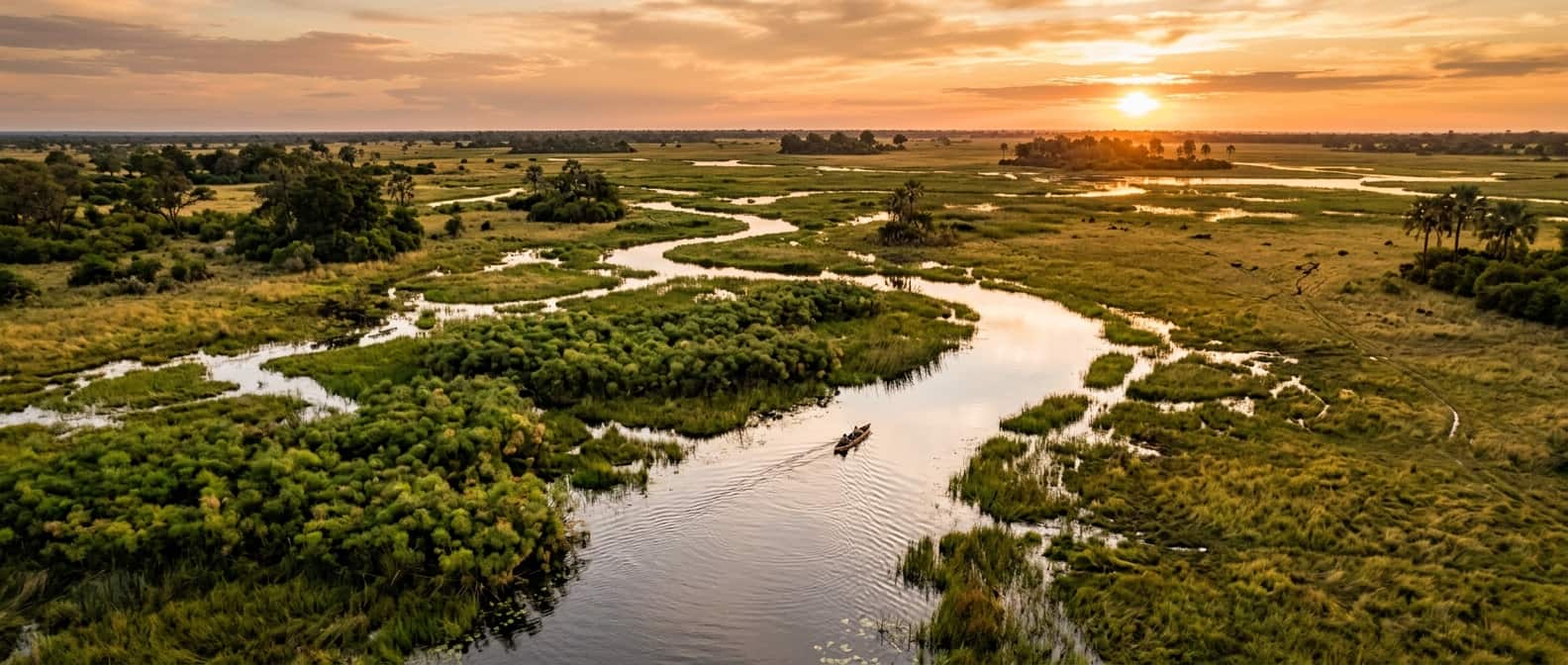
The air smells of crushed wild sage and damp earth. Beneath you, the water of the channel is as clear as cut glass, reflecting the sprawling canopy of a solitary jackalberry tree. As your wooden mokoro glides silently through the papyrus reeds, the only sound is the rhythmic drip of water from the poler’s stick and the distant, resonant grunt of a hippopotamus settling into the mud. There are no diesel engines here. There are no queues of dusty Land Cruisers jostling for a view. There is only the vast, breathing expanse of the Kalahari Basin, flooded by rains that fell months ago in the Angolan highlands.
For the affluent Indian traveler who has already traversed the wide-open plains of the Serengeti and tracked leopards in the Sabi Sands, Botswana represents the final frontier of the African safari. It is a destination built on a singular, uncompromising philosophy: low-volume, high-yield tourism. Here, exclusivity is not merely a buzzword; it is a legislative reality, designed to protect one of the world's most delicate and diverse ecosystems.
The Apex of the African Safari
The luxury of a Botswana safari is defined by space and silence. By heavily restricting the number of beds in private concessions, the country ensures that the human footprint remains vanishingly small. You are not sharing the wilderness; you are absorbed by it.
This model demands a different kind of traveler. It requires an appreciation for the subtle rhythms of the bush—the microscopic detail of a malachite kingfisher hovering over the water, or the sheer, uninterrupted scale of the night sky. The lodges here, many operated by conservation-first brands like Great Plains Conservation and Wilderness Destinatioins, are engineering marvels. Entire camps are built on elevated wooden decks, running on solar power and designed to be packed away without leaving a single permanent scar on the earth. Yet, they offer an astonishing level of comfort: copper bathtubs overlooking floodplains, climate-controlled suites, and wine cellars that rival those found in the Cape Winelands.
The Liquid Labyrinth: Okavango Delta
The Okavango Delta is the geographic and emotional heart of Botswana. It is an endorheic basin—a river that never reaches the sea, but instead empties into the sands of the Kalahari Desert, creating a seasonal oasis visible from space.
Navigating the Delta is a sensory shift. While game drives are available on the larger landmasses, the true magic of the Okavango is experienced on the water. Gliding through the lily-choked channels in a mokoro offers a ground-level perspective of the ecosystem. Here, camps like Xigera Safari Lodge have redefined the aesthetic of the bush. Xigera is less a traditional lodge and more a living gallery of pan-African design, featuring bespoke sculptures and architectural elements that mirror the surrounding lily pads. The focus is deeply personal; there are no set schedules. If you wish to spend the entire morning tracking a specific pride of lions across the floodplains, or simply watching elephants cross the deep channels from the deck of your suite, the day bends to your will.
The Salt Pans: Makgadikgadi
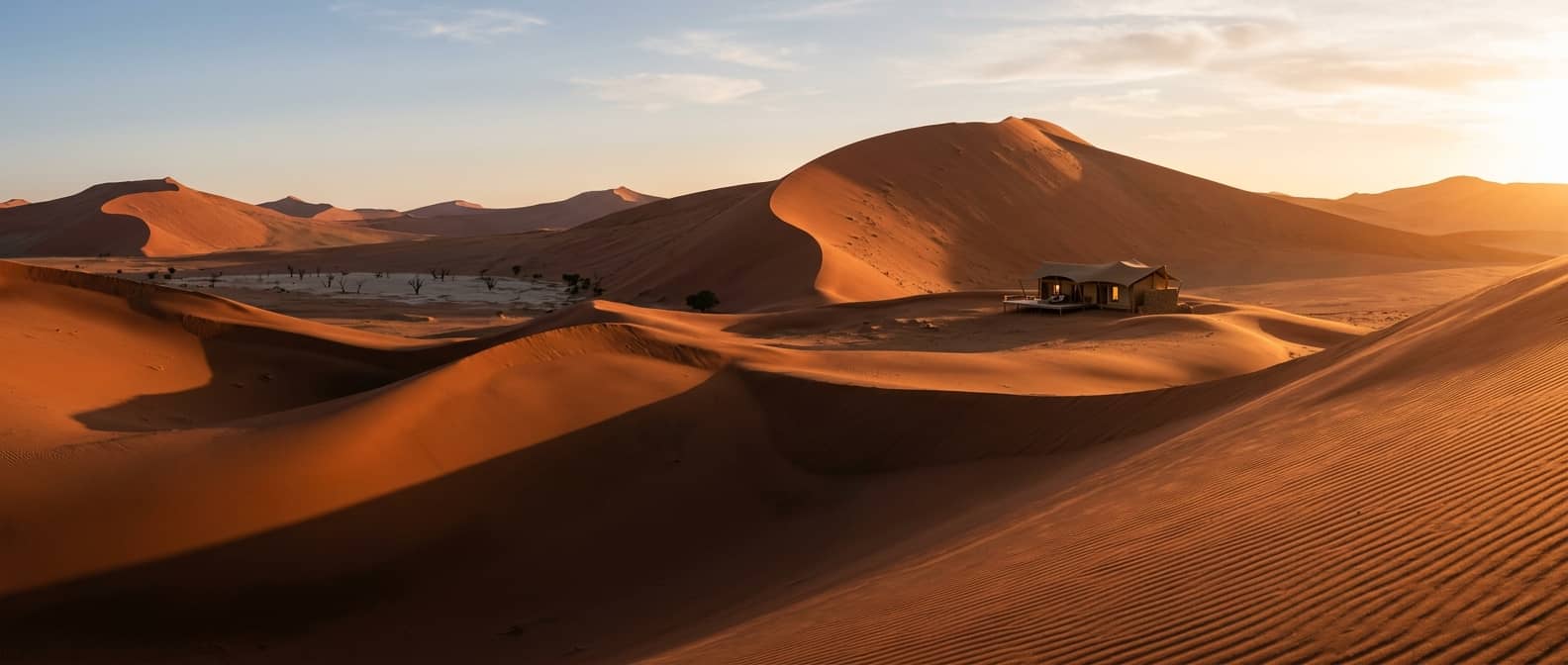
To understand the water, you must first understand the dry. A short light-aircraft flight southeast from the Delta brings you to the Makgadikgadi Pans, the remnants of a massive ancient super-lake. Today, it is a stark, blindingly white expanse of salt flats that stretches to the horizon.
During the dry winter months (May to October), the pans offer an almost lunar landscape. It is a place of profound, echoing silence. Luxury here is conceptual—it is the luxury of absolute isolation. Camps like Jack's Camp, with its iconic 1940s campaign-style tents, Persian rugs, and mahogany campaign furniture, offer a surreal contrast to the harshness of the salt. Guests can ride quad bikes for miles across the crust, encountering habituated meerkats and the indigenous San people, whose ancient knowledge of the desert remains unbroken. When the summer rains arrive, the pans transform into shallow lakes, triggering the second-largest migration of zebra and wildebeest in Africa, followed closely by opportunistic predators.
The Northern Frontier: Linyanti
If the Delta is a place of quiet reflection, the Linyanti Wildlife Reserve in the north is an arena of raw, primal energy. Bordering the Chobe National Park, this private concession is characterized by permanent waterways, dense mopane woodlands, and immense herds of elephants.
Linyanti is widely regarded as one of the best locations in Africa for predator viewing, particularly wild dogs and lions. Because it is a private reserve, vehicles are permitted to drive off-road to follow hunting packs, and night drives reveal the elusive, nocturnal life of the bush—leopards stalking through the shadows and hyenas vocalizing in the dark. Properties like Wilderness DumaTau take full advantage of this dramatic setting, with expansive decks floating above the Osprey Lagoon, where elephants routinely swim across the channel just meters from where you are dining.
Pacing the Journey
A Botswana itinerary is not something to be rushed. The standard circuit typically involves a light aircraft sequence, hopping between distinct ecosystems. Seven to ten days is the ideal duration, allowing for a few nights in the wet, shimmering Okavango, followed by the stark contrast of the Makgadikgadi Pans, and culminating in the intense predator action of Linyanti.
This is a journey that rewires the nervous system. The absence of digital connectivity, the sheer distance from urban density, and the constant, thrumming presence of the wild enforce a kind of mandatory presence. You leave Botswana not just with photographs of apex predators, but with the quiet, lingering realization of how small we are in the grand architecture of the natural world.
Sources
- Botswana Tourism Organization — Core context on Botswana's low-volume, high-yield conservation strategy.
- Xigera Safari Lodge — Details on the pan-African design and architecture in the Okavango Delta.
- Natural Selection: Jack's Camp — Context on the 1940s campaign-style luxury and Makgadikgadi ecosystem.