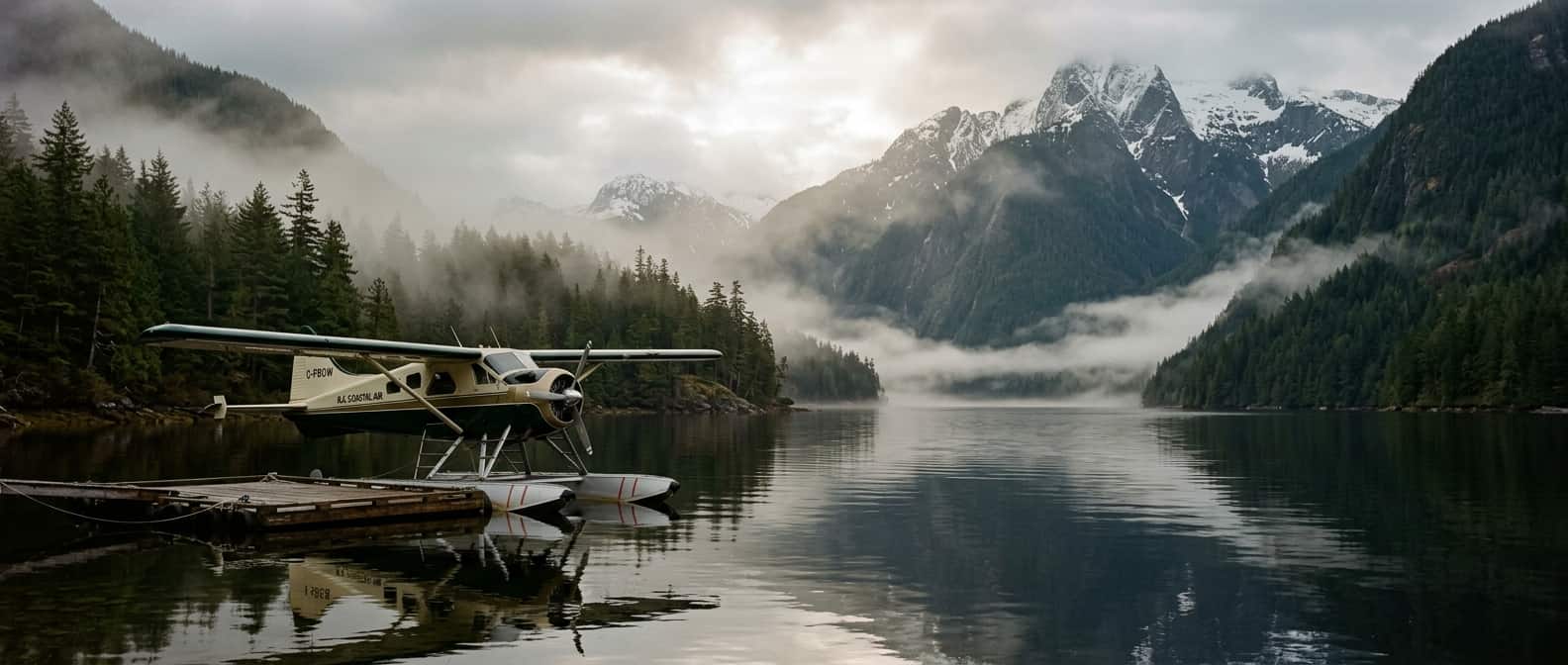
The scent of crushed pine needles cuts through the cool, damp air before the floatplane even idles its engine. Mist hangs low over the glass-like surface of the sound, wrapping the coastline in a shroud of deep greens and slate grays. Here, hundreds of miles from the nearest paved road, the only sounds are the rhythmic lapping of water against the pontoons and the distant echo of a bald eagle. This is not the curated, manicured luxury of a European capital. This is British Columbia—a place where the wild is absolute, and comfort is engineered against the elements.
The New Coolcation
As traditional summer destinations swelter under record-breaking heat, the affluent traveler’s compass is firmly pointing north. The "coolcation" is no longer a fleeting trend but a requisite shift in how we approach the summer months. For the discerning Indian traveler, escaping the subcontinent's own formidable heat necessitates a sanctuary of temperate climates and vast, uncrowded spaces. British Columbia’s temperate rainforests provide exactly this: a high-latitude refuge where daytime temperatures hover in the comfortable low twenties (Celsius) and the air carries a crisp, restorative edge. The luxury here isn't measured in marble foyers, but in exclusivity of access to millions of acres of untouched wilderness.
Arrival by Air
To understand the scale of British Columbia's wilderness, one must view it from above. The journey to the province's elite lodges rarely involves a car. Instead, it begins at a private terminal in Vancouver, stepping aboard a de Havilland Beaver floatplane or a sleek helicopter. As the city grid dissolves, it is replaced by an endless expanse of jagged peaks, ancient glaciers, and winding fjords that carve their way into the coastline. This airborne transition is not merely a transfer; it is a vital psychological threshold. It sets a boundary between the hyper-connected world left behind and the profound quiet of the remote.
Clayoquot Wilderness Lodge
Tucked into a pristine inlet on Vancouver Island, Clayoquot Wilderness Lodge is the archetype of the high-end frontier camp. Operating under the umbrella of Baillie Lodges, it applies a relentless standard of hospitality to an environment that is anything but forgiving. Guests do not stay in rooms, but in grand, safari-style canvas tents erected on raised wooden platforms. Inside, underfloor heating, cast-iron stoves, and antique silver furnish a space that feels more like an Edwardian explorer's outpost than a traditional hotel. Days are spent horseback riding through old-growth forests or spotting black bears foraging along the shoreline, returning only when the sun dips below the horizon.
Nimmo Bay Resort
Further up the coast, deep within the Great Bear Rainforest, Nimmo Bay operates on a different frequency. Accessible only by air or water, this family-owned lodge has mastered the art of intimate, low-impact luxury. The wooden chalets are perched directly over the water or tucked into the dense forest canopy, offering immediate immersion into the ecosystem. Nimmo Bay’s signature is its bespoke approach to wilderness exploration. A private helicopter stands ready to drop guests on a 10,000-year-old glacier for a champagne picnic or ferry them to a secluded river for world-class catch-and-release fly fishing. It is an orchestration of awe, delivered with quiet precision.
The Culinary Paradigm
One might assume that isolation requires culinary compromise. In British Columbia’s top lodges, the opposite is true. The remote setting forces a radical, hyper-local approach to dining. Executive chefs forage for sea asparagus and spruce tips, pulling Dungeness crab and spot prawns straight from the icy waters outside the kitchen door. Meals are a direct reflection of the surrounding terroir, paired with exceptional, hard-to-source vintages from the nearby Okanagan Valley. Dining is unpretentious but flawless, whether served in a fire-lit dining room or on a secluded pebble beach with a private chef cooking over an open flame.
The Luxury of the Untamed
The ultimate privilege of these northern lodges is the permission they grant to disconnect. There is no ambient city noise, no pressing itinerary, and often, no cellular service. What remains is a raw, sensory engagement with one of the last truly wild places on earth. In the quiet of the boreal forest, surrounded by ancient cedars and the deep, cold waters of the Pacific Northwest, one finds a rare equilibrium. It is a reminder that true luxury is not about insulating oneself from the world, but about experiencing it in its most powerful, undiluted form.