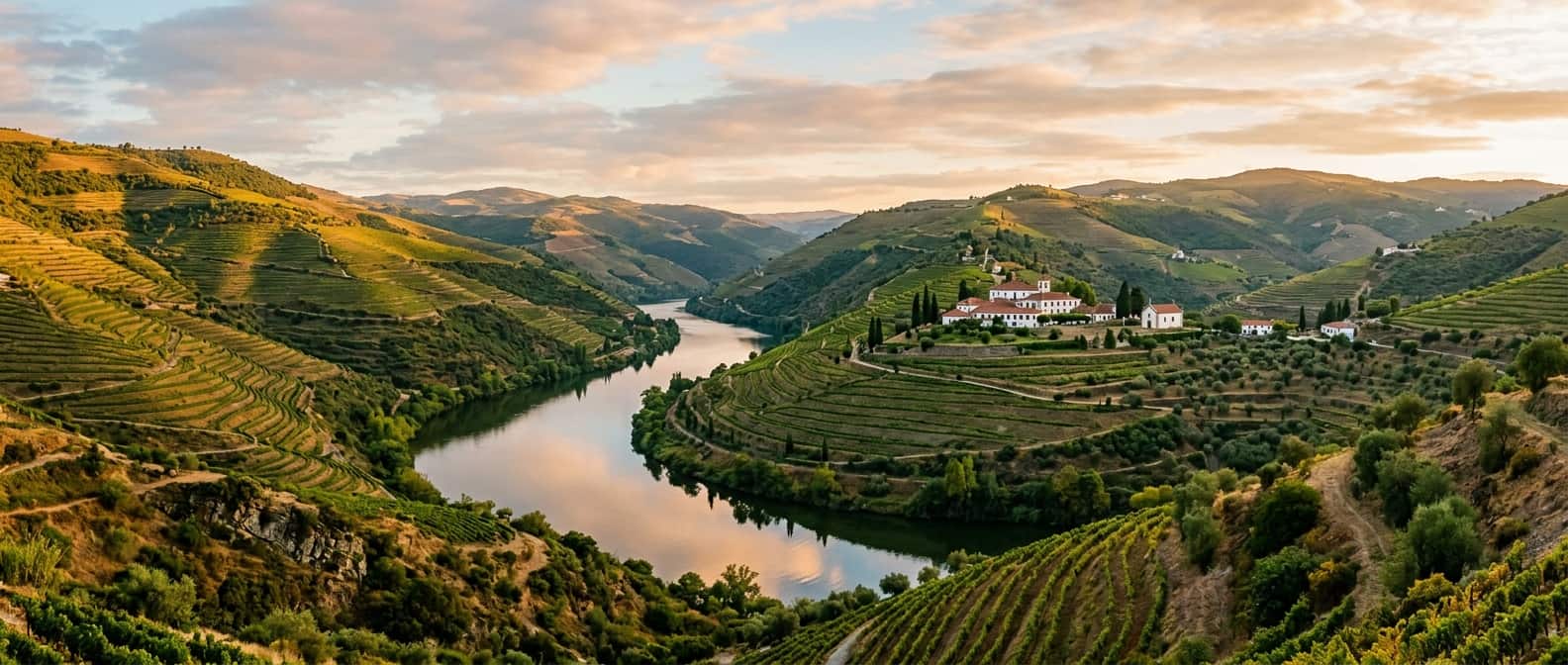
The light in the Douro Valley does not simply fall; it seems to pool and settle into the terraced hillsides like honey. By late afternoon, the sharp geometry of the ancient vineyards softens, glowing against the ribbon of water that has carved its way through the Iberian Peninsula for millennia. There is a profound quiet here, broken only by the distant chime of a village bell or the faint rustle of olive groves shifting in the breeze. For the modern traveler, accustomed to the frenetic pace of Europe’s marquee coasts, arriving in this northern sanctuary feels less like a vacation and more like a necessary exhalation.
The Douro is not a place you conquer or check off a list. It is a place that asks you to sit still, to watch the morning mist rise off the river, and to understand the slow, deliberate craft of time.
The Rhythm of the River
While the Amalfi Coast and the French Riviera lean heavily into their manicured glamour, the Douro Valley operates on an older, more agrarian cadence. Recognized as the world’s oldest demarcated wine region, its steep slopes have been cultivated since the time of the Romans, entirely shaped by human hands mapping vines onto unforgiving schist soil. The result is an amphitheater of greenery that feels both wild and meticulously designed.
For the affluent Indian traveler seeking an alternative to the crowded summer destinations of southern Europe, the Douro presents an elegant solution. It offers the architectural beauty and culinary pedigree expected of high-end continental travel, but it delivers them with a profound sense of isolation. The valley does not rush. Days here unfold in a leisurely progression of long lunches beneath vine-draped pergolas, private river cruises as the heat of the day breaks, and evenings spent tasting vintages that have been aging quietly in dark cellars for decades.
This is the essence of slow luxury. It is an understanding that the ultimate privilege is no longer access to the most exclusive beach club, but rather the space and silence to hear oneself think, accompanied by a glass of something truly remarkable.
Estates of Antiquity: Where to Stay
The hospitality landscape in the Douro has evolved dramatically over the last decade, transitioning from rustic wine lodges to some of the most sophisticated retreats in Europe. Chief among them is the Six Senses Douro Valley, housed in a meticulously restored 19th-century manor set high on a hill overlooking the vine-covered terraces. The property is a masterclass in contextual luxury. The architecture respects the gravity of the landscape, while the interiors offer a sanctuary of muted tones, organic materials, and expansive windows that frame the river like a painting.
At Six Senses, wellness and indulgence are not treated as mutually exclusive. The spa, a sprawling subterranean retreat, draws heavily on the region’s viticulture, offering treatments that utilize grape extracts and local botanicals. Yet, the estate also maintains an encyclopedic wine library and a dining program that elevates regional Portuguese staples into high art.
Further upstream, smaller boutique quintas (historic wine estates) offer a more intimate, deeply personalized experience. Places like Quinta de Ventozelo and Quinta do Vallado provide exclusive access to working vineyards, where guests can observe the harvest and pressing processes firsthand. These estates blur the line between a luxury hotel and a private aristocrat's home, offering a level of discreet, warm service that feels genuinely bespoke.
The Vintage Experience
To visit the Douro is, fundamentally, to engage with its wine. But luxury here moves far beyond the standard tasting room rotation. This is a region where access is everything, and the most memorable experiences are the ones hidden behind heavy wooden doors in private cellars.
Bespoke itineraries often include private consultations with head winemakers, exploring the nuanced differences between the bright, acidic whites grown at higher altitudes and the rich, complex ports that have made the valley famous. Imagine a private tasting in a cellar dating back to the 18th century, guided by a sommelier who opens bottles from the year of your birth.
Dining follows a similar philosophy of hyper-locality and exceptional craft. The culinary scene in the Douro has quietly secured its place on the global gastronomic map, championed by chefs who source almost entirely from the valley itself. Meals are protracted, multi-course affairs—starting with delicate river fish, moving through robust, slow-cooked meats, and finishing with an array of regional cheeses perfectly paired with a vintage Tawny.
Pacing the Journey
A journey to the Douro should not be rushed. The ideal itinerary spans at least four to five nights, allowing the rhythm of the valley to properly take hold. Arrival is often via Porto, a vibrant, layered city that warrants a day or two of exploration, before a seamless transfer—often by private helicopter or a chartered wooden rabelo boat—delivers you into the heart of the valley.
Once settled, the schedule should remain deliberately sparse. A morning hike through the upper terraces, where the air is cool and fragrant with pine and eucalyptus. An afternoon reading by the pool as the sun shifts across the water. A sunset cruise aboard a vintage yacht, champagne in hand, watching the shadows lengthen across the vines.
As the world outside accelerates, the Douro Valley remains steadfastly rooted in its traditions. It is a testament to the beauty of patience, a place where the best things—from the wine in the barrel to the shaping of the landscape—take time. For those willing to adjust their internal clock to match its steady flow, it is nothing short of restorative.