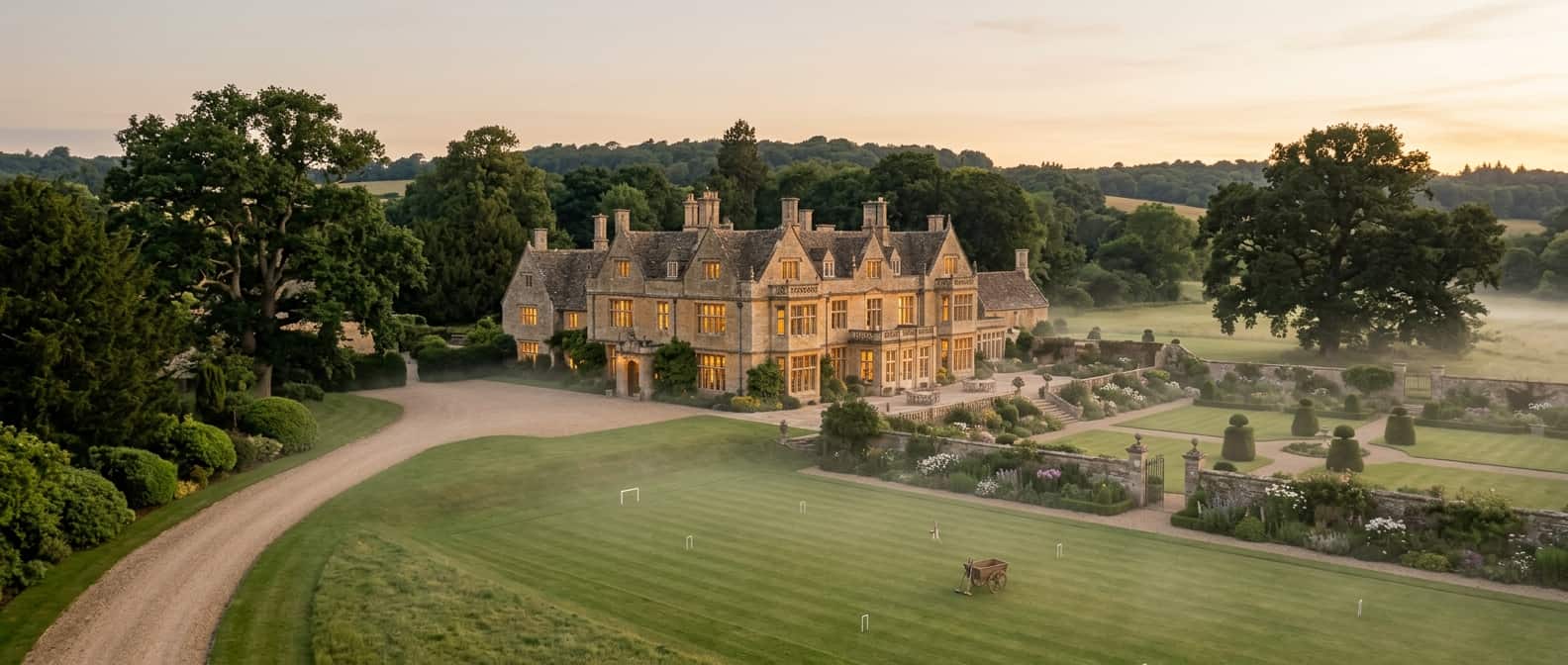
The gravel crunches under the tires of the Range Rover, a sound that has signaled arrival at the English country house for decades. But as the iron gates swing open, the heavy, dark interiors and drafty corridors of the past are nowhere to be found. Instead, there is light pouring through modern glass extensions, the scent of wild fig and cedar, and an atmosphere that feels less like a historical re-enactment and more like a masterful curation of contemporary slow living.
For the affluent traveler, the United Kingdom has long been anchored by the urban gravity of London. Yet, a quiet but profound shift is drawing the global elite beyond the M25. The English country estate has been entirely recalibrated, transforming from dusty aristocratic relics into avant-garde sanctuaries of wellness, epicurean brilliance, and high design.
The Shift from Manor to Sanctuary
Historically, the appeal of the English countryside relied heavily on nostalgia—chintz fabrics, mounted antlers, and a rigid formality. Today's most sought-after estates have stripped away the pretension while retaining the romance. The architecture respects the Georgian or Jacobean bones of the buildings, but the interiors have been handed over to world-class designers who favor tactile linens, muted palettes, and museum-quality contemporary art.
This is not a rejection of heritage, but an evolution. The modern estate understands that luxury is no longer defined by white-gloved service, but by space, silence, and hyper-personalized comfort. It is about waking up in a four-poster bed to the sound of nothing but rain on the leaded windows, before padding down to a subterranean spa that rivals anything in the Swiss Alps.
Somerset’s Epicurean Renaissance
Nowhere is this transformation more evident than in Somerset, a county that has quietly become the epicurean heart of rural England. Leading the charge are estates that function as working farms, cider presses, and botanical gardens, operating with a zero-kilometer ethos that elevates dining to an art form.
Here, the relationship between the kitchen and the land is absolute. Dinners are not fussy, multi-course endurance tests, but vibrant, ingredient-led celebrations of the season. Venison sourced from the estate's own deer park, heritage vegetables pulled from the walled garden that morning, and artisanal cheeses aged in the cellar. The luxury lies in the purity of the produce and the exactness of the execution, served in dining rooms that overlook the very fields where the ingredients were grown.
The Cotswolds, Recalibrated
The Cotswolds has always been the postcard-perfect iteration of England, but a new wave of properties is injecting a dose of cosmopolitan energy into the honey-colored villages. These are private members' clubs and boutique estates that bring the sophisticated edge of Mayfair to the rolling hills of Oxfordshire and Gloucestershire.
The new Cotswolds estate is designed for the modern family and the discerning couple alike. You will find Olympic-sized heated outdoor pools bordered by ancient oaks, padel courts hidden behind yew hedges, and libraries stocked not with dusty encyclopedias, but with first editions and curated vinyl collections. It is a seamless blend of town and country, offering rural isolation without sacrificing a single urban indulgence.
Wellness in the Walled Garden
Perhaps the most significant departure from the traditional country house is the approach to wellness. The drafty manor has been replaced by estates that house multi-million-pound wellness centers, often concealed beneath the lawns or tucked into restored Victorian glasshouses.
These are not standard hotel spas. They are holistic sanctuaries offering Roman-style bathhouses, cryotherapy, advanced biohacking therapies, and Ayurvedic consultations. The walled garden, once merely decorative, now serves as the focal point for mindful movement—outdoor yoga pavilions and meditation spaces surrounded by medicinal herbs and climbing roses. The healing power of the landscape is harnessed and brought indoors, creating environments of profound restoration.
The Architecture of Slow Time
Ultimately, the draw of the new English country estate is the luxury of unhurried time. The schedules that dictate life in Mumbai, London, or Dubai lose their grip the moment you pass the gatehouse.
Days are measured not in meetings, but in the slow burn of a morning mist lifting off the croquet lawn, a long walk in Wellies through an ancient woodland, and the crackle of an open fire in the drawing room before dinner. It is a deeply grounding experience, an invitation to step out of the current and into a quiet, meticulously crafted Arcadia.