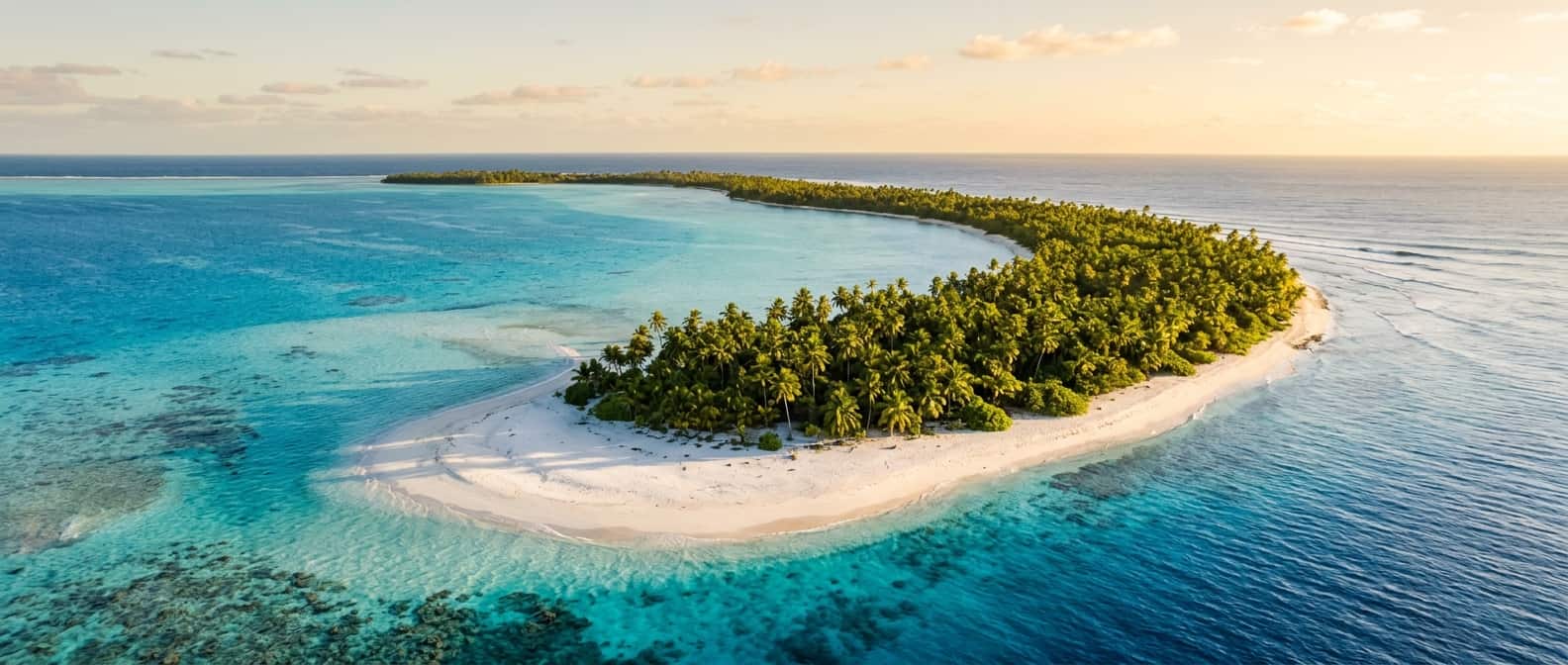
The wind over the South Pacific carries a distinct warmth, heavy with the scent of wild vanilla and salt. Below the twin-engine plane, the deep indigo of the ocean abruptly shatters into a brilliant, electric turquoise ring. This is Tetiaroa, a private atoll of a dozen small islands surrounding a three-mile lagoon, once the summer retreat for Tahitian royalty. It is a place defined not by what it has built, but by what it has left entirely alone.
The Shift Beyond the Familiar
For the affluent Indian traveler, the luxury archipelago has long been synonymous with the Maldives. The cadence is familiar: the short-haul flight, the seaplane transfer, the overwater villa. Yet, as milestone travel evolves, there is a discernible shift toward the edge of the map. French Polynesia represents the ultimate tier-up, trading convenience for profound isolation and untouched topography.
Tetiaroa sits thirty miles north of Tahiti, entirely detached from the typical tourist circuits of Bora Bora or Moorea. The appeal here is not simply the distance traveled from Mumbai or Delhi, but the quality of the remoteness upon arrival. The Brando, the atoll’s sole occupant, operates less as a traditional resort and more as an environmental trust with a few exceptional guest quarters attached. There are no competing speedboats on the horizon. There is no ambient light pollution. It is a sanctuary designed for those who have seen the best of the Indian Ocean and are now seeking an environment that feels thrillingly absolute. This is isolation elevated to an art form, where the luxury lies in the total absence of the outside world.
Arrival: The Private Aviation Experience
The transition from the mainland to the atoll is a masterclass in controlled deceleration. Upon landing at Fa'a'ā International Airport in Papeete, guests are quietly ushered away from the main terminal and into a private aviation lounge. The clamor of international travel dissipates instantly. Air Tetiaroa, the resort's private airline, operates a fleet of twin-engine aircraft exclusively for guests of the island.
The flight takes exactly twenty minutes. It is a brief, visual overture before the main event. As the plane banks over the open ocean, the coral reef of Tetiaroa comes into sharp focus. The landing strip itself is a narrow ribbon of asphalt cut through dense coconut groves on Onetahi, one of the atoll's twelve motus. Stepping onto the tarmac, the immediate sensation is the silence—broken only by the rustle of palm fronds and the distant break of the surf against the outer reef. There is no lobby in the traditional sense. Guests are met directly on the runway and guided to their villas along winding, sandy pathways heavily shaded by tropical canopy. The outside world is effectively severed the moment the plane's engines cut out.
The Villas: Anonymity and Design
The Brando comprises just thirty-five beachfront villas, completely hidden from one another by dense screens of pandanus and ironwood trees. The architecture defers entirely to the landscape. Instead of the ubiquitous overwater bungalows that dominate South Pacific luxury, these structures are anchored firmly to the white sand, blending into the tree line to preserve the visual integrity of the shoreline from the water.
For the high-net-worth traveler seeking absolute anonymity, the design is flawlessly executed. Each villa functions as a self-contained compound. Interiors are vast, utilizing local timber, pandanus leaf roofing, and wide expanses of glass that blur the boundary between the living space and the lagoon. The private plunge pools are set into the deck, mere steps from a stretch of beach that remains untouched save for the occasional hermit crab. The air conditioning is powered by a pioneering seawater system, pulling frigid water from the deep ocean to cool the rooms silently. It is luxury that never feels heavy or imposed. The spaces feel organic, yielding entirely to the rhythms of the sun and the tide.
Conservation as Utmost Luxury
True luxury in the modern era is inextricably linked to preservation. The Brando was conceived with a mandate to protect Tetiaroa's fragile ecosystem, and this ethos permeates every aspect of the guest experience. The resort aims for complete carbon neutrality, utilizing solar power, coconut oil biofuel, and the aforementioned deep-seawater cooling system.
But the conservation effort extends far beyond infrastructure. Tetiaroa serves as a critical sanctuary for green sea turtles and rare seabirds. Guests can accompany resident marine biologists from the island's dedicated research station on nightly excursions to observe turtles nesting on the beach. It is a profoundly quiet, deeply affecting experience that no amount of traditional luxury can replicate. The atoll is not merely a backdrop for a vacation; it is a living laboratory. For families traveling from India, this offers a layer of intellectual engagement and environmental stewardship that elevates the trip from a simple holiday to a formative experience. The privilege of being here is the privilege of witnessing an ecosystem thriving exactly as it did centuries ago.
The Culinary Narrative
Dining on an isolated atoll presents an inherent logistical challenge, yet the culinary program at The Brando rivals the finest establishments in Paris. The flagship restaurant, Les Mutinés, operates under the guidance of Michelin-starred chef Jean Imbert. The space itself is an architectural marvel, designed to evoke the hull of an inverted ship, but the true brilliance lies on the plate.
The menu is a study in precision and locality. Ingredients are drawn largely from the island’s expansive organic garden and orchard, supplemented by sustainably caught fish from the surrounding waters. Classic French technique is applied to Polynesian staples, resulting in dishes that are both sophisticated and deeply rooted in their environment. For a lighter, more relaxed approach, the Beachcomber Cafe offers exceptional lagoon-side dining, while the Te Manu Bar, elevated in the tree canopy, provides the definitive setting for an evening aperitif. The wine cellar is formidable, featuring rare vintages carefully transported and stored in impeccable conditions. It is a culinary narrative that respects its remote setting while refusing to compromise on ambition.
The Verdict for the Indian Traveler
The Brando is not for the casual vacationer. It requires a significant commitment of time and resources to reach. Yet, for the affluent Indian traveler marking a significant life event, it offers a caliber of experience that is increasingly rare. It is a destination that delivers on the promise of true escape.
The sheer distance from the subcontinent acts as a filter, ensuring a level of exclusivity that is difficult to find closer to home. Here, the metrics of luxury are recalibrated. It is not about golden fixtures or excessive service, but about the purity of the environment, the depth of the privacy, and the quiet dignity of a place that remains entirely itself. Tetiaroa asks for your attention, and in return, it offers the profound luxury of stillness.