There is a version of Kyoto that exists entirely in the fast lane: the crowded ascent to Kiyomizu-dera, the flash of cameras in Gion, the relentless hum of the modern station. But shift slightly off axis, past the cedar gates and into the northern hills, and a different rhythm emerges. Here, luxury is not measured in excess, but in subtraction. It is the careful raking of gravel at dawn, the precise temperature of an onsen drawn from deep beneath the earth, and the quiet ritual of a matcha ceremony in a room where the shadows are as considered as the light. For the affluent Indian traveler accustomed to the immediate gratification of global capitals, Kyoto offers something rarer: stillness.
The Architecture of Stillness
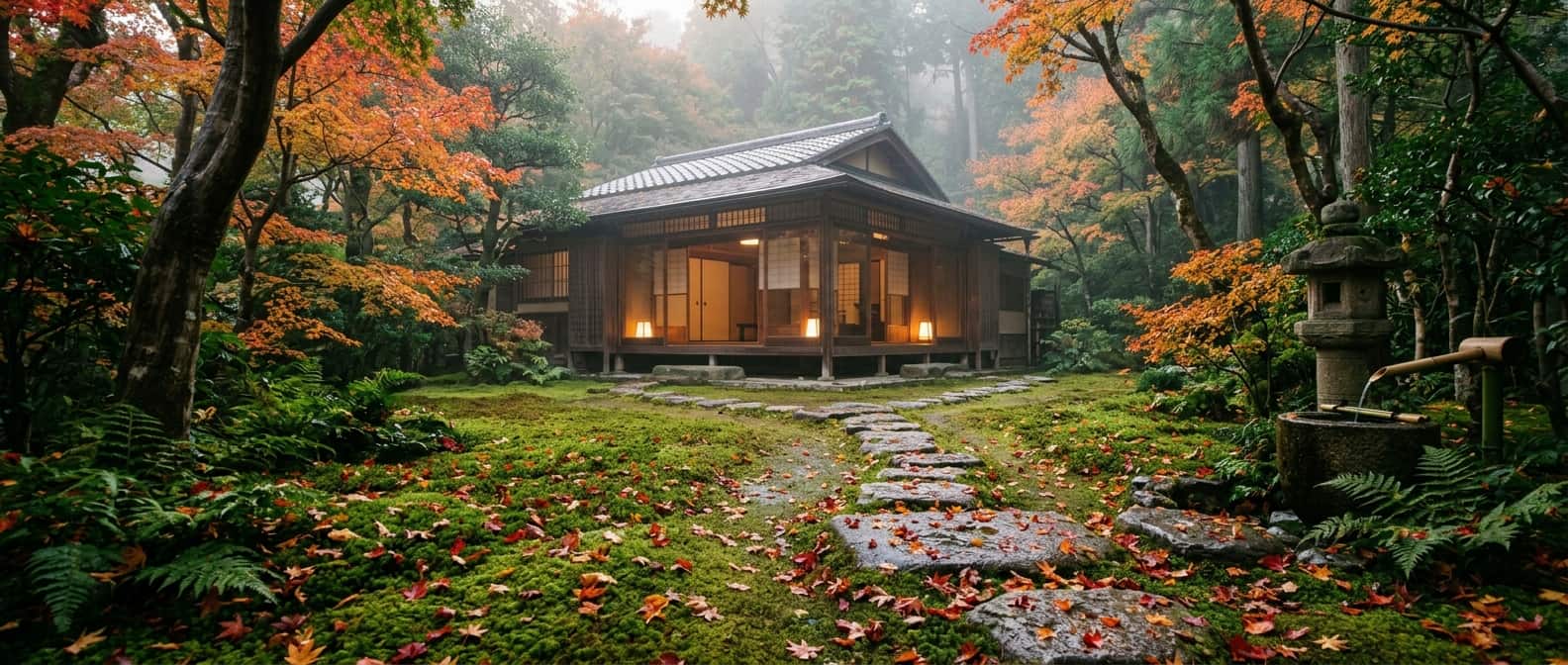
The modern luxury ryokan is a masterclass in tension—balancing ancient hospitality protocols with contemporary design. At Aman Kyoto, tucked into the forested foothills of Hidari Daimonji, the architecture defers entirely to the landscape. Pavilions of dark timber and glass float above mossy boulders, designed by the late Kerry Hill to feel as though they have always belonged to the forest.
Further west, in Arashiyama, Hoshinoya Kyoto requires a private boat ride up the Ōi River to access. The property occupies a restored 17th-century merchant’s retreat. Rooms feature karakami block-printed wallpapers and tatami mats, but with the plush concessions of modern comfort—low-slung beds and floor-to-ceiling glass that turns the changing leaves into a living canvas. It is a profound departure from the vertical luxury of Tokyo, grounding you instead in the tactile and the horizontal.
The Culinary Code: Beyond Kaiseki
Kyoto’s culinary scene is famously insular, but access unlocks a world of hyper-seasonal dining. While kaiseki—the traditional multi-course dinner—is the city's gastronomic backbone, its modern iterations are breaking new ground. At Michelin-starred Monk, situated along the Philosopher’s Path, Chef Yoshihiro Imai applies the precision of Japanese foraging to a wood-fired pizza oven, creating an omakase experience that bridges the rustic and the refined.
For the purist, Kikunoi Honten remains the gold standard. Here, the menu is a fluid reflection of the micro-seasons. A summer dish might arrive on a bed of crushed ice, garnished with a single morning-glory leaf, while autumn brings rich, earthy broths served in centuries-old lacquerware. It is dining as an act of meditation.
The Art of the Karesansui
To understand Kyoto, one must understand its gardens—specifically, the karesansui (dry landscape). These are not spaces for strolling, but for sitting and observing. While Ryōan-ji is the most famous, it is often too crowded for true contemplation.
Seek out the lesser-known sub-temples of Daitoku-ji, such as Zuiho-in. Designed by Mirei Shigemori in the 1930s, its raked gravel waves crash against jagged rock formations in a striking, avant-garde interpretation of the traditional Zen garden. It is a masterclass in spatial awareness, teaching the eye to find beauty in the negative space.
Logistics for the Indian Traveler
For the Indian outbound market, Kyoto requires a deliberate pacing. Fly into Osaka’s Kansai International (KIX) and bypass the city entirely, opting for a private transfer directly to your ryokan. While Japan's rail system is unmatched, luggage logistics can be cumbersome; utilizing a white-glove forwarding service between hotels is essential.
Visas for Indian passport holders have become increasingly streamlined, with e-visas now available, removing the friction from spontaneous travel planning. The ideal window is late November for the momiji (autumn leaves) or early April for the sakura, though the crisp, quiet days of late winter offer an uncrowded intimacy that is arguably the city's greatest luxury.
In Kyoto, the ultimate privilege is not access to the loudest room, but the ability to listen to the quietest one.
Sources
Note: Web researcher was unavailable. Information reflects established editorial knowledge of Kyoto's luxury landscape.