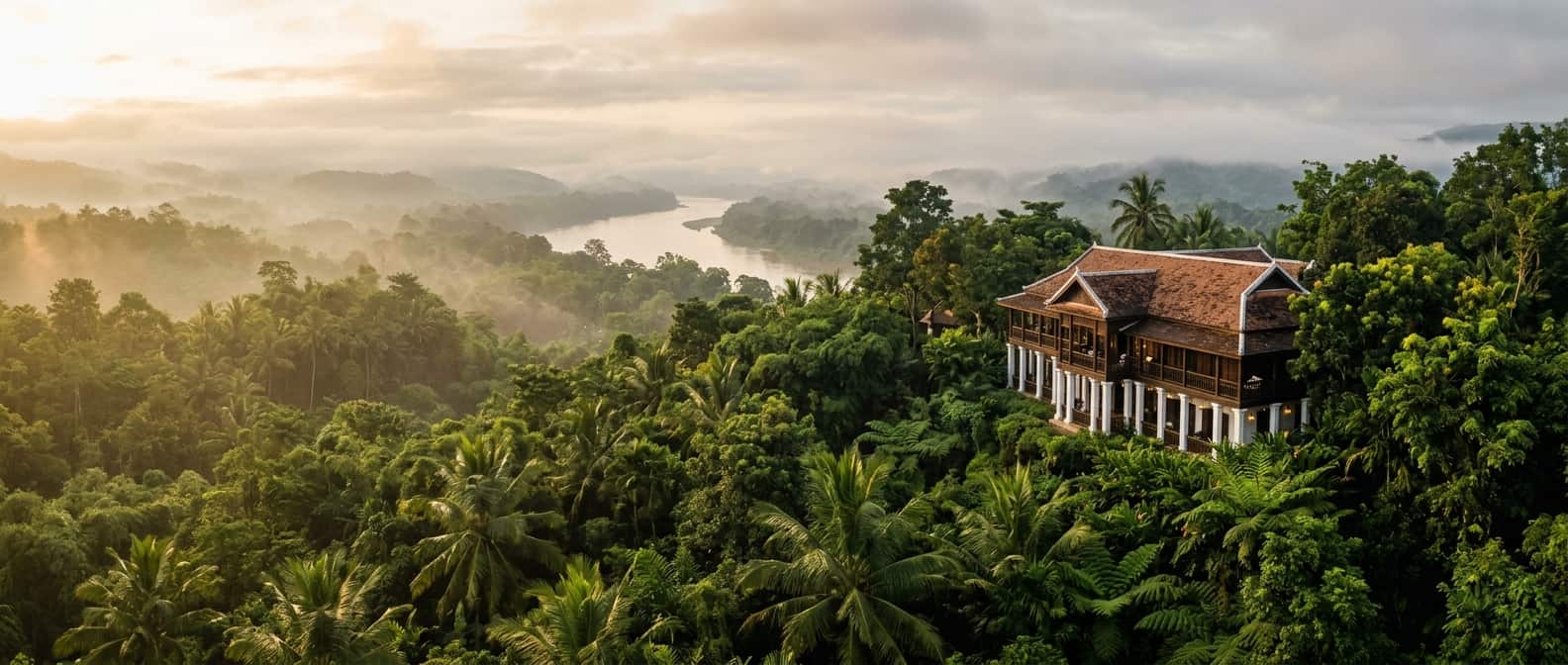
The morning mist in Luang Prabang does not lift so much as it dissolves, revealing the sharp silhouettes of frangipani trees and the gilded roofs of ancient wats. Saffron-robed monks move in absolute silence along the dampened streets, their alms bowls catching the first slant of golden-hour light. Here, at the confluence of the Mekong and Nam Khan rivers, time slows to a deliberate, monastic pace, offering a profound counterpoint to the relentless velocity of modern travel.
The Shift to Slow Luxury
For the discerning Indian traveler, the geography of luxury has expanded well beyond the manicured shores of the Maldives or the energetic density of Phuket. There is a growing appetite for absolute quiet—for destinations that demand nothing of their visitors other than presence. Luang Prabang, the historic royal capital of Laos and a UNESCO World Heritage site, satisfies this mandate with an almost effortless grace.
It remains mercifully insulated from the aggressive development that has consumed other parts of Southeast Asia. Instead of mega-resorts, the town is anchored by carefully restored French-colonial estates and discreet jungle hideaways. The luxury found here is not defined by opulence, but by rarity: the rarity of untouched primary forests, of deeply rooted spiritual traditions that remain entirely authentic, and of a service culture defined by gentle, intuitive anticipation rather than rigid formality.
The Estates: Amantaka and Rosewood
The hospitality landscape in Luang Prabang is defined by two distinct, yet complementary, philosophies of luxury. At Amantaka, situated just south of Phousi Hill, the aesthetic is one of monastic restraint. Housed in a series of restored French-colonial hospital buildings, the estate is a masterclass in spatial luxury. High ceilings, louvered doors, and vast, private courtyards create an atmosphere of profound serenity. The Aman philosophy of seamless, invisible service is perfectly suited to the Laotian temperament, resulting in a stay that feels less like a hotel and more like a private, royal residence.
A short drive into the surrounding jungle reveals a different interpretation of the environment at Rosewood Luang Prabang. Here, the architecture surrenders to the wildness of the landscape. Luxury tented villas, designed by Bill Bensley, are suspended over a cascading waterfall, their interiors rich with indigenous textiles and colonial-era antiques. It is a more sensory, immersive experience, offering absolute isolation without compromising on the meticulous standards expected by high-net-worth travelers.
The Monastic Rhythm
The true luxury of Luang Prabang lies in its rhythms, which are dictated not by itineraries, but by the sun and the bells of the local wats. The Tak Bat, the daily dawn alms-giving ceremony, is the spiritual heartbeat of the town. While it has become a spectacle in certain corridors, true luxury travel allows for a respectful, private engagement with this tradition. The finest estates arrange for their guests to participate quietly, far from the flashbulbs, offering sticky rice prepared by the hotel’s chefs in a moment of genuine cultural exchange.
Beyond the dawn, the days unfold with a deliberate languor. Bicycles are the preferred mode of transport, navigating lanes lined with teakwood houses and bougainvillea. Private viewings of the town's most significant temples, such as Wat Xieng Thong with its sweeping, multi-tiered roof, can be arranged before the public gates open, allowing the intricate glass mosaics to be admired in absolute solitude.
The Mekong in Private
The Mekong River is the central artery of Laotian life, and engaging with it is essential to the Luang Prabang experience. However, the standard public cruises are easily bypassed in favor of bespoke river navigation. Hand-crafted, private longboats, appointed with daybeds, raw silk cushions, and fully staffed galleys, offer an entirely different vantage point.
Navigating upstream toward the Pak Ou Caves—a dramatic limestone cliff face housing thousands of gilded Buddha statues—becomes a meditative journey. A sunset cruise, accompanied by vintage champagne and traditional Laotian canapés, is perhaps the definitive Luang Prabang moment. The water turns a bruised purple as the sun drops behind the forested mountains, and the only sound is the low hum of the outboard motor and the distant call of tropical birds.
Curating the Laotian Journey
Logistically, Luang Prabang has never been more accessible for the affluent Indian outbound market, with seamless connections through Bangkok or Hanoi. Yet, it retains the essential feeling of a final frontier. It is a destination that requires curation rather than scheduling.
The most successful itineraries lean into the local topography, blending a few nights in the colonial center at Amantaka with a retreat into the jungle canopy at Rosewood. It is a place for private cooking masterclasses focusing on the complex, herbaceous layers of Laotian cuisine, for deep-tissue therapies utilizing local botanicals, and for unstructured hours spent reading on a veranda as the afternoon rain moves through the valley.
Ultimately, Luang Prabang does not dazzle; it restores. It offers the modern luxury traveler the rarest commodity of all: an elegant, undisturbed stillness.