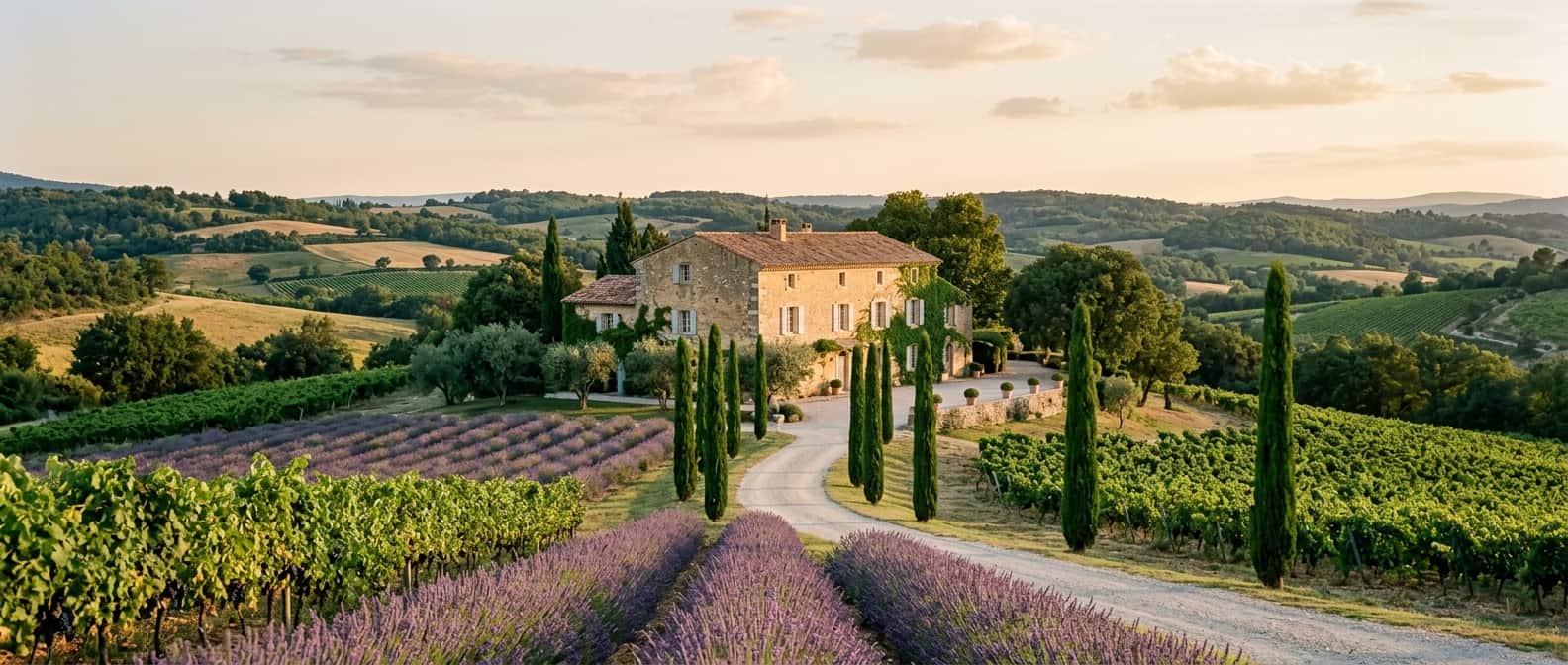
There is a specific quality to the light in Provence as the afternoon turns to evening. It hits the pale limestone of centuries-old farmhouses and turns them the colour of honey. The air smells sharply of pine, wild thyme, and sun-baked earth, while the rhythmic, metallic hum of cicadas creates an acoustic blanket over the landscape. For generations, the glittering, yacht-lined marinas of the Côte d'Azur have drawn the world’s elite, but a different kind of traveler is moving an hour inland. Here, in the Luberon Valley, luxury is not announced; it is lived quietly behind the high stone walls of private estates.
Trading the coastal frenzy for the interior’s slow, agrarian rhythm marks a shift in how modern affluence experiences France. It is an embrace of "stealth wealth" and sensory stillness. For the discerning Indian traveler seeking an escape from urban intensity, the Luberon offers a return to a grander, slower, and profoundly tactile way of living.
The Bastides and Domains
To understand the Luberon is to understand the bastide—the classic, aristocratic country house of Provence. These are not mere villas; they are sprawling estates built of heavy stone, anchored by ancient plane trees and surrounded by acres of private vines and working olive groves.
Securing a private domain for a week or a month is the ultimate currency of slow luxury here. Many of these historic properties have been quietly transformed into sanctuaries of modern comfort without losing their patinated charm. Inside, you find cool, terracotta-tiled floors, linen-draped furniture, and kitchens designed for private chefs to prepare meals from the morning’s market haul. For those who prefer the orchestration of a grand hotel, properties like Airelles Gordes, La Bastide, offer an immaculate, palatial experience. Perched on a cliffside, it feels less like a resort and more like stepping into a perfectly preserved 18th-century noble residence, where the service is invisible but omnipresent.
The Architecture of Slow
The geography of the Luberon is defined by its villages perchés—hilltop settlements that look as though they grew directly out of the bedrock. There is Gordes, an architectural masterpiece of winding, cobbled lanes leading to a Renaissance château; Bonnieux, with its sweeping views over the valley floor; and Ménerbes, an enclave of artists and quiet wealth.
To visit these villages is not about checking off landmarks. It is an exercise in pacing. Mornings are spent walking through narrow streets worn smooth by centuries of footsteps, stopping only for a black coffee and a warm croissant. By noon, the heat dictates a retreat to the thick-walled cool of your bastide. This architecture was designed long before modern cooling, relying instead on heavy wooden shutters and cross-breezes—a masterclass in vernacular design that forces you to respect the natural rhythm of the day.
The Provencal Table
Gastronomy in the Luberon is deeply tethered to the soil. This is not the place for molecular, high-concept dining; the luxury here lies in the absolute purity of the ingredients. The region is a breadbasket of heirloom tomatoes, Cavaillon melons, goat cheeses from local farms, and, in the cooler months, the coveted black truffles of the Vaucluse.
Dining is a ritual that stretches over hours. It might be a long, languid lunch under a trellis of wisteria at a Michelin-starred table, where the sommelier pours a crisp, pale rosé from an estate just three miles down the road. Or, perhaps more luxuriously, it is a private dinner prepared by a hired chef at your bastide. They return from the local market to craft a multi-course menu, served at a long oak table under the stars, accompanied only by the sound of the wind through the cypress trees.
The Rhythm of the Valley
If there is an agenda in the Luberon, it is wonderfully loose. Sundays are reserved for L'Isle-sur-la-Sorgue, known as the antique capital of France. Here, the canals are lined with hundreds of dealers selling everything from 19th-century linens to grand chandeliers and weathered stone fountains. Sifting through these treasures, guided perhaps by an interior designer or local art consultant, is a favorite pastime for those looking to ship a piece of Provencal history home.
Days blend into one another. You might spend an afternoon at a private wine tasting, learning the subtle differences of the region's terroir, or simply sitting in the garden with a book as the light begins its slow, golden decline.
The Luberon does not demand your attention; it simply absorbs you. It is a reminder that the truest form of luxury is space, silence, and the time to let the hours unfold exactly as they should.