The sound is the first thing you notice—not the crash of a shore break, but the rhythmic, resonant slap of water against wooden pilings beneath your floorboards. It is a constant acoustic reminder that you are suspended between two elements: the equatorial sun above and the vibrant, teeming coral shelf below. In the Maldives, the overwater villa is not just an accommodation category; it is the fundamental architectural expression of the destination itself. Yet, as searches from India for these aquatic sanctuaries surge by 120% year-over-year, selecting the right stilted hideaway has become an exercise in nuance. The archipelago is no longer a monolith of thatched roofs and glass floors; it is a canvas for contrasting design philosophies.
The Evolution of the Overwater Villa
What began in the late 20th century as a novel way to expand resort capacity without disturbing fragile island ecosystems has evolved into an arms race of luxury. The basic blueprint—a wooden walkway branching off a central island, leading to a series of detached suites—remains largely unchanged. However, the execution has splintered into distinct schools of thought.
Today’s discerning traveler isn't simply choosing an atoll; they are choosing a spatial experience. Do you want the raw, Robinson Crusoe romanticism of untreated wood and open-air bathrooms, or the hermetic seal of a hyper-modern, climate-controlled glass box hovering above the Indian Ocean? The distinction matters entirely to how you will experience the Maldives.
The Barefoot Pioneers: Rustic Luxury
For decades, the standard was set by properties that embraced their remoteness. This is the school of "barefoot luxury," a term practically invented in the Maldives. Here, architecture defers to nature. Villas are constructed from sustainable, locally sourced materials—thatch, bamboo, and reclaimed teak. The design language is intentionally unpolished, emphasizing tactile engagement over sterile perfection.
Take the newly opened Soneva Secret in the Haa Dhaalu Atoll. Its 50 villas represent the pinnacle of this philosophy. The spaces are massive, blurring the line between indoor and out, with retractable roofs for stargazing and lagoon slides that inject a sense of play. The luxury here is found in the craftsmanship and the absolute, unapologetic immersion in the environment. It appeals to the traveler who wants to forget the city entirely, embracing a sophisticated, curated wildness.
The Modernist Wave: Glass and Steel over Atolls
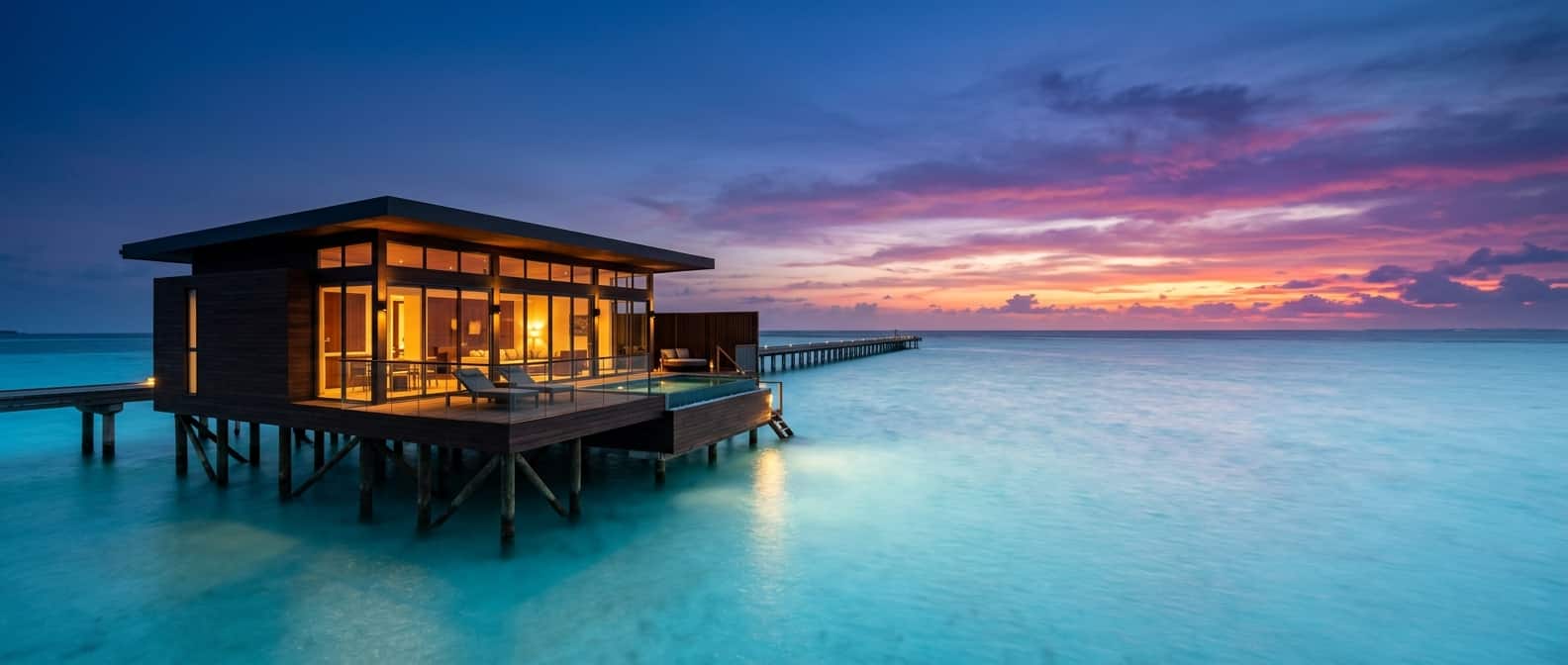
In stark contrast is the new wave of modernist properties that treat the overwater villa as a masterclass in contemporary engineering. These structures are sleek, angular, and often prioritize vast expanses of uninterrupted glass to frame the horizon like a living cinema screen. The aesthetic is closer to a high-end urban penthouse that happens to be floating on a reef.
The impending arrival of Aman Maldives in the Vaavu Atoll, designed by Kerry Hill Architects, signals a significant moment for this architectural style. Known for their rigorous minimalism, Aman's entry suggests an overwater experience defined by precise geometry, muted palettes, and an almost monastic serenity. Similarly, properties like the upcoming Hyatt Regency Samarafushi promise a more structured, polished take on the overwater stay. This style caters to those who seek the isolation of the Maldives but demand the sleek comforts and controlled environments of international contemporary design.
The New Exclusivity: Ultra-Low Density
Beyond aesthetics, the most significant shift in Maldivian hospitality is the move toward ultra-low density. As the destination has become more accessible, true luxury is increasingly defined by the absence of other people. The focus has shifted from the size of the resort to the ratio of space per guest.
This is where the overwater villa truly shines. The best modern iterations are designed to be entirely self-sufficient ecosystems. They are no longer just bedrooms; they are sprawling compounds featuring private infinity pools that rival main resort pools, dedicated spa treatment rooms, and expansive multi-level decks for lounging, dining, and direct ocean access. The goal is to create an environment so complete and captivating that the guest has no compelling reason to ever return to the main island.
Decoding the Deck: What Actually Matters
When evaluating these floating sanctuaries, the marketing brochures often blur together. To make an informed choice, look past the square footage and focus on the practicalities of the deck architecture.
First, consider the orientation. Sunset villas command a premium for the evening spectacle, but sunrise villas often offer cooler afternoons and calmer waters. Second, scrutinize the privacy screening. The best designs utilize strategic louvers, angled walls, or significant spacing to ensure you cannot see (or hear) your neighbors from your plunge pool. Finally, evaluate the marine access. A beautifully designed villa over a dead reef is a missed opportunity. Ensure the property offers a "house reef" accessible directly from your ladder, allowing for spontaneous snorkeling without the need for a boat transfer.
The perfect overwater villa is ultimately a balancing act—a structure that provides absolute comfort without severing the fragile, vital connection to the vibrant ocean that surrounds it.
Sources
- The Overwater Villa Escape: A 2026 Deep Dive — Notes a 120% YoY surge in searches from India for Maldives overwater villas.
- New luxury hotel opening 2024 in the Maldives — Soneva Secret — Confirms the opening of Soneva Secret with 50 new villas.
- Aman Maldives: Aman announces hotel in Maldives — Announces the upcoming Aman resort designed by Kerry Hill Architects.
- Hyatt Unveils Plans for Hyatt Regency Samarafushi Maldives — Details the 130-villa development opening in late 2024.