The morning air in the Luangwa Valley smells of crushed wild basil and red dust. There is no low hum of a diesel engine, no crackle of a two-way radio. Instead, there is the crunch of dry grass beneath your boots and the sharp, rhythmic alarm call of a puku somewhere near the riverbank. This is the luxury of proximity. In an era where African safaris are increasingly defined by plunge pools and air-conditioned 4x4s, Zambia insists on something far rarer: the unmediated thrill of experiencing the wild on foot.
The Birthplace of the Walking Safari
It was here, in the 1950s, that conservationist Norman Carr pioneered the walking safari. He believed that viewing animals from a vehicle rendered the observer a mere spectator. To walk was to become a participant in the ecosystem. Today, South Luangwa remains the undisputed capital of this discipline.
For the affluent Indian traveler who has already “done” the Serengeti migration or the Kruger reserves, the Luangwa Valley represents the PhD level of safari. The guides here undergo rigorous multi-year training, reading the bush like a complex manuscript. They decode the subtle indentation of a leopard’s paw in the sand, the age of an elephant’s dung, and the language of the wind.
Design in the Dust: The Time + Tide Camps
To walk in the wild does not mean to compromise on refinement. The valley’s best operators have perfected the art of "barefoot luxury," creating sanctuaries that leave a light footprint but deliver exceptional comfort.
Take the Time + Tide camps—specifically Chinzombo, designed by award-winning architects Silvio Rech and Lesley Carstens. Tucked into the shade of ancient msikizi trees, the camp’s canvas-and-leather villas overlook the sweeping Luangwa River. Here, the aesthetic is deeply contextual: locally woven reeds, raw leather, and campaign furniture that nods to the romantic era of exploration. Yet, it offers the ultimate modern indulgences: private plunge pools, Wi-Fi (if you must), and culinary programs that rival top-tier Cape Town restaurants.
The Rhythm of the River
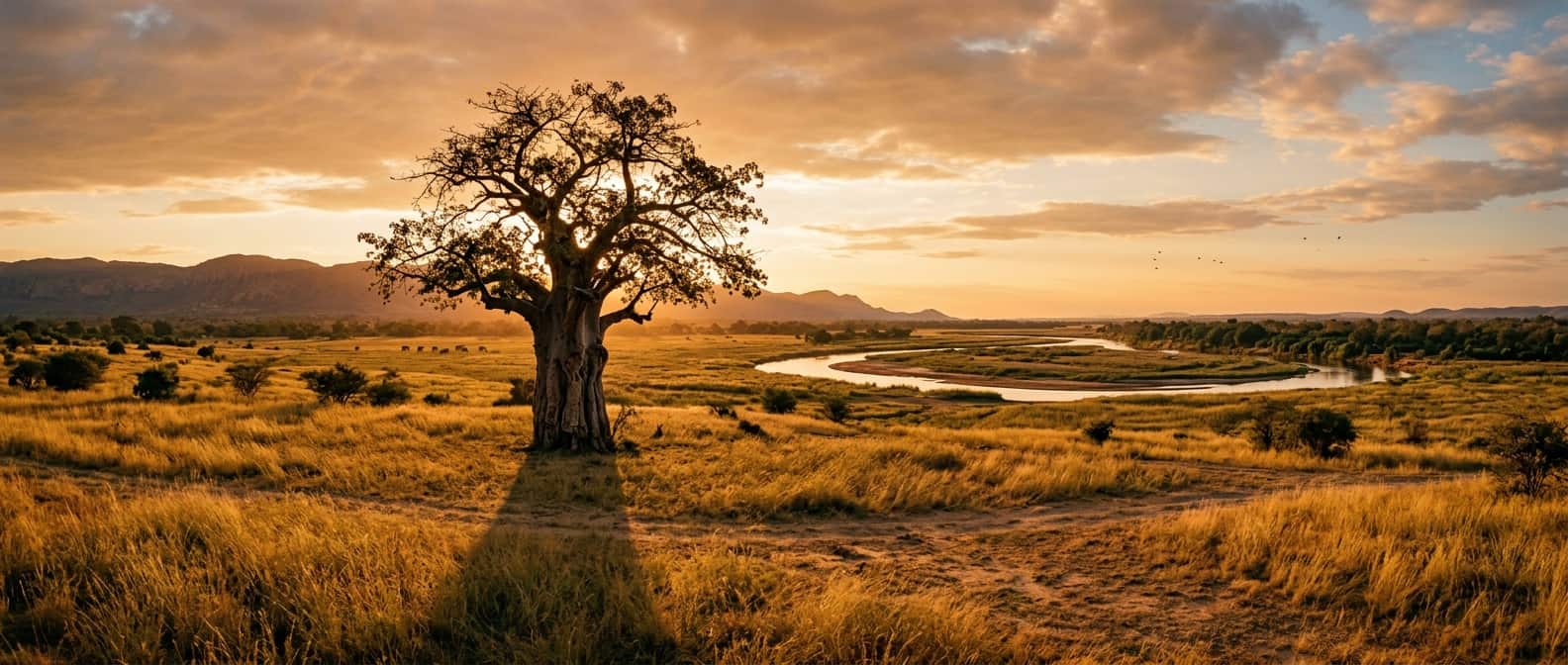
Life in South Luangwa is dictated by the river. Unlike the open plains of East Africa, the landscape here is a mosaic of oxbow lagoons, ebony groves, and dense mopane woodlands. This geography concentrates the wildlife. The park holds one of the highest concentrations of leopards in Africa, alongside endemic species like the Thornicroft’s giraffe and Cookson’s wildebeest.
A typical day eschews the frantic rushing of traditional game drives. After a dawn walk tracking lions along the sandy riverbeds, guests retreat to camp for a late brunch. The afternoon might involve a serene boat safari (during the emerald season) or a classic sundowner drive, gin and tonic in hand, watching carmine bee-eaters dive in the golden hour light.
Why Zambia is the Next Tier-1 Safari
Historically, Indian outbound travel has gravitated toward Kenya and South Africa for convenience. But as privacy becomes the ultimate luxury commodity, Zambia’s low-density model is ascendant. The camps here are small—often just four to six tents. You are unlikely to see another vehicle, let alone a queue of them, at a leopard sighting.
Moreover, logistics have smoothed out significantly. Private charter flights from Lusaka directly into the Mfuwe airstrip bypass the friction of commercial regional travel, ensuring the transition from international arrival to bush camp is seamless.
Logistics and the Seasonal Shift
Timing is everything in the Luangwa. The dry season (June to October) is the traditional window. The bush thins out, and animals congregate around the shrinking lagoons, creating spectacular, dramatic sightings. The walking is easy, the skies a relentless, flawless blue.
Yet, the "emerald season" (February to April) holds a distinct, quiet appeal for repeat visitors. The river swells, the landscape explodes into vivid green, and the valley becomes a paradise for birders and photographers.
The Luangwa does not perform for its visitors. It exists, fiercely and beautifully, on its own terms. And to walk through it is to remember, profoundly, what it means to be alive.
Sources
- Time + Tide Zambia — Context on Chinzombo's architectural design and Norman Carr's legacy.
- Zambia Tourism: South Luangwa — Demographic and seasonal logistics for the valley.
--- Title: The First Footprint: A Field Guide to Zambia’s South Luangwa Category: Destinations Deep-Dive Author: Fly Goldfinch Team Excerpt: Leave the 4x4 behind. Deep in the South Luangwa, Zambia’s high-design bush camps offer the ultimate luxury: experiencing the wild on foot. Read time: ~4 min Featured: No Cover: `/app/agents/generated/covers/zambia-south-luangwa-luxury-walking-safari-india.jpg` Word count: 643 words