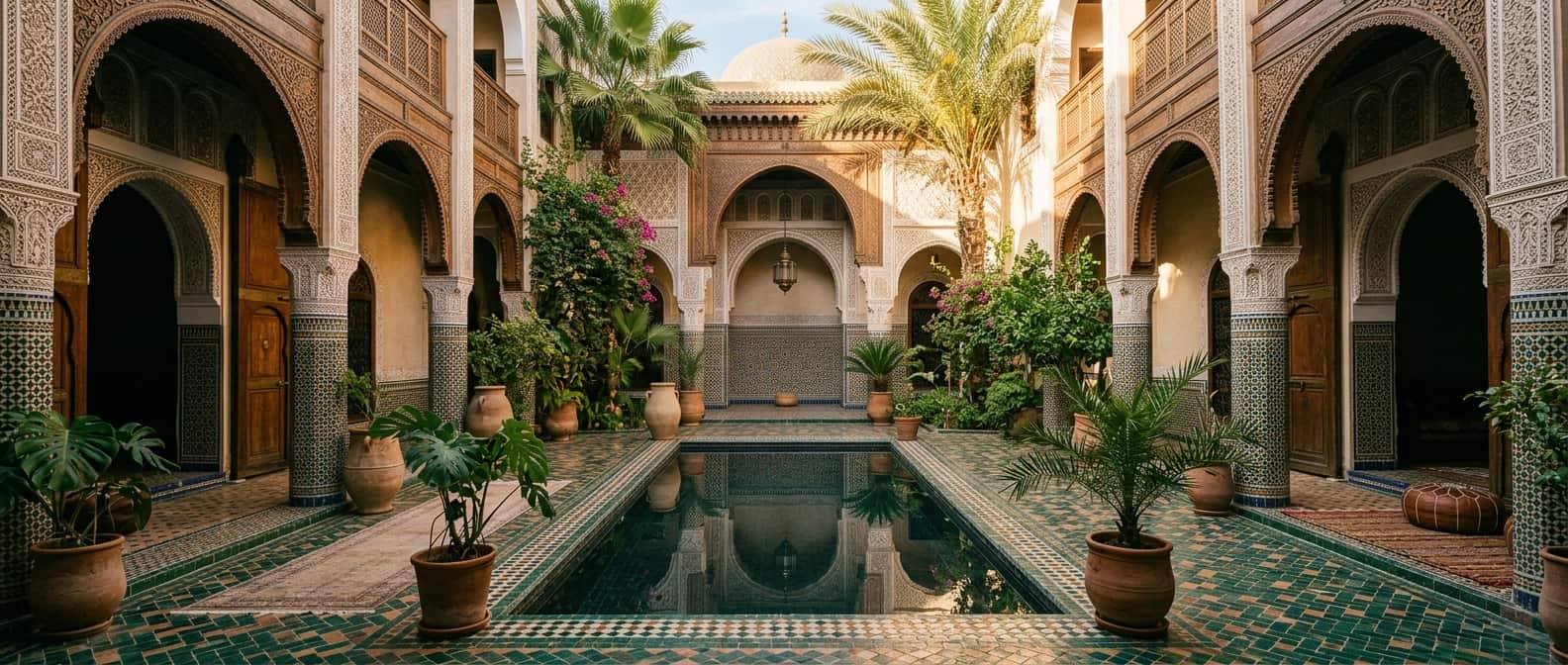
To step off the narrow, chaotic alleys of the Marrakech medina and into a traditional riad is to experience an immediate and profound drop in blood pressure. The air cools. The relentless hum of the souk is replaced by the singular, rhythmic sound of water spilling into a tiled basin. The scent of exhaust and spice gives way to orange blossom and damp earth. This abrupt pivot from sensory overload to absolute, walled-in sanctuary is the defining rhythm of Moroccan travel—and it is drawing a new wave of discerning travelers.
Driven by a desire for destinations that offer high culture and high design, there has been a 224% surge in Indian tourism to Morocco in recent years. But to experience the country at its highest frequency is not to rush through a ten-day imperial city circuit. It is to move slowly between two contrasting poles: the hidden palaces of the red city, and the silent, thin-air retreats of the Atlas Mountains.
The Riad Reimagined: Absolute Privacy
The concept of the riad—a traditional home built around a central, open-air courtyard—has been elevated to an art form in Marrakech. For the affluent traveler, the standard is no longer just a beautiful room, but total seclusion and faultless service.
Properties like the Royal Mansour have redefined what privacy means in a bustling medina. Commissioned by King Mohammed VI, the estate feels less like a hotel and more like a private medina unto itself. Guests don’t book rooms; they take up residence in private, multi-story riads, complete with their own rooftop plunge pools and courtyards. An underground network of tunnels ensures that the hundreds of staff remain completely invisible until they are needed. It is a masterclass in quiet luxury—an oasis of hand-carved cedar, intricate zellige tile, and heavy silk, insulated entirely from the frenetic energy just beyond its heavy wooden doors.
Beyond the Walls: The Palmeraie Estates
For those who find even the hushed corners of the medina too close to the action, the Palmeraie offers a different cadence. This sprawling palm oasis on the fringes of the city has long been the enclave of choice for expats and international design heavyweights.
Here, the architecture shifts from the verticality of the medina to low-slung, expansive estates. Private villas set among olive groves and date palms allow for a slower morning routine. The focus in the Palmeraie is on space—sprawling manicured gardens, vast swimming pools, and the luxury of unhurried time. It is the ideal basecamp for families or groups who want the world-class dining and shopping of Marrakech accessible by a short car ride, but prefer to retreat to absolute quiet as the evening call to prayer echoes across the plains.
The High Atlas: Altitude and Isolation
If Marrakech is about hidden sanctuaries, the High Atlas Mountains are about raw, exposed majesty. Less than a two-hour drive from the city, the landscape fractures into jagged peaks, deep valleys, and terraced Berber villages built into the rock face.
High-altitude luxury here is defined by properties like Richard Branson’s Kasbah Tamadot. Perched on a cliff edge overlooking a dramatic river valley, the retreat pairs the ruggedness of the terrain with uncompromising comfort. Days are spent trekking through walnut groves, visiting remote artisan collectives, or taking tea with local Berber families. Evenings are reserved for reading by a roaring fire and dinners served under a sprawling canopy of stars. The air is thinner, the light is sharper, and the silence is absolute.
The New Caravan: Stone Desert Camps
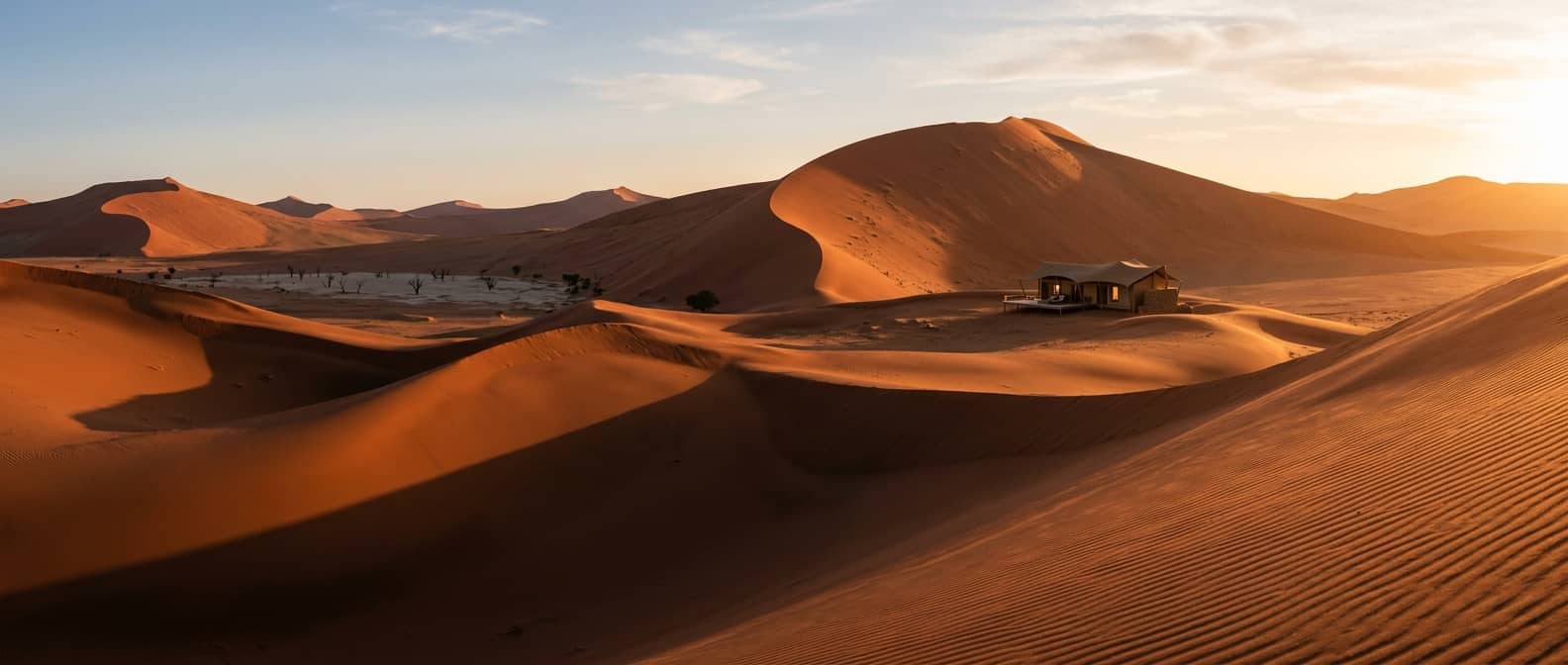
For a final shift in landscape, the Agafay Desert—a lunar expanse of stone and sand just outside Marrakech—offers a contemporary take on the nomadic camp. Forget the multi-day drives required to reach the deep dunes of the Sahara. Agafay provides the stark romance of the desert without the logistical exhaustion.
Luxury camps here consist of sprawling canvas suites, king-sized beds draped in heavy linens, and private decks facing the snow-capped Atlas peaks. Dinner is a slow-cooked tagine served by lantern light. It is an experience designed around stillness. The desert strips away the noise, leaving only the wind, the crackle of a fire, and the vast, unobstructed sky.
The Blueprint for the Indian Traveler
Morocco is exceptionally well-positioned for the premium Indian outbound market, but timing and logistics are key to a seamless trip. Spring (March to May) and autumn (September to November) offer the most temperate weather, allowing you to comfortably transition from the warm medina to the crisp mountain air.
Visas for Indian passport holders require a bit of advance planning through the embassy, though the process has streamlined significantly to accommodate the growing demand. When plotting your itinerary, resist the urge to see it all. The true luxury of Morocco is found in lingering—in watching the afternoon light shift across a tiled courtyard, in the slow pour of mint tea, and in the quiet realization that the best way to experience the country is simply to sit still and let it unfold.
Sources
- Why Indians are flocking to Morocco: Inside the 224% post-2019 tourism boom — Details the 224% surge in Indian tourism to Morocco, confirming it as a high-demand tier-1 destination.