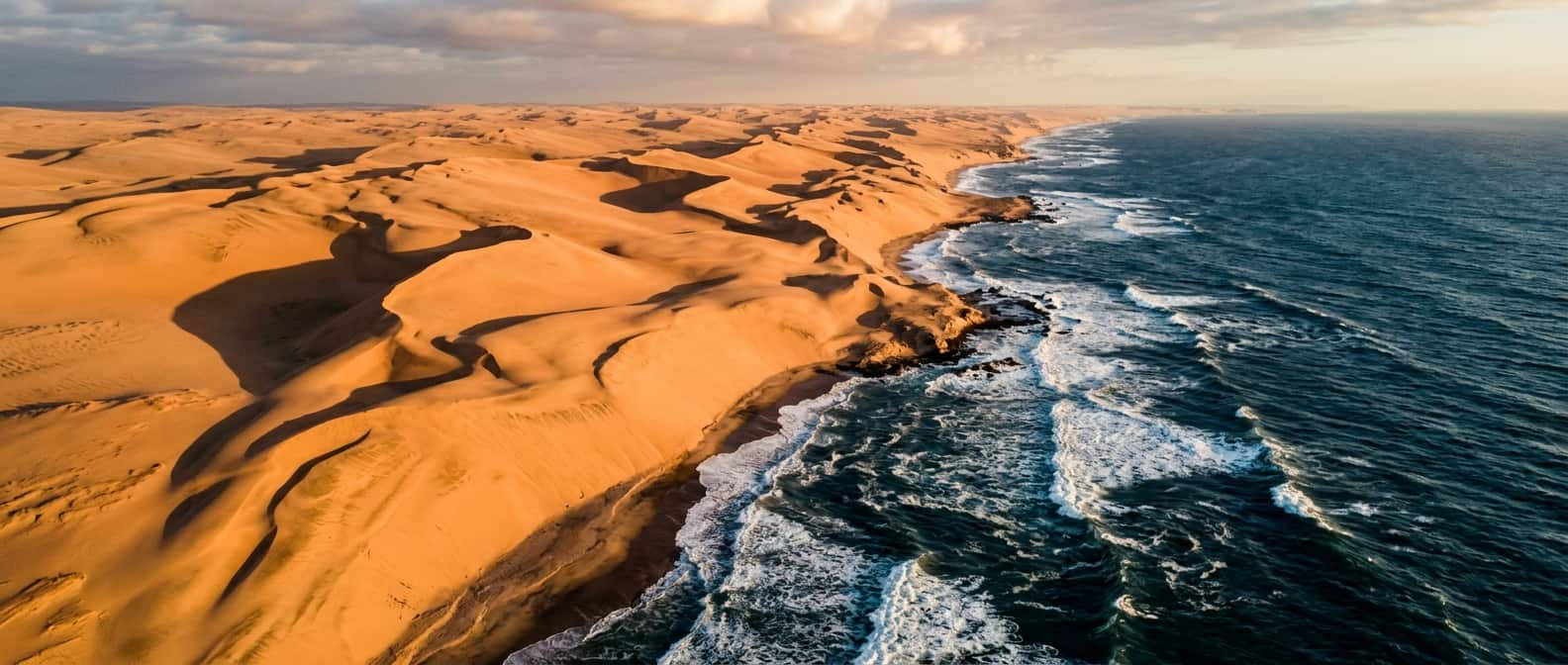
The sand here is the color of crushed apricots, rising in monolithic crests before dropping abruptly into the freezing, frothing Atlantic. There are no roads. There is only the low hum of a Cessna Grand Caravan carving a path through the morning fog, banking over the rusted ribs of a centuries-old shipwreck. This is Namibia’s Skeleton Coast—a place where the desert consumes the sea, and where the luxury lies in absolute, uninterrupted isolation.
For the affluent Indian traveler, the traditional safari has often meant the crowded plains of the Maasai Mara or the predictable circuits of Kruger. But as the appetite for genuine, unscripted wilderness grows, the focus is shifting southwest. Namibia offers a scale of emptiness that is difficult to comprehend until you are flying over it. Here, the standard 4x4 vehicle is traded for private light aircraft, transforming a harsh, impenetrable landscape into an exclusive theater of shifting sands, petrified forests, and desert-adapted wildlife.
The Architecture of Emptiness
Namibia is not a destination for ticking off the Big Five in a single afternoon. It is a slow, methodical unraveling of geography. A fly-in safari typically begins in Windhoek, bypassing the grueling overland drives in favor of scenic hops that deliver you to airstrips scraped directly into the salt pans.
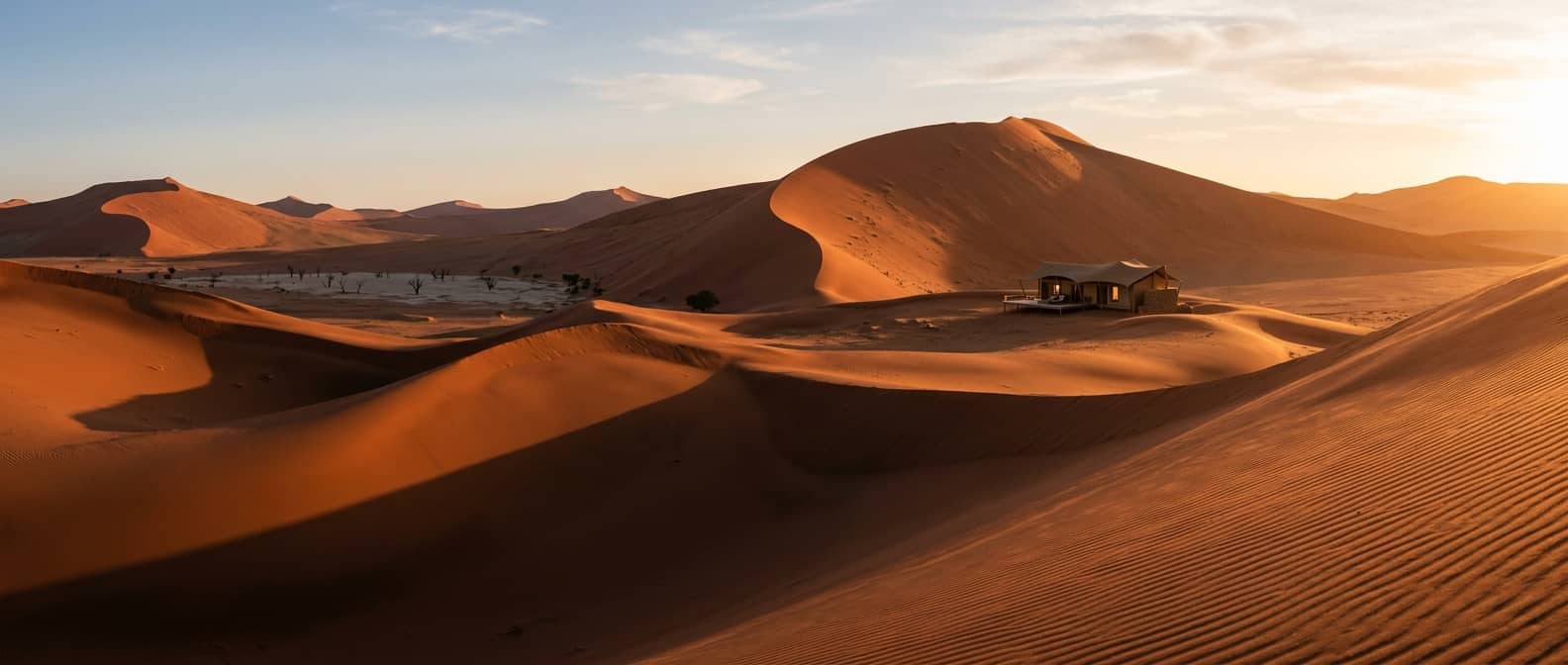
From the air, the topography reads like an abstract painting. The dunes of Sossusvlei appear as sharp-edged crimson waves, while the Deadvlei clay pan resembles a stark white canvas punctuated by the blackened skeletons of 900-year-old camel thorn trees. Touching down at a lodge like Hoanib Skeleton Coast Camp means stepping into a landscape that feels entirely extraterrestrial. The architecture of these camps relies on low-impact, high-design principles—canvas and timber structures that dissolve into the dunes, offering deep soaking tubs and wide-angle views of nothingness.
Desert-Adapted Wildlife
The wildlife in Namibia is not abundant, but it is fiercely resilient. This is the realm of the desert-adapted elephant, creatures that have evolved smaller body masses and wider feet to traverse the loose sands in search of ephemeral riverbeds. Tracking them is a masterclass in patience and reading the terrain.
You might spend a morning following the elusive tracks of a desert lion or watching a solitary gemsbok stand completely still to absorb moisture from the incoming coastal fog. There is a profound intimacy to these encounters. Because the wildlife is sparse, each sighting carries a weight and a narrative that is often lost in denser game reserves. It is wildlife viewing stripped of its commercial cadence, returned to a state of quiet observation.
The Skeleton Coast
The true frontier of a Namibian fly-in safari is the Skeleton Coast itself. Known to the indigenous San people as "The Land God Made in Anger," it is a brutal, hauntingly beautiful stretch of shoreline littered with the carcasses of whales and the rusted hulls of ill-fated ships.
Access is strictly controlled, and seeing it by air is a privilege reserved for a few. Flying at low altitudes, you trace the coastline where the cold Benguela Current creates a thick, rolling fog bank that collides with the hyper-arid desert. Camps like Shipwreck Lodge offer the only respite in this desolate environment, providing striking, cabin-like accommodations designed to mimic the wrecks that dot the shore. Here, days are spent exploring the roaring dunes and listening to the wind howl across the Atlantic, returning to blazing fires and world-class Syrah in the evening.
The Shift in Outbound Luxury
For the Indian outbound market, the appeal of Namibia is the luxury of profound disconnect. It is a departure from the highly manicured, butler-serviced estates of conventional luxury travel. The exclusivity here is measured not by the thread count of the linens—though they are immaculate—but by the sheer rarity of the experience.
It is the luxury of flying for two hours and seeing no trace of human habitation. It is the privilege of standing on the crest of a 300-meter dune in complete silence. In a world that is increasingly loud and heavily trafficked, Namibia offers the ultimate indulgence: a vast, beautiful emptiness.
Sources
- Travel + Leisure — Observations on the rise of fly-in safaris over traditional overland routes.
- Wilderness Destinations — Insights into the sustainable architecture and operations of remote Namibian camps like Hoanib Skeleton Coast.