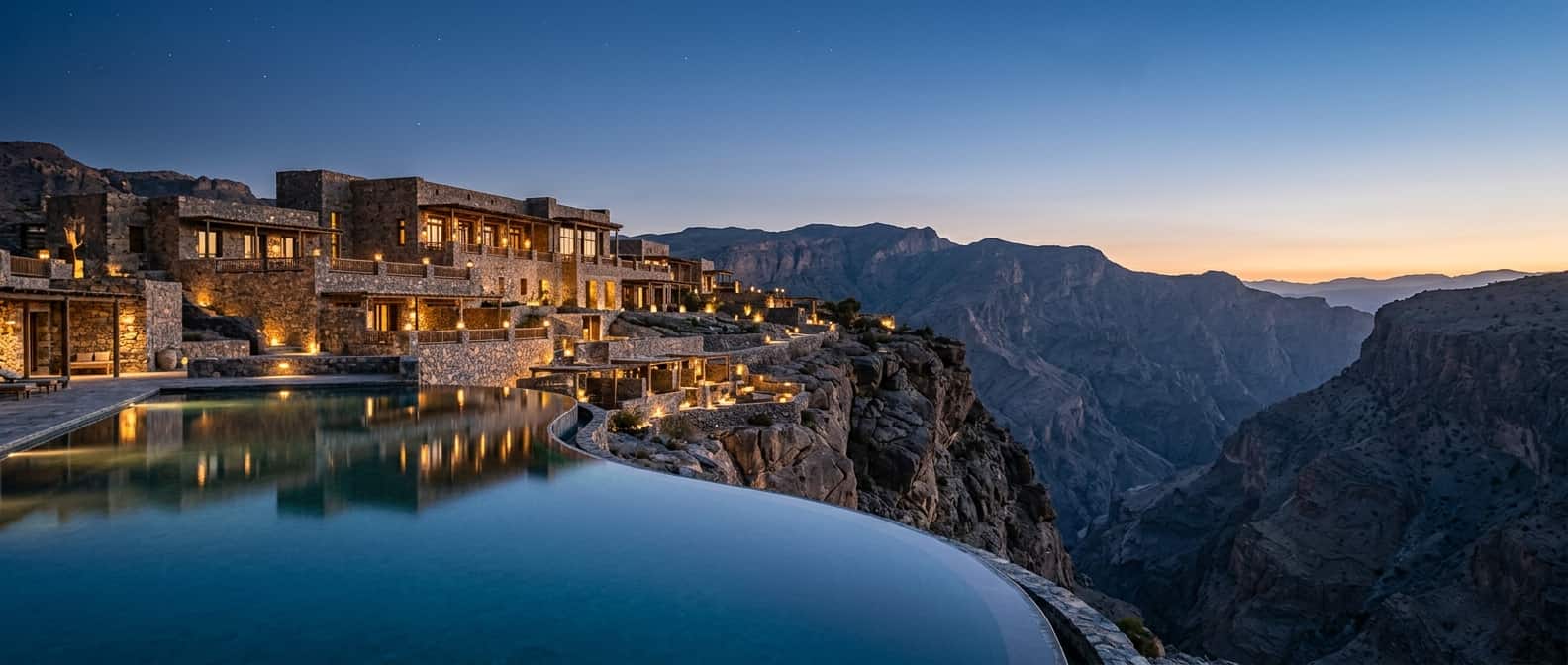
The air at two thousand meters carries the scent of wild juniper and cooling rock. Below, the canyon drops away into an abyss of bruised purple and shadow, its ancient terraces etched into the limestone like contour lines on a topographic map. This is not the Arabia of glittering skylines or impossible glass spires. This is Oman—a country that has quietly but decisively positioned itself as the region’s ultimate sanctuary for the luxury traveler seeking silence, space, and earthen monumentality. For the affluent Indian traveler, it offers a dramatic change of frequency just a two-and-a-half-hour flight from Mumbai.
The Musandam Peninsula
To arrive at Six Senses Zighy Bay is to understand the Omani definition of exclusivity. Accessible by a winding mountain pass—or, for those so inclined, a paraglide descent down to the beach—the resort sits in an enclave of the Musandam Peninsula, hemmed in by the jagged Hajar Mountains on one side and the Gulf of Oman on the other. It is a masterclass in vernacular architecture. Villas are built from local stone and palm fronds, their private plunge pools shaded by high walls that echo traditional Omani villages.
The luxury here is tactile and entirely unhurried. Days are spent on traditional dhow cruises through the "Norway of Arabia," where limestone fjords plunge into waters teeming with marine life, followed by slow, multi-course dinners cooked in underground earth ovens. It is an isolation that feels both primordial and intensely refined.
The Heights of Jabal Akhdar
Inland, the geography shifts from coastal isolation to high-altitude drama. The Al Hajar mountain range is the geologic spine of the country, and the Green Mountain—Jabal Akhdar—is its crowning retreat. Up here, the temperature drops by fifteen degrees, and the air is bracing.
Resorts like Alila Jabal Akhdar and Anantara Al Jabal Al Akhdar have rewritten the rules of mountain luxury. Clinging to the edge of sheer cliffs, these properties are brutalist yet deeply organic, utilizing local stone and Falaj-inspired water channels to blend seamlessly into the topography. The draw for the modern Indian aesthete is profound: morning hikes through abandoned cliffside villages, afternoons spent in frankincense-infused spas, and evenings watching the canyon turn the color of oxidized copper as the sun sets over the peaks.
The Empty Quarter
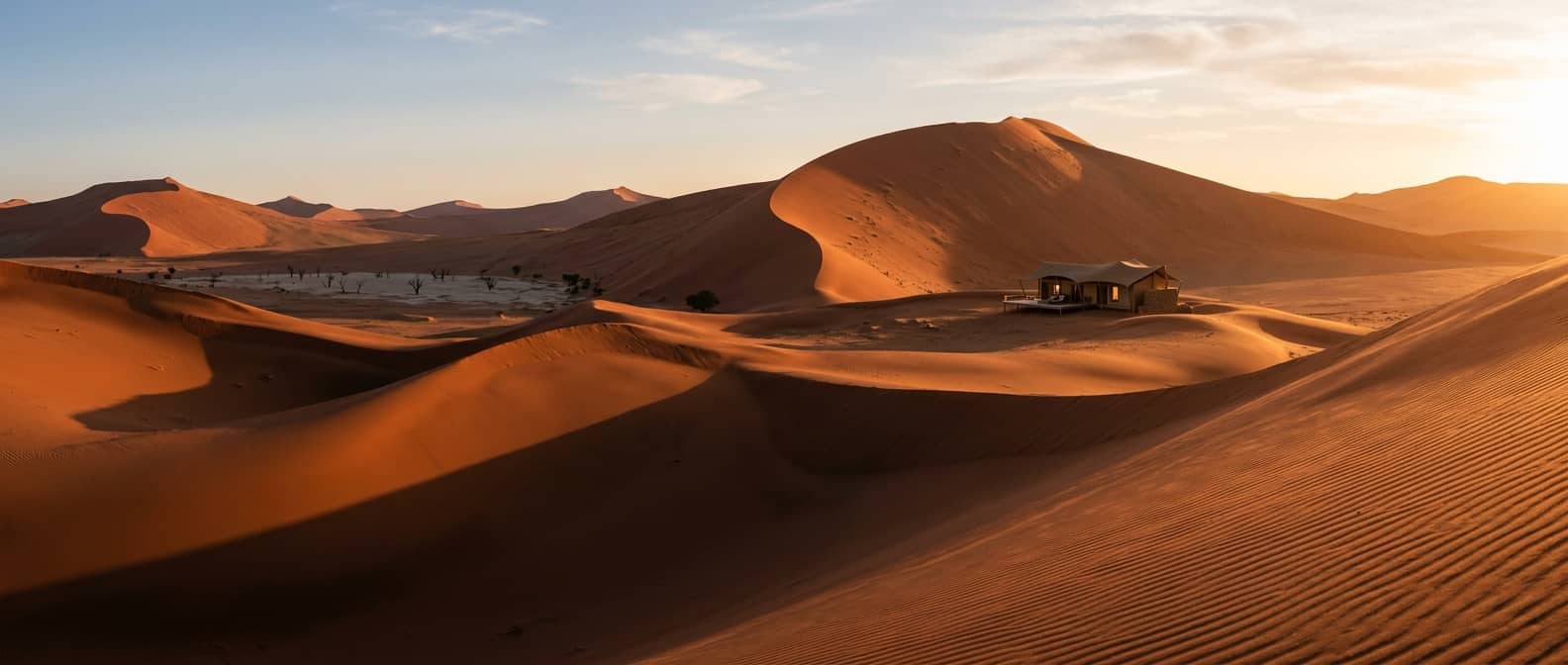
For those who equate absolute luxury with absolute solitude, the Rub' al Khali—the Empty Quarter—offers an oceanic expanse of sand that stretches into the horizon. Here, the luxury is the logistics. Bespoke mobile camps, erected solely for your party, provide a level of expeditionary comfort that belies the harshness of the environment. Think Persian rugs laid on the dunes, campaign-style furnishings, and chefs preparing haute cuisine under skies unpolluted by artificial light.
It is a sensory reset, a place where the sheer scale of the landscape reduces the noise of the modern world to zero.
The New Arabian Standard
Oman’s restraint is its greatest asset. It does not demand your attention; it simply absorbs you into its ancient, geologic rhythm. For the luxury outbound market from India, moving away from hyper-commercialized hubs, Oman represents the zenith of experiential travel—a place where the architecture defers to the mountain, and luxury is defined by the depth of the silence.
Sources
- Travel + Leisure India — Context on short-haul luxury preferences among affluent Indian travelers.
- Conde Nast Traveler — Architecture and design ethos of Omani luxury resorts.