The air at two thousand meters carries the distinct scent of damask roses and crushed juniper. Far below, the jagged contours of the Al Hajar mountains fold into absolute silence, their limestone ridges turning burnt orange as the light begins to fail. There is a specific kind of quiet here, one that feels ancient and entirely indifferent to the frantic pace of the world beyond the peaks. This is not the gilded, glass-clad luxury of the neighboring emirates; it is an older, more elemental proposition.
The Elements of Oman
For the seasoned traveler arriving from Mumbai or Delhi, the appeal of Oman lies in its stark, architectural contrast. It is a country defined by its topography—a masterclass in texture where the immense dunes of the Empty Quarter meet the sharp precipices of the northern fjords. Luxury here is never a loud declaration. It is found in the meticulous integration of structure and landscape.
The modern Omani aesthetic draws heavily from traditional fort architecture, utilizing local stone, palm fronds, and falaj water channels to create spaces that feel both rooted and exceptionally refined. The resulting experience is one of profound isolation, yet it remains intensely comfortable. You are positioned at the edge of the world, but with thread-count linens and temperature-controlled private pools. It is an environment built for slow mornings and deliberate days, an antidote to the compressed itineraries that often define long-haul travel.
Jabal Akhdar: The High-Altitude Retreat
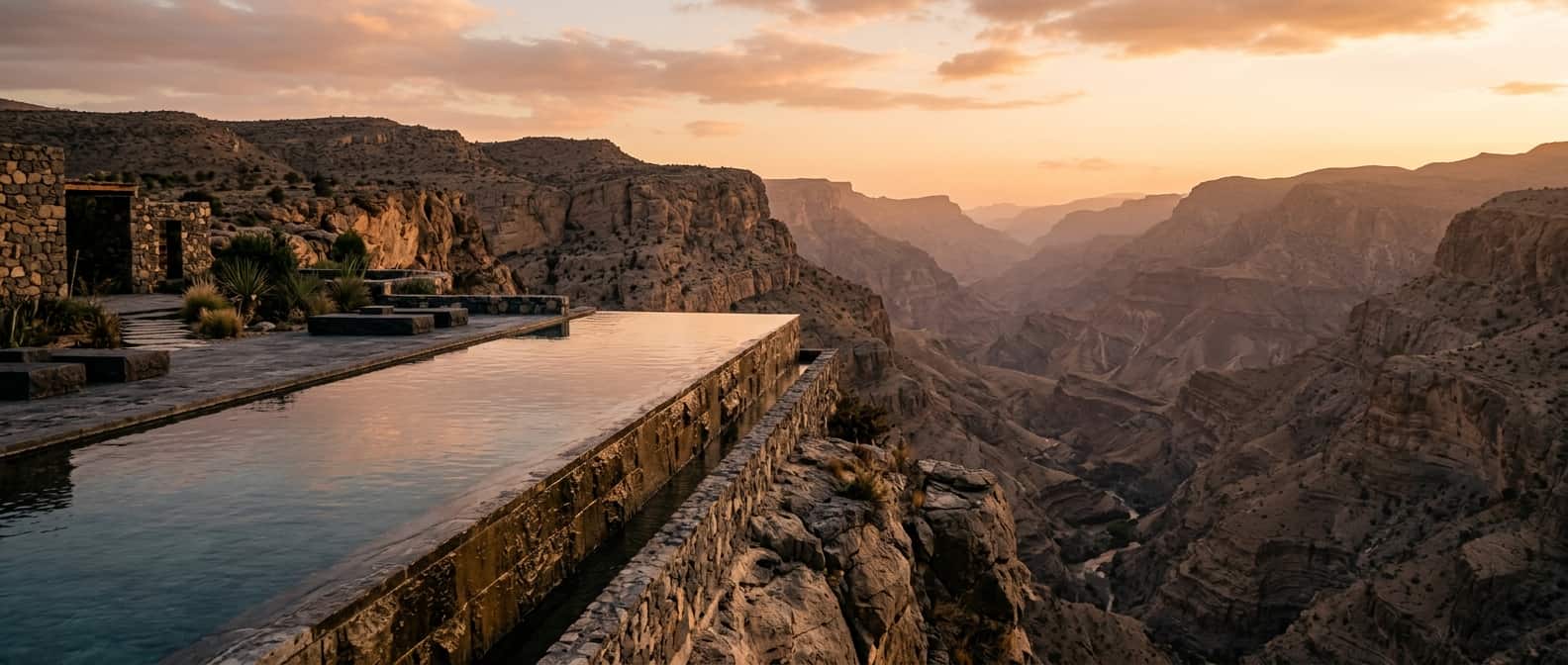
Ascending the Saiq Plateau requires a four-wheel drive and a certain tolerance for vertiginous drops. The reward, however, is immediate. The air temperature drops sharply, leaving behind the coastal humidity for a crisp, mountain climate that has drawn the Omani royal family for generations.
Properties like Alila Jabal Akhdar and Anantara Al Jabal Al Akhdar have set the benchmark for high-altitude hospitality. Perched on the rims of vast gorges, these stone-clad sanctuaries offer an unbroken connection to the geology of the region. The days up here are marked by hiking ancient donkey trails through abandoned villages, harvesting pomegranates in terraced gardens, or simply watching the shadows lengthen across the canyon from the vantage point of a cantilevered deck. Dining is an exercise in locality, with menus heavily influenced by the seasonal harvests of the plateau, served against the backdrop of an impossibly clear, star-heavy sky.
Zighy Bay: The Arabian Fjord
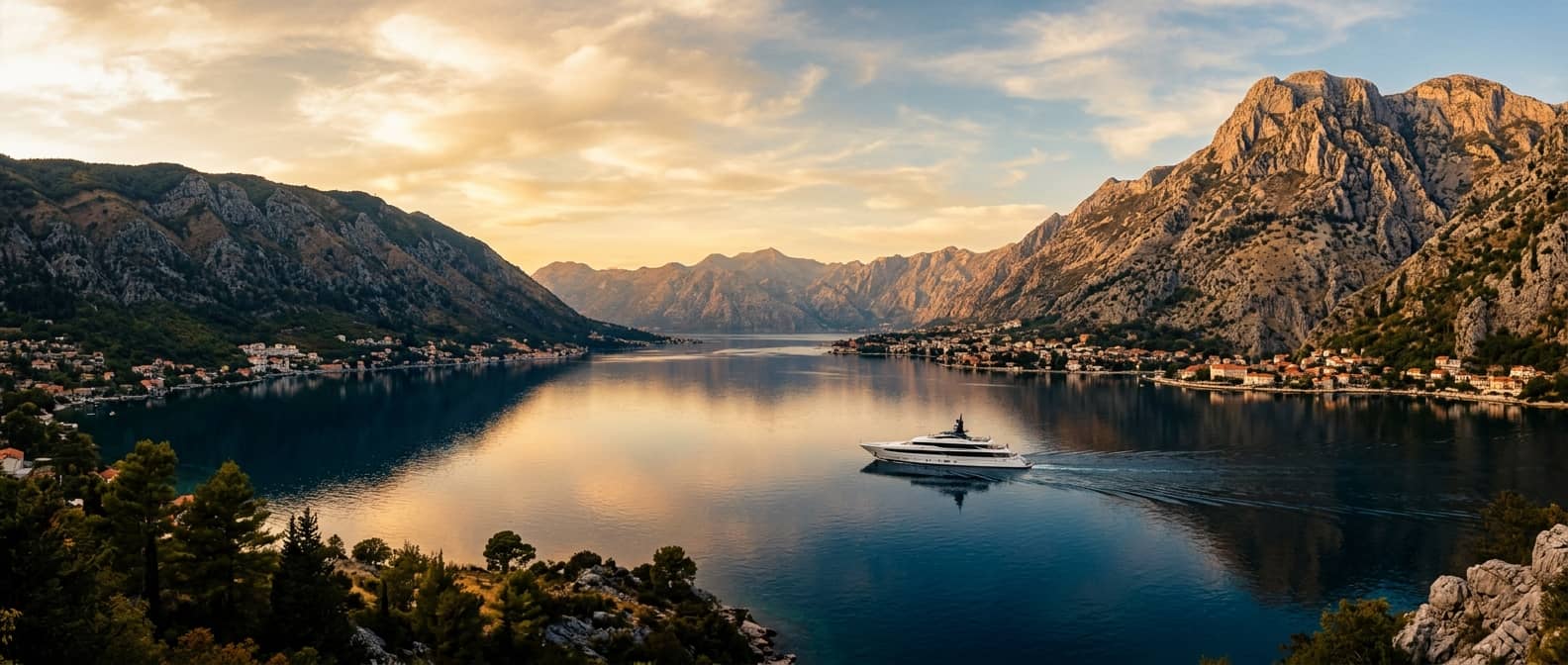
In the far north, separated from the rest of Oman by the UAE, lies the Musandam Peninsula. Often referred to as the Arabian Fjord, it is a dramatic collision of the Hajar mountains and the Gulf of Oman. Access to Six Senses Zighy Bay, the region’s defining property, is an event in itself—whether arriving by a sweeping speedboat ride from the nearby marina, descending the jagged mountain pass by four-by-four, or paragliding directly onto the resort’s private beach.
The village-style resort is constructed entirely from natural stone and warm woods, mirroring the rugged environment that surrounds it. Here, the rhythm of the day is dictated by the water. Mornings might involve private dhow cruises through deep, limestone inlets, where dolphins navigate the clear green depths alongside you. Afternoons dissolve into the privacy of a walled villa compound, the only sounds being the lap of your private pool and the call to prayer echoing from the neighboring fishing village.
The Empty Quarter: High-Design in the Dunes
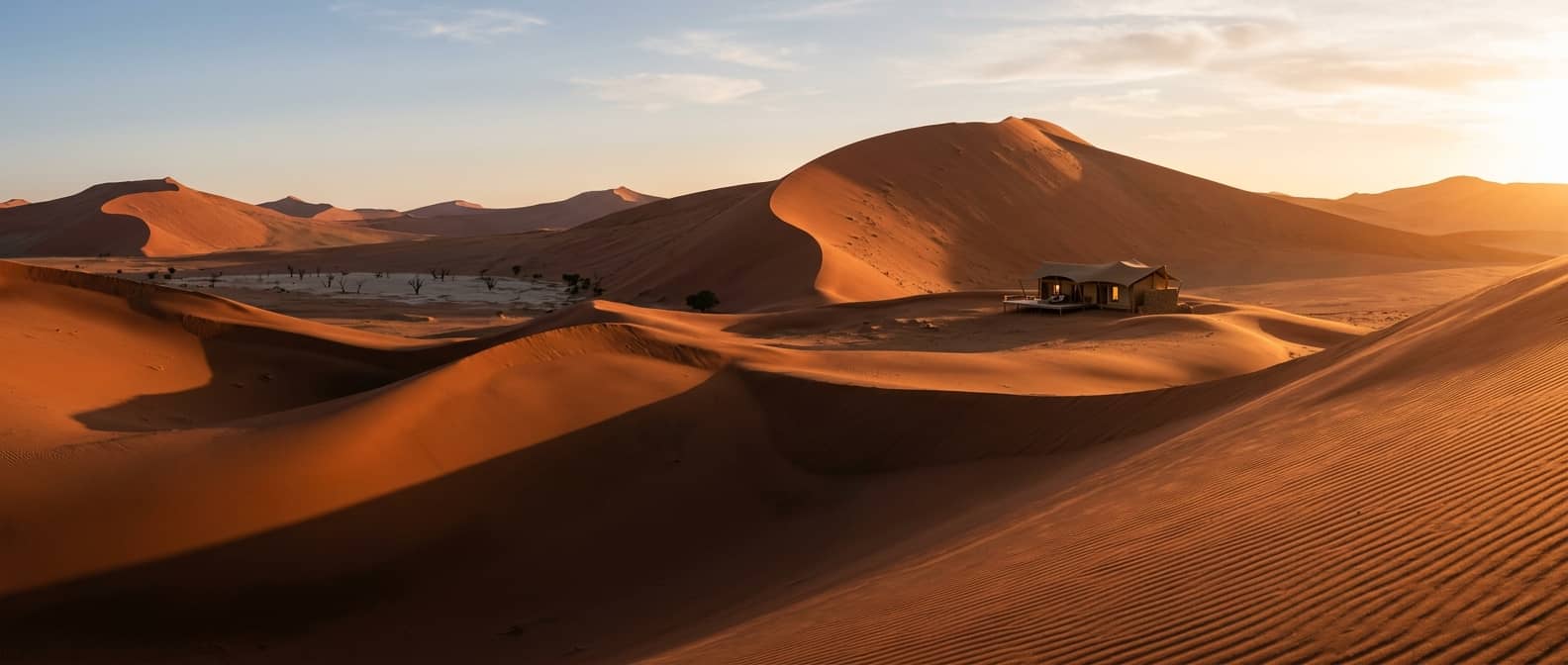
Away from the coasts and the peaks lies the Rub' al Khali, or the Empty Quarter—the largest continuous sand desert on earth. The scale of this environment defies easy comprehension. It is a shifting, silent ocean of copper-colored dunes that stretch endlessly toward the Saudi Arabian border.
In this vast emptiness, luxury camps offer a tenuous but beautiful anchor. Properties like the Desert Nights Camp in the Wahiba Sands—while closer to civilization than the deep Empty Quarter—provide a template for desert refinement. Days are spent navigating the slipfaces in specialized vehicles or walking the ridgelines at dawn. As dusk approaches, the heat breaks, and the focus shifts to private, fire-lit dinners set directly in the sand. There is a deep, psychological luxury in this level of stillness, a complete detachment from the signal noise of daily life.
The Logistics of Slow Travel
Oman rewards the deliberate traveler. While the drive times between the mountains, the desert, and the coast can be substantial, the infrastructure is immaculate. Private transfers navigate the multi-lane highways with ease, making multi-center itineraries entirely viable for those with ten days to spare. For a shorter trip, focusing entirely on either the Musandam Peninsula or the Al Hajar mountains provides a complete narrative without the friction of constant movement.
The hospitality throughout the Sultanate operates on a frequency of genuine warmth. It lacks the transactional feel that occasionally plagues highly developed tourist economies. Here, the service is deeply personal and fiercely proud of the Omani heritage. It is a destination that understands the true currency of modern luxury: space, privacy, and the time to experience both without interruption.