The air at 11,000 feet possesses a certain crystalline sharpness, thinning the veil between the earth and the dramatic, cloud-swept peaks of the Andes. Here, the rugged beauty of the Incan empire meets an unexpectedly sophisticated modern infrastructure. For the discerning Indian traveler, South America has evolved from a rugged expedition into a study of high-altitude indulgence, where oxygen-enriched suites and midnight-blue trains replace arduous treks.
The New South American Standard
For decades, the journey to the heart of the Incan empire was synonymous with heavy boots and breathless climbs. Today, a quiet revolution has transformed the Peruvian highlands into a haven of slow, deliberate luxury. The paradigm has shifted from enduring the elements to observing them from environments of profound comfort.
The appeal for affluent Indian travelers lies in the sheer distance and exclusivity of the experience. Peru offers a striking contrast to familiar European summer haunts or Indian Ocean retreats. It is a destination that demands time and rewards it with a sensory landscape unlike anywhere else on earth—from the salt pans of Maras to the mist-shrouded ruins of an empire that defied gravity.
Acclimatizing in the Sacred Valley
The journey begins not in the high-altitude capital of Cusco, but lower down in the Urubamba Valley—the Sacred Valley of the Incas. Here, at a more manageable 9,000 feet, luxury lodges are designed around the concept of gentle acclimatization. Properties like Rio Sagrado and Tambo del Inka hide within the folds of the mountains, offering private villas that open directly onto the rushing Urubamba River.
Days in the valley are spent in quiet exploration. Private guides navigate the terraced ruins of Ollantaytambo and the circular agricultural terraces of Moray long before the day-trippers arrive. Evenings are reserved for pisco sours by crackling outdoor fire pits, the dark Andean sky turning into a brilliant canopy of stars unpolluted by city lights.
The Hiram Bingham and the Citadel
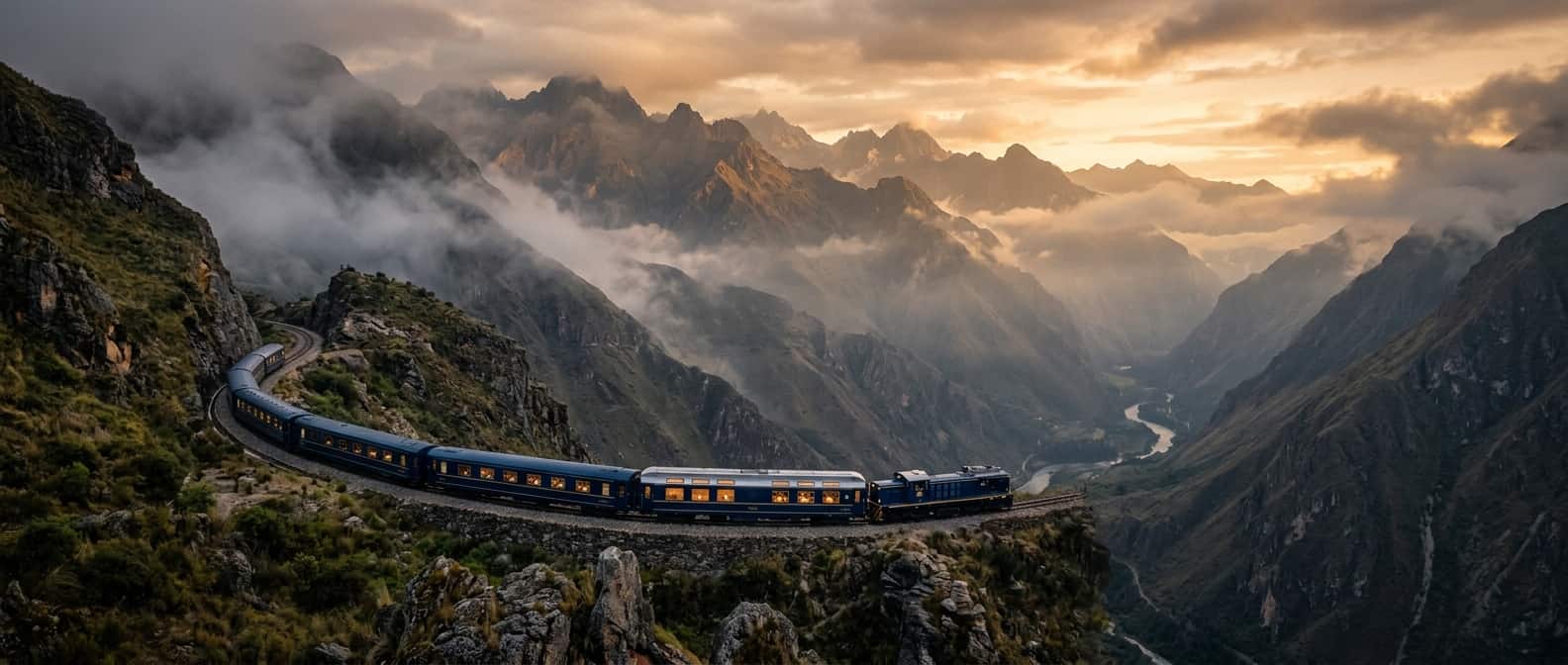
The approach to Machu Picchu is a pilgrimage, but it need not be a punishing one. The Belmond Hiram Bingham train transforms the winding journey from the Sacred Valley to Aguas Calientes into an affair of polished wood, brass fittings, and live Peruvian music. It is an echo of the golden age of travel, moving gracefully through lush cloud forests while guests are served multi-course Andean-inspired tasting menus.
Upon arrival, the true luxury is timing. While thousands crowd the sun gate at dawn, the most exclusive itineraries position travelers at the citadel in the late afternoon. As the morning mist burns off and the crowds retreat, the ruins of Machu Picchu are returned to the silence of the mountains. Standing among the monolithic stones as the light turns golden is a deeply private, almost spiritual experience.
The Andean Explorer: A Palace on Rails
To journey further into the high plains is to board the Andean Explorer, South America’s first luxury sleeper train. Tracing one of the highest rail routes in the world from Cusco to Lake Titicaca and on to Arequipa, the train is a masterclass in motion and atmosphere.
Inside the private cabins, alpaca wool throws and oxygen-enriched air systems ensure deep, restful sleep as the train ascends past 14,000 feet. The observation car, with its open-air balcony, becomes the social heart of the journey. Here, passengers watch herds of vicuñas sprint across the barren, cinematic expanse of the Altiplano, a landscape so vast and austere it feels like another planet.
Lima: The Culinary Capital of the Americas
The journey typically ends where the country meets the Pacific Ocean—in Lima. The city has quietly secured its position as the undisputed culinary capital of the Americas. It is home to an extraordinary concentration of Michelin-caliber establishments that fuse Japanese precision with indigenous Amazonian and Andean ingredients—a movement known as Nikkei.
Securing a table at Central or Maido is a prerequisite for visiting the capital. The tasting menus are not merely meals; they are exhaustive, edible maps of Peru’s dizzying biodiversity. It is the perfect conclusion to a journey defined by elevation.
To experience Peru today is to realize that the most profound adventures no longer require sacrificing comfort; rather, they are amplified by it.
Sources
(No web sources available; insights drawn from high-level industry knowledge on South American luxury travel and Belmond's Peruvian infrastructure.)