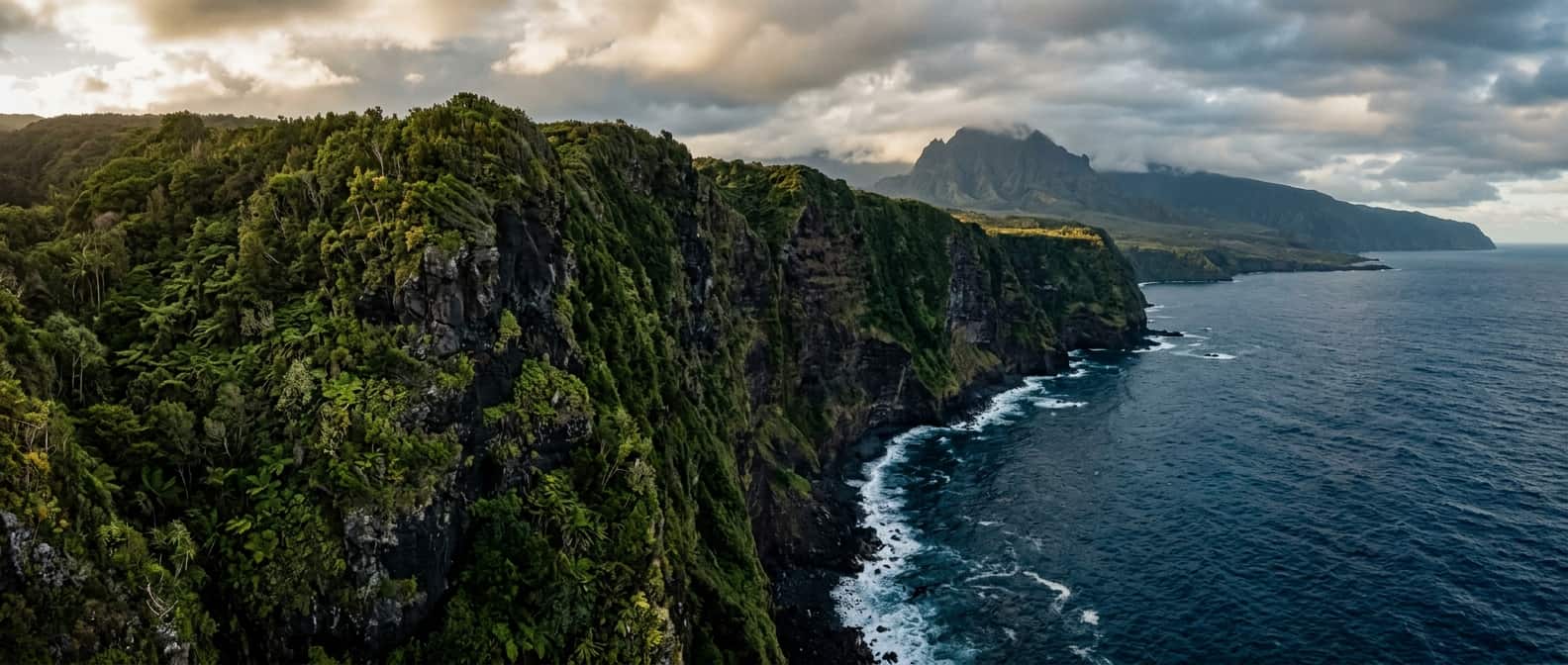
The air here does not smell of salt and sunscreen, but of crushed vanilla pods and cold, high-altitude mist. You are in the Indian Ocean, geographically bracketed by Madagascar and Mauritius, yet the terrain rising violently from the water feels distinctly prehistoric. This is not the familiar rhythm of the Maldives or the gentle, sloping luxury of the Seychelles. Reunion Island is a dramatic, jagged spike of French territory thrusting out of the sea, where active volcanoes meet deep, green ravines, and coastal boulevards are lined with boulangeries. For the Indian traveler accustomed to the fly-and-flop island paradigm, Reunion offers a necessary, exhilarating shock to the system.
With an unprecedented 108% rise in luxury hotel bookings for the summer of 2026, the affluent Indian traveler is clearly searching for something beyond the predictable. They are looking for topography, for narrative, for an edge. Reunion delivers exactly that.
The Volcanic Interior
To understand Reunion, you must first leave the coast behind. The island's interior is defined by three massive cirques—natural amphitheatres carved by millennia of erosion—and the brooding presence of Piton de la Fournaise, one of the world’s most active volcanoes. The scale here defies ground-level comprehension. The only way to truly read the landscape is from the air.
Chartering an Airbus H130 helicopter from Saint-Pierre at dawn is the definitive Reunion experience. As the rotor blades bite into the cool morning air, you ascend over fields of sugarcane before the earth suddenly drops away, revealing the sheer, vertical walls of the Mafate cirque. There are no roads here; the tiny hamlets scattered below are accessible only on foot or by air. The flight culminates over the lunar expanse of the volcano itself, where the rust-red crater smokes quietly against the bright blue sky. It is a stark, cinematic encounter with the earth’s raw geology.
Coastal Luxury
If the interior is wild and unforgiving, the western coast is an exercise in manicured French sophistication. The island’s luxury infrastructure is concentrated around Saint-Gilles-les-Bains, where the Indian Ocean is tamed by a coral reef, creating shallow, turquoise lagoons entirely free of the island's notorious offshore currents.
The lodgings here lean toward understated, plantation-style elegance rather than overt opulence. Properties like LUX* Saint Gilles balance colonial architectural cues—sweeping verandas, dark wood louvers, and crisp white linens—with modern, barefoot sensibilities. Days here are unhurried. Mornings are for paddleboarding on the glassy lagoon, afternoons for reading under the shade of a filao tree, and evenings are punctuated by the quiet clinking of glasses over perfectly executed sundowners. The service is discreet and unmistakably European, a quiet reminder that you are, administratively and culturally, in France.
The Creole Kitchen
The culinary landscape of Reunion is perhaps its most compelling narrative. It is a seamless, centuries-old collision of French technique, Malagasy ingredients, African traditions, and Indian spices. The resulting Creole cuisine is entirely unique to this solitary rock.
Dining well here requires moving between high and low with ease. A lunch might consist of a simple, fiercely spiced cari poulet—chicken simmered with turmeric, thyme, and small, fiery chilies—eaten at a wooden table overlooking the ocean. Dinner, conversely, might take place at a Michelin-referenced table in Saint-Denis, where local palm hearts are treated with the reverence of truffles, and the wine list draws heavily from the cellars of Burgundy and Bordeaux. Central to everything is the island's Bourbon vanilla, considered by many pastry chefs to be the finest in the world. It finds its way into both savory reductions and complex, layered desserts, a fragrant thread tying the island's cuisine together.
The Logistics
Historically, the friction of reaching Reunion kept it off the radar for all but the most determined travelers. That barrier has now been completely dismantled. The launch of direct IndiGo flights from Chennai in April 2026 has transformed the island from an obscure proposition into a highly accessible weekend-to-weeklong escape for the Indian market.
Because Reunion is an overseas department of France, access requires a Schengen visa issued by the French consulate (specifically noting Reunion). The island’s infrastructure is superb, with perfectly paved roads winding up into the mountains, but a private driver or a high-end rental car is essential for navigating the hairpin turns of the interior.
Reunion asks for a different kind of traveler. It demands engagement, a willingness to swap the lounger for hiking boots, and a palate eager for contrast. It is a place where you can watch lava flow into the ocean at dawn and be parsing a complex Pinot Noir by dusk.
Sources
- Reunion Island strengthens India ties with direct IndiGo Chennai flights April 2026 — details on the new flight route and destination appeal.
- Cleartrip reports 108% rise in luxury hotel bookings for summer 2026 — context on the surge in Indian outbound luxury travel.
- Indian travellers seeking luxury experiences in Summer of 2026 — macro trends on multi-country and experiential bookings.