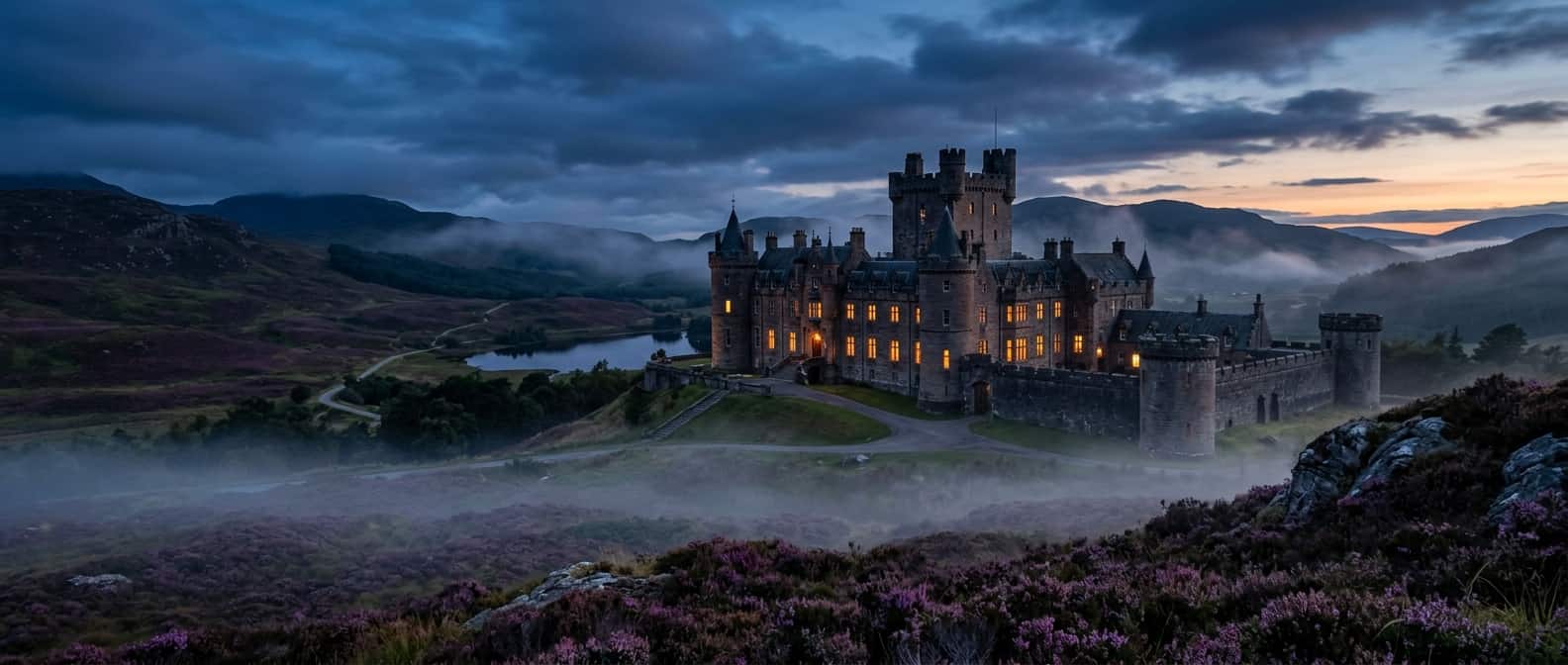
The approach to a true Highland estate is never abrupt. It is a slow, cinematic reveal—miles of single-track road winding through ancient Caledonian pine forests, past lochs that mirror the slate-grey sky, until the silhouette of a baronial manor finally emerges from the mist. There is no bustling lobby, no queue for the concierge. There is only the crunch of gravel under the tires of your Range Rover, the faint scent of peat smoke in the crisp air, and a staff waiting solely for your arrival.
For the affluent Indian traveler, the definition of luxury has decisively shifted. The traditional European summer—navigating the crowded piazzas of Italy or the bustling promenades of the French Riviera—no longer holds the same appeal for those who value space above all else. Instead, the ultimate luxury is absolute, uninterrupted privacy. In the Scottish Highlands, the concept of the 'exclusive-use' estate has been perfected, offering multi-generational families and discerning groups a masterclass in aristocratic slow living.
The Architecture of Arrival
To understand the appeal of the exclusive-use estate, one must first appreciate the scale of the landscape. The Scottish Highlands offer a stark, elemental beauty that demands a different pace of travel. When you take over a private castle or a modern sporting lodge, you are not merely booking a suite; you are assuming temporary stewardship of a sprawling private wilderness.
Properties like the Fife Arms in Braemar have redefined the Highland hotel, but for those seeking complete seclusion, estates such as Aldourie Castle on the shores of Loch Ness or the ultra-modern lodges of the Cairngorms offer something entirely different. Here, the architecture is designed to turn inward to warmth and outward to nature. Heavy tartan drapes, roaring open fires, and walls lined with centuries-old portraiture sit alongside discreet modern technology and museum-grade art collections. It is an environment where the Indian high-net-worth family can spread out, gathering in grand drawing rooms for evening drinks before retreating to deeply personal, uniquely designed quarters.
The Rise of Exclusive Use
The trend toward exclusive-use travel has accelerated rapidly among Indian high-net-worth individuals. The logistical complexities of traveling with a large, multi-generational family—accommodating different dietary requirements, varied mobility levels, and divergent interests—are effortlessly smoothed away when the entire property is yours.
In a traditional luxury hotel, even a five-star one, there is inevitably a rhythm dictated by the institution. Breakfast ends at a certain hour; the pool is shared. On a private Highland estate, the rhythm is entirely your own. If the younger generation wishes to sleep until noon while the elders take a brisk morning walk through the heather, there is no friction. The staff—often including a private chef, butler, and estate manager—operate with a quiet, anticipatory grace, tailoring every aspect of the day to the family’s exact preferences.
Sporting and Slow Living
The Highland estate is intrinsically linked to the land, and the activities available reflect a deep respect for Scottish traditions. However, modern luxury dictates that these pursuits are entirely optional. For the active traveler, the estate manager can arrange bespoke experiences: salmon fishing on a private beat of the River Spey, guided deer stalking with the estate's gamekeeper, or clay pigeon shooting on the moors.
Yet, the true luxury of these properties often lies in the art of slow living. It is about the quiet indulgence of spending an afternoon in a wood-paneled library with a first edition and a rare single malt from a neighboring distillery. It is a private, guided foraging walk through the estate’s woodlands, learning about the local flora before returning to the warmth of the drawing room. For families, it is the simple, uninterrupted joy of being together without the gaze of other guests—playing billiards after dinner, or walking the dogs provided by the estate across the sweeping lawns.
A Culinary Renaissance
Scotland’s culinary reputation has undergone a quiet revolution, and nowhere is this more evident than in the dining rooms of its private estates. The country’s larder is world-class, boasting hand-dived scallops from the Orkney Islands, wild venison from the surrounding hills, and organic produce grown in the estate’s own walled gardens.
When booking an exclusive-use property, the private chef becomes a central figure in the experience. Long before arrival, the menu is meticulously planned in consultation with the guests. For the Indian traveler, this means the seamless integration of specific dietary preferences—whether that involves complex vegetarian tasting menus, Jain dietary requirements, or the desire for comforting, familiar flavors alongside elevated Scottish gastronomy. Dinner is not merely a meal; it is an event. Tables are set with antique silver and crystal, illuminated by candlelight, creating an atmosphere of deeply personal grand dining.
The Logistics of Discretion
The remoteness of the Scottish Highlands is its greatest asset, but accessing this isolation requires seamless logistics. The journey often begins far from the rugged hills, with private aviation playing a crucial role. Most premium estates have the capacity to land helicopters directly on the lawn, allowing guests to bypass commercial airports entirely. A private charter from London or Edinburgh transforms a potentially arduous journey into a scenic flight over some of the most dramatic landscapes in Europe.
For those flying into Edinburgh or Glasgow commercially, the transfer is managed with absolute discretion. Chauffeured Range Rovers or luxury coaches for larger families ensure the transition from the city to the estate is effortless. Security, too, is a given. These properties are often set within thousands of acres of private land, accessible only by private, gated roads. For high-profile individuals seeking a retreat from the public eye, this level of inherent security is invaluable.
The exclusive-use Highland estate represents a profound shift in luxury travel. It is a move away from the transactional nature of hospitality toward something deeply personal and inherently private. For the Indian traveler seeking to connect with family, nature, and the quiet rhythm of slow living, Scotland offers an aristocratic sanctuary where time, finally, belongs entirely to you.