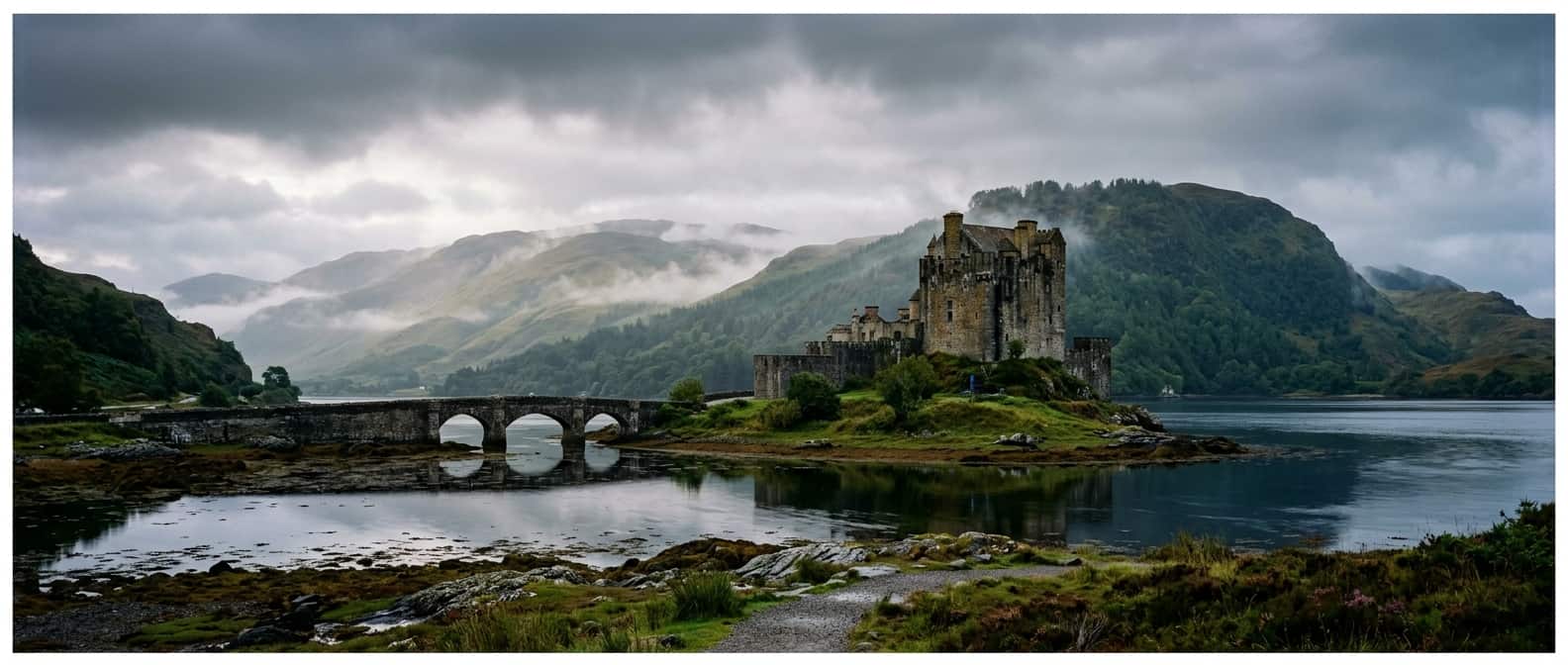
The air in the Cairngorms carries a distinct weight—a blend of wet heather, ancient peat, and the undeniable quiet of true isolation. Here, the manicured frenzy of a Mediterranean summer feels an ocean away. For the discerning Indian traveler seeking refuge from the heat, the Scottish Highlands offer a different sort of indulgence: one rooted in land, legacy, and crackling fires in centuries-old drawing rooms.
This is not the Scotland of hurried coach tours or crowded loch shores. It is a world of exclusive-use estates, private ghillies, and cellars that hold liquid history. It is the architecture of a slow, deliberate escape.
The Estate as Sanctuary
There is a shift occurring in how affluent travelers approach the United Kingdom. The gravitational pull of London remains, but the desire for space—boundless, private, and fiercely beautiful—has elevated the Scottish Highlands to the apex of luxury travel. The appeal lies in the concept of the 'exclusive-use' estate.
Properties like the newly reimagined castles in Aberdeenshire or the ruggedly handsome lodges of Sutherland are not merely hotels; they are temporary fiefdoms. Guests are handed the keys to vast acreages where the staff outnumbers the visitors, and the day's itinerary is dictated entirely by the shifting light and personal whim.
The Fife Arms and the Art of the Highlands
In the village of Braemar, The Fife Arms has rewritten the rulebook for a highland retreat. Owned by art gallerists Iwan and Manuela Wirth, it is less a traditional lodge and more a curated exhibition wrapped in tartan and tweed. A Picasso hangs in the drawing room; a site-specific Richard Jackson chandelier illuminates the grand staircase.
For the Indian aesthetic connoisseur, it presents a fascinating juxtaposition: the rugged, elemental beauty of the Scottish wilderness viewed through the lens of international contemporary art. It is a place where one might spend the morning stalking deer on the moors and the evening discussing modernism over a dram of rare single malt.
A Private Audience with the Cask
Whisky tourism in Scotland is ubiquitous, but at the highest echelon, it becomes a deeply personal, almost secretive affair. The standard distillery tour is bypassed in favor of private vault access.
Bespoke itineraries now feature helicopter transfers to Islay or Speyside, where master distillers uncask expressions that have never seen a commercial shelf. For the Indian palate, increasingly sophisticated and demanding of provenance, these private tastings offer a masterclass in terroir and time. It is an exploration of legacy, poured out one amber drop at a time.
The Sporting Life
The rhythm of a highland estate is inexorably tied to its outdoor pursuits. Yet, one need not be a seasoned sportsman to appreciate the theater of it. A private ghillie—a traditional highland guide—transforms the landscape from a passive backdrop into an interactive stage.
Whether it is salmon fishing on the River Tay, clay pigeon shooting in a dramatic glen, or simply a guided, bracing hike across the heather-clad hills, the luxury lies in the expertise and the absolute solitude. The wildness is tamed just enough to be accessible, returning you to a hot bath, a roaring fire, and an impeccably set dining table by dusk.
The Return of Slow Elegance
The allure of the Scottish Highlands is, ultimately, its unyielding pace. It does not perform for the visitor; it simply exists, grand and indifferent. In a world of hyper-connectivity and endless summers, retreating to a baronial hall in a landscape sculpted by glaciers feels profoundly restorative. It is a reminder that true luxury often whispers rather than shouts—a sentiment best understood with an aged malt in hand, watching the Highland mist roll across the glen.
Sources
(Skipped: `web_researcher` API was unavailable, so no live external links were used.)