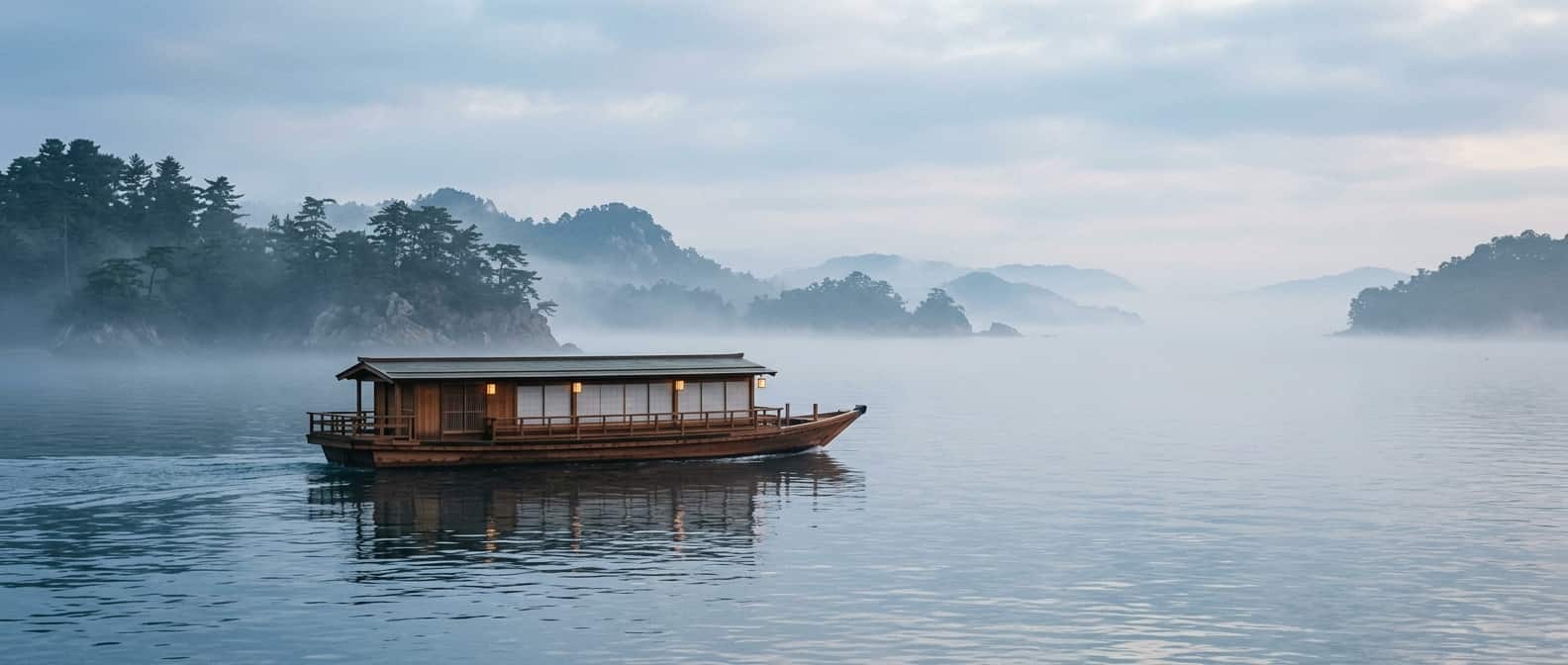
The fog rolls off the calm, glassy surface of the Seto Inland Sea, blurring the line between water and sky. The scent of hinoki wood drifts through the crisp morning air as a minimalist vessel glides past pine-studded islands, leaving barely a ripple in its wake. This is not the Japan of neon-lit intersections or ancient capitals bustling with foot traffic. This is the archipelago’s quietest frontier—a sanctuary where architecture, contemporary art, and maritime stillness converge for the affluent traveler seeking absolute isolation.
The Shift to Slow: Beyond Kyoto and Tokyo
For years, the Indian luxury traveler’s relationship with Japan has been defined by the golden route—Tokyo’s Michelin-starred counters, Kyoto’s heritage ryokans, and the powder snow of Hokkaido. But as repeat visits become the norm, the desire for exclusivity has shifted southward. The Seto Inland Sea, an expansive body of water separating Honshu, Shikoku, and Kyushu, has quietly transformed into the ultimate canvas for slow luxury.
Here, the pace is dictated by the tides. The region is home to thousands of small islands, many of which have been revitalized by ambitious art projects and visionary architects like Tadao Ando. It is a destination that demands time, offering an antidote to the hyper-connectivity of modern life. For the discerning traveler, it presents an entirely new vocabulary of Japanese luxury—one rooted in emptiness, aesthetic precision, and the luxury of unhurried observation.
Guntû: The Floating Ryokan
At the heart of this maritime exploration is guntû, a vessel that redefines the concept of a cruise. Described more accurately as a floating ryokan, it features just nineteen walnut-clad suites, each offering sweeping, unobstructed views of the Inland Sea. Designed by architect Yasushi Horibe, the ship is a masterclass in understated elegance, blending the warmth of a traditional Japanese inn with the sleek lines of modern maritime engineering.
Days aboard guntû are deliberately unstructured. Guests might watch local fishermen haul in their morning catch, participate in a traditional tea ceremony in the ship’s minimalist lounge, or simply soak in an open-air cypress bath as the vessel drifts past forgotten fishing villages. It is an experience that caters to the desire for complete privacy, allowing travelers to experience the sea from a sanctuary of impeccable design.
Naoshima: The Ultimate Art Island
No journey through the Seto Inland Sea is complete without dropping anchor at Naoshima. Once a sleepy fishing outpost, the island has been meticulously transformed into a global epicenter for contemporary art, courtesy of the Benesse Art Site. It is here that Tadao Ando’s concrete mastery meets the vibrant installations of Yayoi Kusama, all set against the dramatic backdrop of the sea.
The Chichu Art Museum, built entirely underground to preserve the island’s natural contours, houses works by Claude Monet, James Turrell, and Walter De Maria. The experience of viewing Monet’s Water Lilies under purely natural light, filtered through Ando’s precise concrete geometry, is nothing short of profound. For the luxury traveler, Naoshima is less a museum and more a pilgrimage—a place where art and environment are inextricably linked.
Exclusive Access and Private Viewings
The true luxury of the Seto Inland Sea lies not just in what you see, but how you see it. For our clientele, navigating the art islands is an exercise in bespoke access. Standard ferries and crowded museum queues are bypassed entirely in favor of private yacht charters and helicopter transfers, ensuring seamless movement between islands like Teshima and Inujima.
Beyond transportation, exclusivity extends to the art itself. Private, after-hours viewings at the Benesse House Museum or the Teshima Art Museum—a breathtaking concrete shell that captures the sounds of wind and water—can be arranged. This level of access transforms a standard cultural tour into a deeply personal encounter with some of the world’s most significant contemporary artworks, curated entirely to the traveler's rhythm.
Culinary Mastery on the Water
The culinary narrative of the Seto Inland Sea is as compelling as its art. The waters here are renowned for their biodiversity, yielding some of Japan's most sought-after seafood. Aboard guntû and at the region's elite ryokans, dining is an intimate affair, deeply rooted in the philosophy of shun—the exact moment an ingredient is at its peak.
Meals are a masterclass in regionality. Expect delicate servings of Setouchi sea bream, locally harvested olive-fed Wagyu from nearby Shodoshima, and citrus-infused delicacies that reflect the region’s mild, Mediterranean-like climate. Sushi counters crafted from single slabs of hinoki offer front-row seats to chefs who treat their craft with monastic devotion, ensuring that every meal is an expression of the sea itself.
The Logistics of Quiet Luxury
Accessing this secluded world requires meticulous planning. The journey typically begins with a bullet train to Okayama, followed by a private transfer to the coastal marinas. The climate is mild year-round, but the shoulder seasons of spring and autumn offer the most evocative light for both art viewing and cruising.
Ultimately, the Seto Inland Sea is not a destination for the restless. It is a place for those who have seen the world and now seek to understand it more deeply. It is an invitation to slow down, to appreciate the interplay of light and shadow, and to find luxury in the profound stillness of the water.