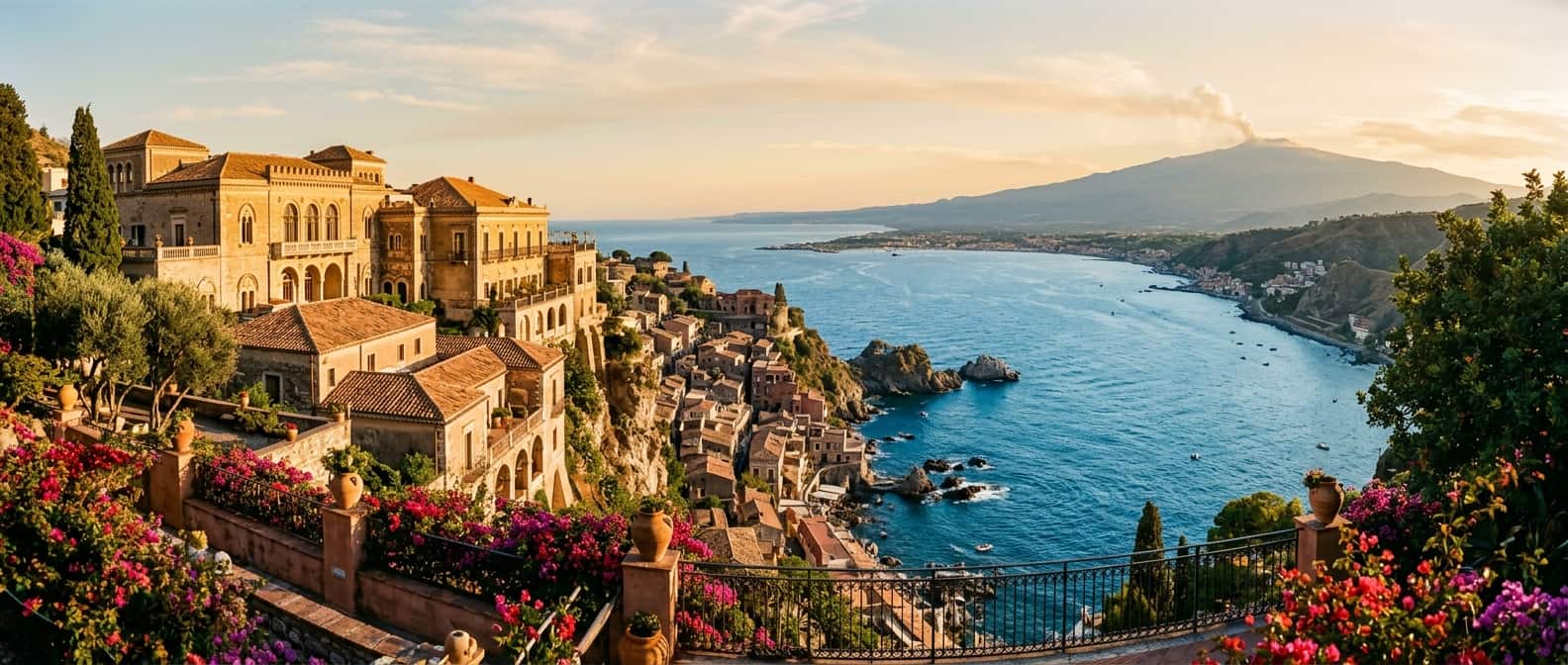
The morning air in Taormina smells faintly of sea salt, crushed lemons, and the lingering ash of Mount Etna. Here, perched high above the Ionian Sea, the light behaves differently—it is a thick, golden wash that turns ancient stone into honey and casts long, deliberate shadows across cobblestone terraces. Sicily has always been Italy’s dramatic southern act, a sun-baked island where Greek, Arab, and Norman histories collide. Now, it stands as the country's most compelling frontier for slow, unapologetic luxury.
The Shift to the South
For years, the affluent Indian traveler’s Italian circuit was remarkably fixed: the high-fashion arteries of Milan, the palatial hotels of Lake Como, and the vertical glamor of the Amalfi Coast. But a distinct shift is underway. The modern luxury traveler is moving south, seeking destinations that offer a raw, unvarnished authenticity alongside world-class refinement.
Sicily answers this mandate perfectly. It is an island that refuses to be hurried. The luxury here is found not in white-glove austerity, but in the profound connection to the land and the sea. It is a place of private villas nestled among olive groves, historic palazzos converted into intimate sanctuaries, and Michelin-starred dining that elevates the humble ingredients of the Mediterranean to high art.
Taormina and the Ionian Coast
To understand Sicily’s capacity for glamor, one must begin in Taormina. Clinging to the cliffs on the island’s eastern coast, this ancient town has been a retreat for aristocrats, writers, and cinematic icons for over a century. The focal point of the town's renaissance is the remarkable San Domenico Palace, a Four Seasons Hotel. Housed in a 14th-century Dominican convent, it is a masterclass in atmospheric luxury, offering sprawling gardens and infinite views of the smoking peak of Mount Etna.
Days here are spent in deliberate leisure. Mornings are for wandering the ancient Greek amphitheater before the midday heat descends. Afternoons demand a private boat charter from the pebble beach of Isola Bella, tracing the dramatic coastline where limestone cliffs plunge into impossibly clear, sapphire waters. As evening falls, the ritual of the aperitivo unfolds on bougainvillea-draped terraces, watching the fading light perform its nightly magic on the Ionian Sea.
The Baroque Beauty of Noto
Leaving the dramatic cliffs of the east, a journey south reveals a completely different aesthetic: the Val di Noto. Following a devastating earthquake in 1693, the towns in this region were completely rebuilt in a unified, flamboyant Baroque style. Noto is the crown jewel of this architectural triumph. Built entirely of local limestone, the town appears to glow from within as the sun sets, a masterpiece of honey-colored facades, intricate balconies, and sweeping staircases.
The luxury landscape in Noto is defined by the masseria—historic fortified farmhouses that have been meticulously restored. These estates offer an exclusive, hyper-private experience. Surrounded by citrus groves and almond trees, they serve as elegant basecamps for exploring the region’s cultural riches and pristine, white-sand beaches. The pace of life here dictates a slower rhythm, where the ultimate luxury is a long, shaded lunch of sea urchin pasta and local Nero d'Avola wine.
The Aeolian Archipelago
For those seeking absolute isolation, the Aeolian Islands—a volcanic archipelago scattered off Sicily’s northern coast—offer a compelling escape. Each of the seven islands possesses a distinct character, from the stark, cinematic beauty of Stromboli, with its continuously erupting volcano, to the lush, bohemian charm of Salina.
Panarea, the smallest and most exclusive of the islands, is the quiet favorite of the European elite. Devoid of cars and accessible only by private yacht or helicopter, it is a whitewashed haven of barefoot luxury. The days are dedicated to the sea, diving in secluded coves and navigating the dramatic sea stacks, before returning to cliffside villas where the only sound is the rhythmic crash of the Mediterranean.
The Gastronomic Heritage
It is impossible to separate Sicily from its food. The island’s cuisine is a vivid chronicle of its history, a vibrant mosaic of culinary traditions. Dining in Sicily ranges from rustic, family-run trattorias hidden in medieval alleyways to sophisticated, Michelin-starred establishments that reimagine the island’s heritage.
For the affluent traveler, the culinary experience is bespoke. It means private wine tastings on the dark, fertile slopes of Mount Etna, guided by the winemakers pioneering the region's remarkable resurgence. It involves exclusive access to the bustling markets of Palermo, led by acclaimed local chefs who translate the morning's catch into private, multi-course feasts. The focus is relentlessly local: bright, acidic lemons, deep-red Pachino tomatoes, and the sweet, complex notes of Marsala wine.
When to Go and How to Arrive
Sicily’s Mediterranean climate makes it an exceptionally long season. While the high summer months of July and August bring intense heat and a vibrant, albeit crowded, social scene, the shoulder seasons are where the island truly shines. Late May through June, and September into early October, offer warm waters, empty beaches, and comfortable temperatures for exploring the ruins and vineyards.
The island is served by airports in Palermo and Catania, though the ultimate arrival involves touching down in a private jet before transferring via helicopter directly to the coastline. It is a fittingly dramatic entrance for an island that commands attention from the moment it comes into view. Sicily does not politely invite you in; it entirely consumes you, leaving you with a profound, lingering desire to return before you have even departed.