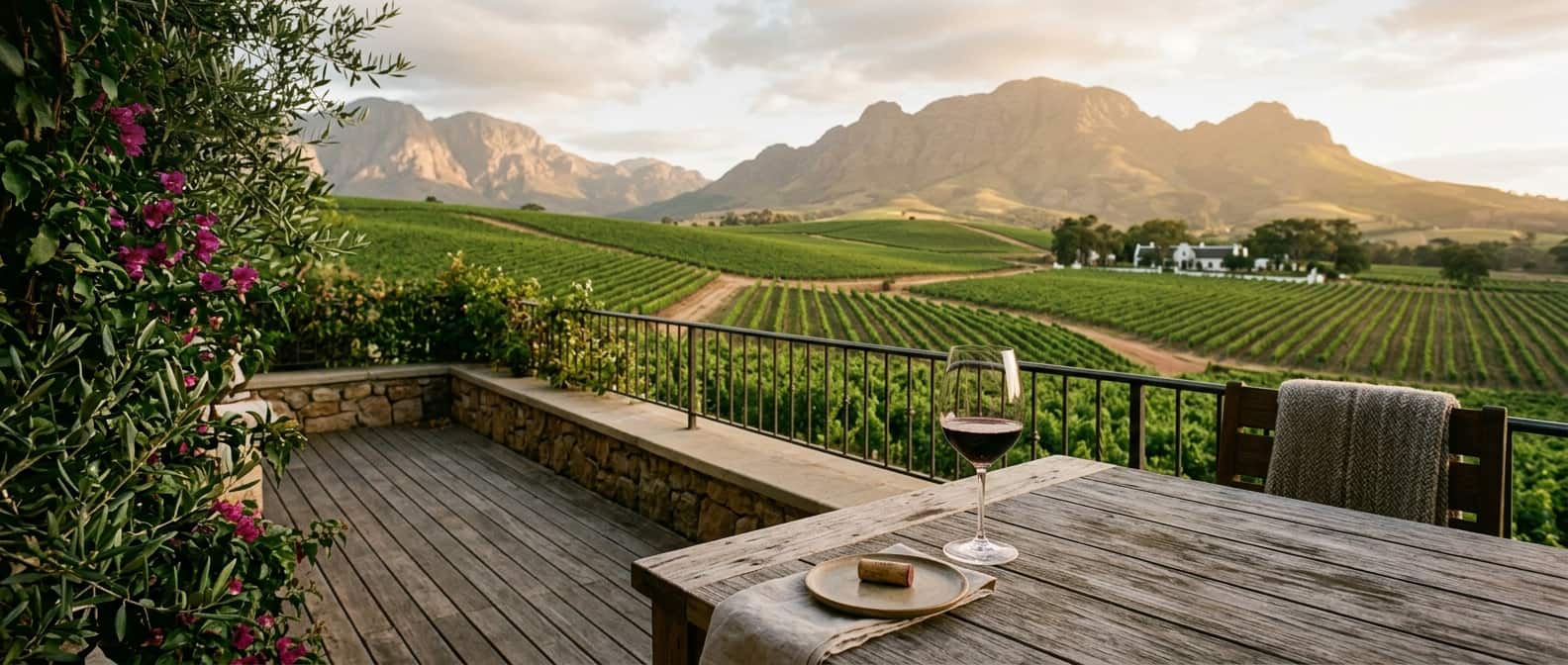
The light in the Cape behaves differently than it does anywhere else on the continent. By late afternoon, it pours over the jagged, ancient peaks of the Hottentots Holland mountains and settles like liquid gold onto the vine-streaked valleys below. The air carries the sharp, clean scent of fynbos mixed with the distant, salt-heavy breeze of the Atlantic. Here, the raw, untamed spirit of Southern Africa is refined into something quietly spectacular.
For the affluent Indian traveler, the traditional South African itinerary has long been defined by the high-stakes thrill of the Big Five in the Kruger. But there is a parallel geography—one defined not by the pursuit of wildlife, but by the slow, deliberate pursuit of taste, design, and ecological immersion. This is the Cape Winelands and the rugged coastal reserves of the Western Cape.
The Shift to the Cape
The evolution of South African luxury travel is moving steadily southward. While the northern reserves offer unparalleled game viewing, the Western Cape provides a sophisticated deceleration. It is a region where exclusive-use estates rival the great châteaux of France, and where the culinary landscape is shaped by a profound connection to the earth.
For those seeking an alternative to the crowded European summer, the Cape offers a compelling proposition. The infrastructure is flawless, the time-zone difference from India is negligible, and the standard of hospitality is deeply personal. It is an environment built for lingering—long, unhurried lunches under centuries-old oak trees, private cellar tastings led by master winemakers, and afternoons spent tracing the contours of the coastline.
Franschhoek: The Gastronomic Capital
Nestled in a valley of breathtaking proportions, Franschhoek is arguably the culinary epicentre of the southern hemisphere. Founded by French Huguenots in the 17th century, the town has preserved its European heritage while developing a distinctly African soul.
The luxury here is highly curated. Properties like Leeu Estates and La Residence do not simply offer accommodation; they provide access to a rarefied world of art, viticulture, and design. At Leeu Estates, the manicured gardens give way to working vineyards, and the spa relies on indigenous botanicals. Dining is an event. The tasting menus at the region's top restaurants are masterclasses in hyper-local sourcing, where ingredients are often foraging from the surrounding mountainsides just hours before service.
Stellenbosch: Heritage and Modernity
A short drive from Franschhoek lies Stellenbosch, a town where Cape Dutch architecture stands in stark, brilliant contrast to the rugged mountains. If Franschhoek is the polished jewel, Stellenbosch is the historic heart of the winelands.
The estates here are grand, sprawling affairs. Delaire Graff Estate, perched on the Helshoogte Pass, is a testament to the intersection of fine art, high jewellery, and exceptional wine. The lodges overlook valleys blanketed in vineyards, offering total privacy and cinematic views. But the true luxury of Stellenbosch lies in its quiet corners—private tastings of rare, decades-old vintages in subterranean cellars, or horseback rides through the fynbos-covered hills at dawn, long before the mist has lifted.
Grootbos: The Floral Kingdom
To understand the Cape fully, one must leave the vineyards and head toward the coast. Where the Indian and Atlantic oceans meet, the landscape turns dramatic and untamed. Here lies Grootbos Private Nature Reserve, a pioneer in regenerative travel and a sanctuary for the Cape Floral Kingdom.
Grootbos represents the apex of conscious luxury. The lodges, tucked into the ancient milkwood forests, look out over Walker Bay—a stretch of water famous for its visiting southern right whales. The days here are spent exploring a botanical wonderland that contains more plant species than the entire British Isles. Guided by expert botanists, guests walk through landscapes that feel entirely prehistoric. The luxury is not just in the thread count or the architecture, but in the profound isolation and the privilege of witnessing an ecosystem in perfect, delicate balance.
The Logistics of Slow Luxury
Navigating the Cape requires a shift in tempo. The distances are short, but the experiences demand time. Private aviation and luxury transfers seamlessly connect the international hub of Cape Town with the estates of Franschhoek and the coastal retreats of Walker Bay.
The most rewarding itineraries are those that resist the urge to do too much. A week split between a private villa in the winelands and a forest suite at Grootbos offers a comprehensive immersion into the region’s dual nature. It is a journey that moves from the cultivated elegance of the vine to the raw, untamed beauty of the coast, bound together by an uncompromising standard of luxury.
The Cape does not ask you to rush. It asks only that you pay attention to the light, the land, and the quiet, extraordinary details.