The light in the Western Cape does not merely illuminate; it clarifies. It hits the sheer rock face of Table Mountain with a stark, golden intensity, before softening over the manicured vines of the deep valleys. For the discerning Indian traveler, the appeal of South Africa has always been this vivid contrast. It is a country where one morning is spent tasting robust Pinotage in a centuries-old cellar, and the next tracking leopards through the lowveld.
In recent years, the standard of luxury here has shifted, catching the attention of those seeking high-end, immersive travel without the rigid formality of old Europe. This is a guide to South Africa’s highest frequencies: the remote, the refined, and the fiercely protected.
The Cape Grace Reimagined: Landing in the Mother City
Cape Town remains the inevitable, and glorious, starting point. While the V&A Waterfront buzzes with a relentless maritime energy, true isolation is found just above it. The newly reimagined grand dames of the city—properties that have quietly shed their heavy colonial drapery for lighter, contemporary African design—offer a sanctuary.
Mornings here are best spent bypassing the crowded tourist cables in favor of private helicopter charters over the Twelve Apostles, watching the icy Atlantic crash against the Cape Peninsula. By afternoon, the city’s burgeoning art district, the Zeitz MOCAA, demands attention. It is the largest museum of contemporary African art in the world, housed in a repurposed grain silo, offering private, curator-led tours that parse the continent’s complex creative output.
Franschhoek: The Culinary Capital of the Cape
A mere hour’s drive into the interior, the dramatic, craggy mountains give way to the Cape Winelands. Franschhoek, a valley settled by French Huguenots in the 17th century, feels remarkably European in its precision, yet entirely African in its scale.
The luxury here is experiential and deeply private. Opt for estates that offer exclusive-use manor houses. Days slip by in a rhythm of private barrel tastings, long lunches under ancient oaks, and exploring the terroir via vintage car drives through the valley. The culinary scene in Franschhoek regularly rivals that of Michelin-starred European capitals, but the atmosphere is unbuttoned. Expect hyper-local foraging, sustainably raised Cape Wagyu, and cellars guarded by winemakers who prefer walking the vines with their guests rather than holding court in a tasting room.
The Blue Train: A Slower Pace North
To transit from the temperate cape to the wilder north, aviation is efficient, but rail is romantic. The Blue Train remains a testament to a bygone era of travel, slowly rolling from Cape Town to Pretoria over two nights.
In its modern iteration, the train is less a mode of transport and more a rolling, five-star hotel. The luxury is unapologetically slow. As the landscape shifts from the lush winelands to the arid expanse of the Karoo desert, guests in the observation car can watch the country change its palette entirely, accompanied by high tea or a local botanical gin. It is a deliberate deceleration before the adrenaline of the bush.
Sabi Sands: The Apex of the Private Safari
If the Winelands are about cultivated refinement, the Greater Kruger region—specifically the Sabi Sands Game Reserve—is about raw, unmitigated access. The Sabi Sands shares an unfenced border with the Kruger National Park, allowing wildlife to roam freely, but strictly limits the number of vehicles.
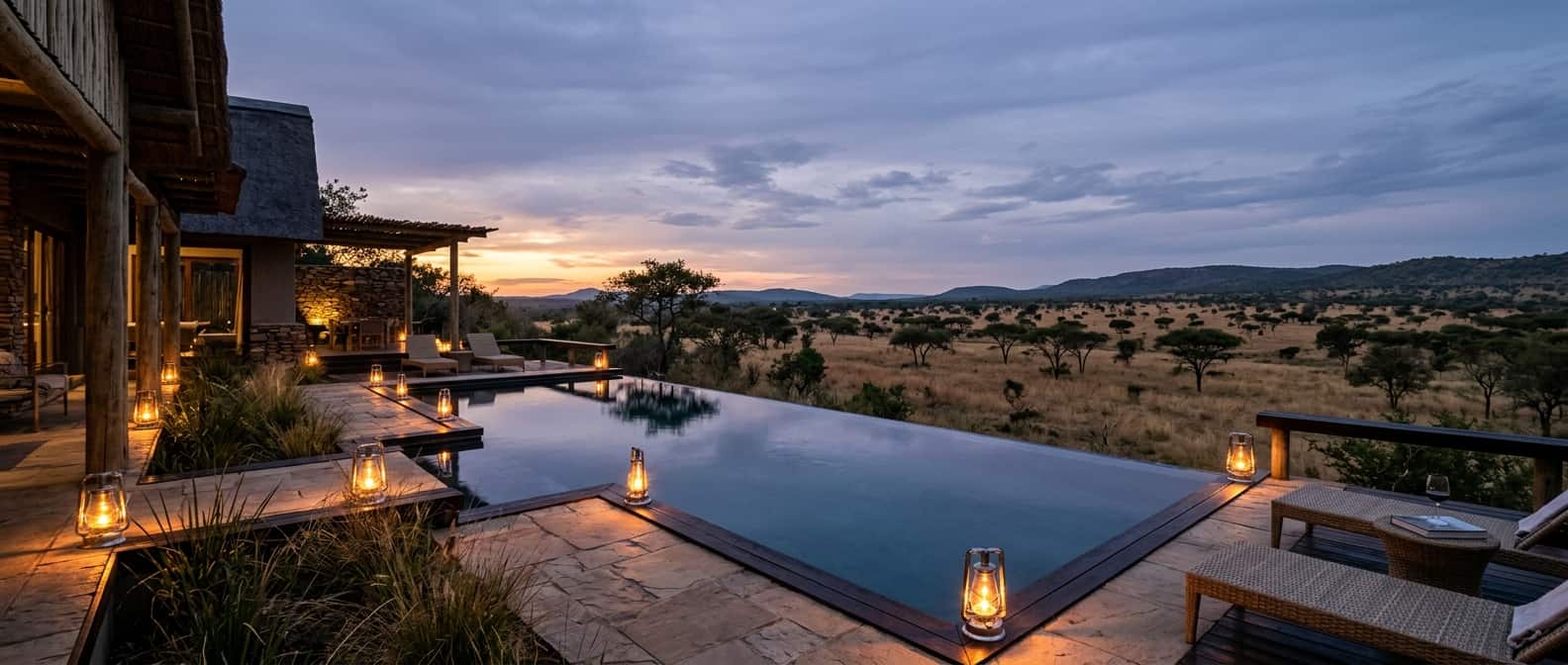
Here, luxury is defined by isolation. The top-tier lodges in this concession have moved entirely away from the colonial safari aesthetic, embracing instead low-impact, high-design structures of glass, local timber, and raw concrete. Days are dictated by the rhythm of the sun and the movement of the big cats. You will track leopards—Sabi Sands is globally renowned for its leopard population—with highly trained trackers who read the bush like a manuscript. Evenings culminate not in crowded camps, but with private dining on vast, lantern-lit decks under a canopy of southern hemisphere stars.
The Logistics of Luxury: When to Go
South Africa’s dual nature means it requires careful seasonal planning. For the Indian traveler escaping the intense summer, the South African winter (June to August) offers crisp, cool days in the Cape and the absolute best game viewing in the north, as the bush thins out and animals congregate around water sources. For those seeking the lush, green beauty of the Winelands and warm coastal days, September through November—the Southern Hemisphere spring—is unmatched.
Ultimately, a journey through South Africa is a lesson in balance. It is a destination that demands you appreciate a vintage MCC (Méthode Cap Classique) as much as the absolute silence of the savannah at dawn.
Sources
- Cleartrip reports 108% rise in luxury hotel bookings for summer 2026, ETTravelWorld — Indicates a strong trend towards premium, bespoke travel experiences among affluent Indian travelers.
- Indian travellers seeking luxury experiences in Summer of 2026 — Confirms significant rising interest in Southern Hemisphere escapes.