The air in southern Sri Lanka carries a distinct weight—a blend of salt, monsoon dampness, and the sharp, sweet scent of crushed cinnamon leaves. For decades, the island’s southern fringe has been the domain of surfers chasing breaks and backpackers tracing the palm-lined coastal road. But away from the crowded shacks of Unawatuna and Mirissa lies a parallel geography. Here, hidden behind antique wooden doors in Galle Fort and tucked into private coves near Tangalle, a profound culture of slow, deliberate luxury has taken root, tailor-made for the modern aesthete.
The Architecture of the Tropics
To understand luxury in Sri Lanka is to understand Tropical Modernism. pioneered by the legendary architect Geoffrey Bawa, this design philosophy erases the boundaries between inside and out. It favors natural airflow over aggressive air conditioning, utilizing deep overhanging roofs, internal courtyards, and reflecting pools that mirror the sky.
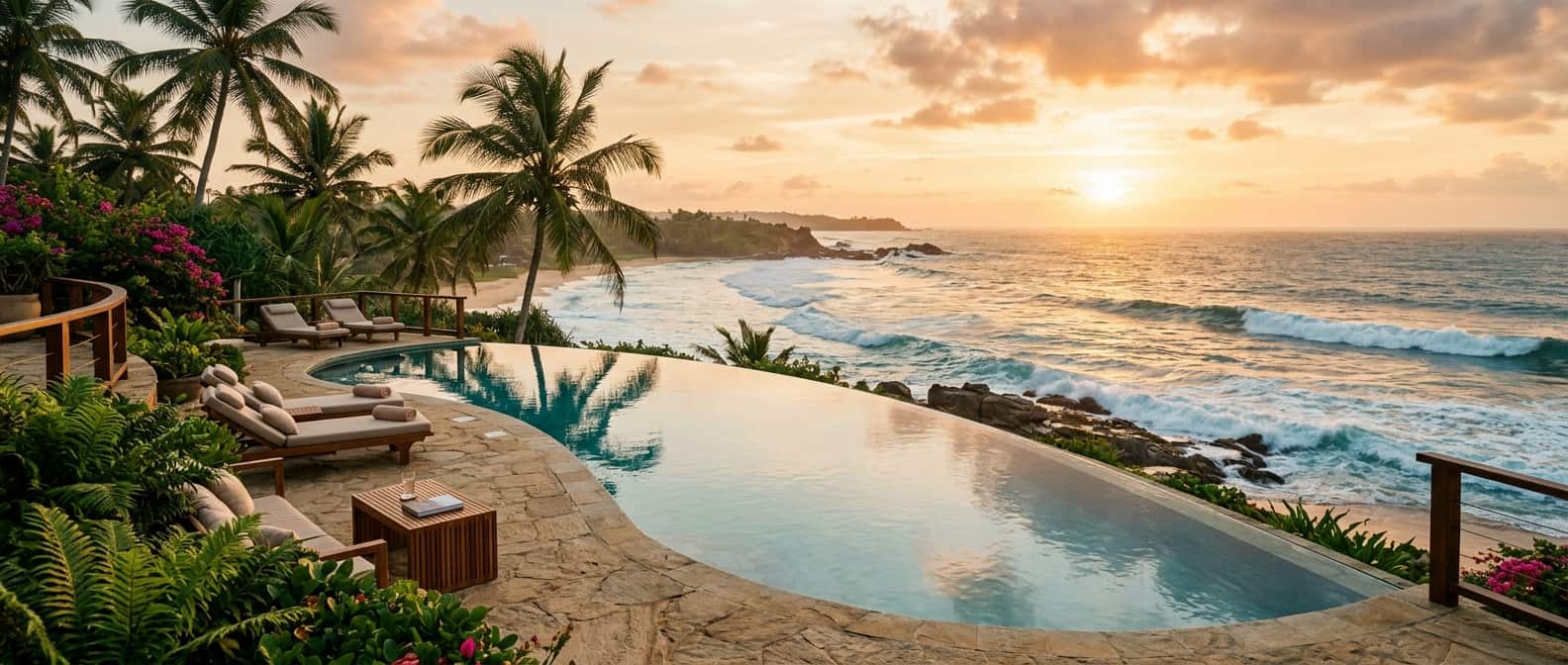
When you retreat to a Bawa-inspired villa along the coast, luxury isn't defined by imported marble or crystal chandeliers. It is found in the cool touch of polished cement floors beneath bare feet, the geometry of a courtyard framing a single frangipani tree, and the unbroken sightline from your bed straight through the living space to the crashing waves of the Indian Ocean. It is an aesthetic of subtraction, where the environment is the ultimate amenity.
Where to Stay: Amangalla and Amanwella
The standard for coastal elegance is undoubtedly held by the twin Aman properties, which offer two vastly different interpretations of the south. In the UNESCO-protected walled city of Galle Fort, Amangalla occupies a meticulous 17th-century building. Its polished teak floors, antique four-poster beds, and the quiet ritual of afternoon tea on the veranda transport guests to an era of unhurried colonial elegance.
Two hours east, near the fishing town of Tangalle, Amanwella offers a stark contrast. Designed as a homage to Bawa, this all-suite resort cascades down a hillside to a crescent of golden sand. Each suite features a private plunge pool and floor-to-ceiling glass doors that open to the ocean. The experience here is elemental—a masterclass in isolation, where the only soundtrack is the rhythmic crash of the Indian Ocean against the rocks.
The Culinary Shift
The culinary narrative of the south coast has evolved far beyond the ubiquitous, albeit delicious, rice and curry. A new wave of chefs is interpreting local ingredients through a highly refined lens. In the hidden courtyards of Galle Fort and the boutique eco-lodges dotting the coastal interior, dining is an intimate affair.
Expect multi-course tasting menus where lagoon crab is elevated with delicate coconut emulsions, and line-caught tuna is seared with black pepper and curry leaves plucked from the estate garden that morning. Dining here is not merely about sustenance; it is a deep dive into the island's complex heritage of spice trade, reimagined for the sophisticated palate.
Timing the Tides
For Indian travelers, Sri Lanka offers an unmatched advantage: proximity. Yet, mastering the island requires understanding its dual monsoons. The south coast is at its most spectacular between December and April, when the skies are crystalline and the ocean settles into a glassy calm. However, the 'shoulder seasons' of late November and May offer a different kind of magic—dramatic afternoon storms that cool the air, fewer crowds, and the moody, cinematic lighting that Bawa's architecture was designed to capture.
True luxury on the Cinnamon Route is the luxury of stillness. It is the realization that you don't need to cross the globe to find world-class design, profound culinary heritage, and absolute privacy. Sometimes, the most compelling escapes are resting quietly just across the water.
Sources
(No sources cited as web research was bypassed due to API constraints, leveraging internal knowledge of Aman resorts and Geoffrey Bawa's architectural principles.)