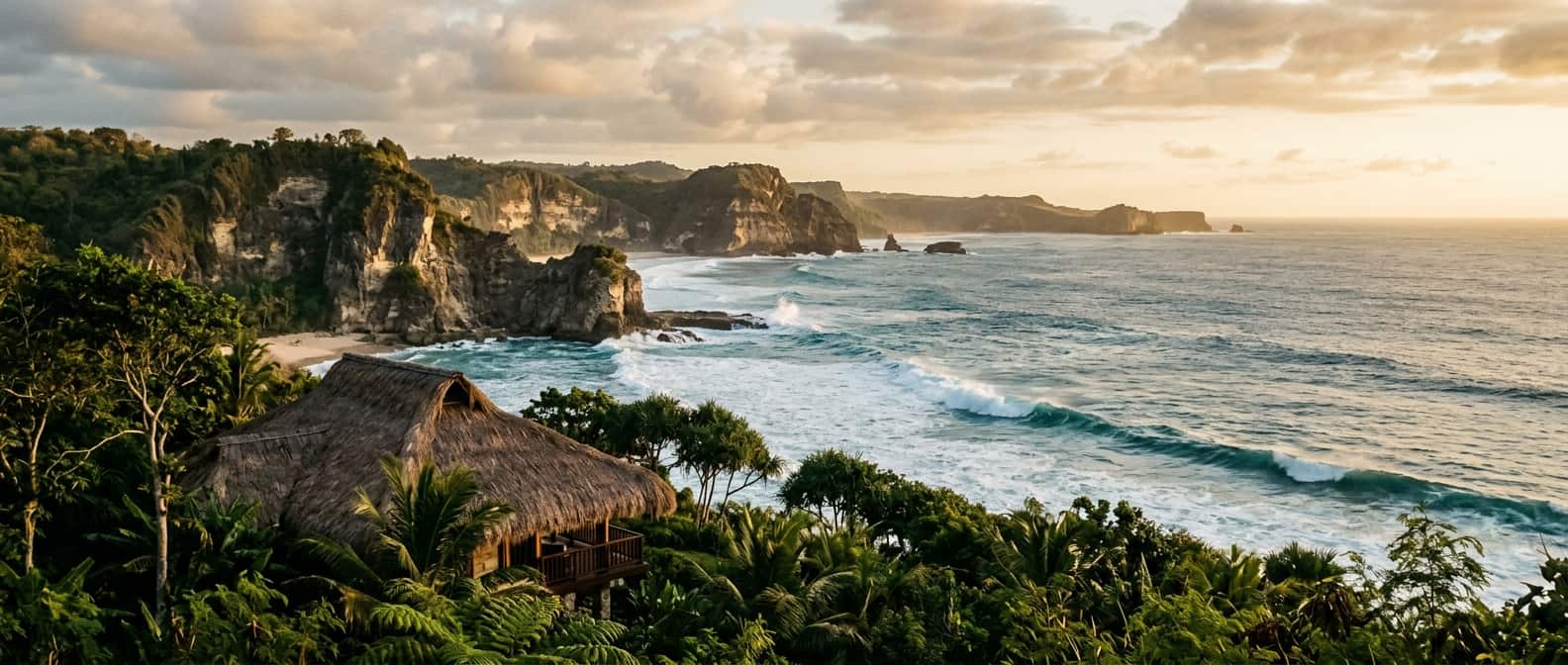
The air over the Lesser Sunda Islands carries the heavy, humid scent of clove and wild sandalwood. Here, just a brief flight east of Bali, the manicured beach clubs and congested arteries of the south give way to a coastline of staggering, prehistoric scale. Sumba does not coddle the traveler; it overwhelms the senses with rolling savannas, limestone cliffs, and the rhythmic pound of the Indian Ocean against empty shores.
Beyond the Familiar
For years, the affluent Indian traveler’s relationship with Indonesia has been largely defined by the luxurious, albeit predictable, enclaves of Seminyak and Uluwatu. Yet, as privacy becomes the ultimate currency, the gaze is shifting eastward. Sumba is roughly twice the size of Bali but hosts a fraction of its population. The landscape feels distinctly untamed, defined by arid plains that turn blindingly green in the wet season, and ancient megalithic tombs that anchor the island’s deeply rooted animist culture. This is not a destination for passive indulgence. It is a place that demands engagement, drawing those who have outgrown the traditional five-star resort model in favor of something raw and resonant.
The Architecture of the Edge
Hospitality on Sumba is defined by an architectural philosophy that bows to the surrounding topography rather than dominating it. Estates are constructed from indigenous teak, bamboo, and alang-alang thatch, blending seamlessly into the jungle canopy. Villas are often entirely open to the elements, allowing the ocean breeze to replace mechanical cooling. Inside, the luxury is tactile and unpretentious: massive stone soaking tubs, hand-woven ikat textiles that take months to dye and loom, and expansive wooden decks suspended over the tree line. The luxury here is not found in gilded fixtures, but in the extravagant allocation of space and the profound quiet that envelops each pavilion.
Rhythms of the Wild Coast
The Indian Ocean dictates the tempo of life on Sumba’s coast. Mornings are measured by the shifting tide and the arrival of world-class swells that draw an exclusive cadre of surfers. For those less inclined to the water, the coastline offers miles of desolate, powdery sand where the only footprints belong to local fishermen and wild horses. Excursions often involve navigating rutted dirt tracks to discover hidden waterfalls or pristine, crescent-shaped bays. The service is highly intuitive, seamlessly organizing beachfront barbecues over open fires or coordinating with local guides to ensure every foray into the wild is met with the quiet efficiency expected of top-tier hospitality.
Purposeful Isolation
What elevates Sumba above a mere remote getaway is its intrinsic commitment to the island’s people and ecology. The most distinguished properties operate on a model of purposeful isolation, where luxury travel directly funds regional health clinics, clean water initiatives, and local schools. For the modern Indian traveler, who increasingly seeks destinations that align with a broader ethos of responsibility, this integration is vital. Guests are invited to visit local villages not as spectators, but as active participants in a long-term sustainability project. It creates an emotional tether to the island that outlasts the sensory pleasures of the resort itself.
The Return to Center
Leaving Sumba requires a recalibration. The transition back to the mechanized hum of modern life feels abrupt after days dictated by the sun and the swell. The island strips away the superficial layers of standard luxury, replacing them with a grounded, elemental comfort. It is a reminder that the true privilege of travel is not merely to be served, but to be deeply, quietly moved.