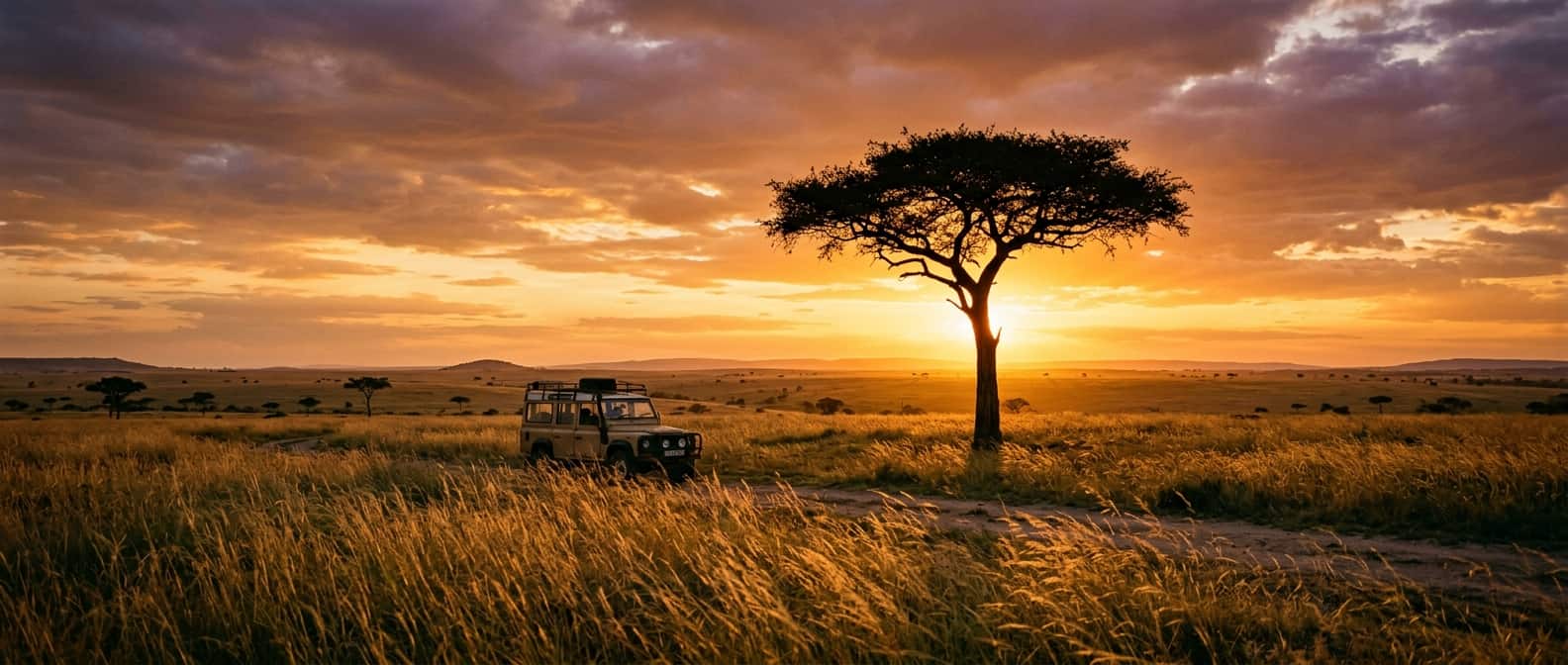
The air in the Grumeti Reserve carries a distinct, dry electricity long before the rains arrive. It is an ocean of pale blonde grass stretching toward a horizon so flat and unbroken it forces a recalibration of scale. Here, the concept of time shifts from the digital to the ancient—measured not in hours, but in the slow, deliberate arc of the sun and the shifting shadows of acacia trees. This is the Serengeti stripped of its frenetic tourist traffic, returning to a state of absolute, profound isolation.
For the affluent traveler seeking the pinnacle of the African bush, the narrative has evolved. The contemporary safari is no longer a checklist of the Big Five, nor is it about rushing between game drive vehicles. It is about stillness. It is about securing vast tracts of wilderness for a handful of guests, ensuring that when a leopard descends from a baobab at dusk, yours is the only engine idling in the twilight.
The Singita Standard: Sasakwa and Faru Faru
Within the 350,000-acre Grumeti Reserve, Singita operates with a level of refinement that has redefined the East African safari. Singita Sasakwa, perched high on a rocky promontory, surveys the plains with the gravitas of an Edwardian manor. Its stone walls, sweeping verandas, and vast infinity pools present an almost surreal contrast to the wild expanse below. It is a place of cut crystal and polished silver, where evening game drives culminate in vintage champagne served on a silver tray as the sky turns a bruised, magnificent violet.
Down by the Grumeti River, the aesthetic shifts dramatically at Singita Faru Faru. Here, the architecture is organic, drawing heavily from botanical themes and the textured hues of the earth. The lodge feels woven into the riverbank. Floor-to-ceiling glass blurs the boundary between the opulent interiors and the wilderness outside. It is entirely possible to witness an elephant herd navigating the riverbed without ever lifting your head from a linen-draped daybed.
These properties operate on a philosophy of invisible service. The orchestration of a day is seamless, intuitively adapted to the rhythm of the guests and the movement of the game.
The Architecture of the Bush
The evolution of the luxury lodge in Tanzania is a study in context. The most successful spaces do not attempt to insulate the guest from the environment; rather, they frame it. Canvas walls remain the ultimate luxury, an auditory link to the nocturnal symphony of the savannah. The roar of a lion echoing across the plains is not a sound meant to be muted by triple-glazed glass.
At Mwiba Lodge, set in a private 130,000-acre wildlife reserve adjoining the southern Serengeti, the architecture is a masterclass in integration. The suites are built into massive stone boulders and ancient coral trees. Copper bathtubs look out over a rocky gorge, and the design relies heavily on natural linens, raw wood, and neutral tones. The luxury here is the absence of visual noise. The interiors do not compete with the landscape; they provide a quiet vantage point from which to absorb it.
This deliberate restraint extends to the footprint of the camps. Sustainability is not a marketing add-on but the foundational ethos. The exclusivity of these lodges funds critical conservation work, ensuring that the luxury experience directly contributes to the protection of the ecosystem.
Rhythm of the Plains
The true luxury of a private concession is the freedom to dictate the pace of the day. In the national parks, vehicles are restricted to designated roads and must return to camp by sunset. In a private reserve, these constraints dissolve.
Mornings often begin before dawn, the air sharp and cold. A silent, electric Land Cruiser moves off-road, tracking a pride of lions through the dew-heavy grass. Without the pressure of competing vehicles, the encounter is allowed to unfold naturally. You might spend two hours simply watching a cheetah scan the horizon, observing the subtle tension in its shoulders.
As the heat of the day builds, the focus shifts. The hours between late morning and mid-afternoon are meant for retreat. This is the time for a plunge pool, a massage utilizing indigenous botanicals, or a long, languid lunch shaded by a canvas marquee.
Night drives introduce an entirely different cast of characters. With the aid of a spotlight, the bush reveals its nocturnal life—the glowing eyes of a bushbaby, the stealthy movement of a civet, or a leopard on the hunt. It is a sensory shift, relying on sound and shadow, and it is a privilege exclusively available on private land.
The Private Concession Advantage
The value proposition of the private concession cannot be overstated. The Serengeti National Park, while spectacular, is subject to the immense pressure of global tourism. During the peak of the Great Migration, river crossings can attract dozens of vehicles, transforming a profound natural event into a crowded spectacle.
Lodges situated in private reserves like Grumeti or Mwiba offer a sanctuary from this congestion. Guests have access to the migration when it passes through, but they also have the luxury of retreating to a wilderness that feels entirely their own. The density of wildlife on these concessions is staggering, managed through rigorous anti-poaching efforts and habitat restoration.
Furthermore, private concessions offer activities impossible within the park borders. Guided walking safaris recalibrate the senses. Moving through the bush on foot, guided by an armed scout, shifts the perspective from observer to participant. You learn to read tracks in the dust, to identify the alarm calls of birds, and to appreciate the intricate micro-ecosystems that go unnoticed from a vehicle.
Logistics and Seasonal Nuance
For the affluent Indian traveler, logistics must be as flawless as the destination. The journey typically begins with a commercial flight to Kilimanjaro International Airport, followed immediately by a private charter directly to the lodge's airstrip. This bypasses the arduous overland transfers and delivers guests straight into the heart of the reserve.
Understanding the seasonal rhythm of the Serengeti is crucial. The Great Migration is a continuous cycle, driven by rainfall. While the dramatic river crossings in the north (July to October) are highly coveted, the calving season in the southern Ndutu region (January to March) offers equally compelling predator action.
However, the "secret season" of November and early December often provides the most rewarding experience. The short rains transform the plains into a vibrant, emerald green. The dust settles, the light becomes razor-sharp for photography, and the lodges are quieter. It is a time of immense beauty and profound peace.
To experience the Serengeti at this level is to understand the profound privilege of space. It is a temporary return to an older, wilder world, mediated by uncompromising comfort and intuitive service. In a world increasingly defined by noise and proximity, the ultimate luxury is the horizon, empty and endless, belonging entirely to you.
Sources
The web researcher tool was unavailable; editorial intelligence and internal market data were used to construct this guide.